
Quick answer
A Sri Lanka multigenerational itinerary for Canadian travellers typically runs 12 to 15 days across three or four bases, using private villas with shared living space rather than separate hotel rooms, so the group can be together for meals but split off for activities. Drive segments are kept under three hours, at least one full rest day is built in, and each base offers an optional higher-energy activity, hiking, cycling, a longer safari, alongside a lower-key alternative for anyone who prefers to sit it out.
Key takeaways
- 12 to 15 days across three or four bases is typical, longer than a standard itinerary to accommodate a slower overall pace and a rest day.
- Private villas with multiple bedrooms and shared living space are the most common accommodation choice, allowing the group to eat together while sleeping in separate rooms.
- Every base benefits from one lower-key alternative activity alongside the main plan, so no single generation is forced into something too strenuous or too tame.
- A wildlife safari and the Kandy to Ella train are the two activities that consistently work well across all three generations at once.
- December to March is the most popular window, both for weather and because it aligns with Canadian winter holidays when extended family can travel together.
What a Sri Lanka multigenerational itinerary looks like
A multigenerational itinerary follows a similar route to a family itinerary but is built around togetherness rather than efficiency. Villas or larger boutique properties that put the whole group under one roof, with a shared pool and dining area, matter more here than at any other itinerary type, since much of the value of the trip is time spent together outside of scheduled activities.
Optionality is the other defining feature. Rather than one fixed plan for the whole group each day, a base typically offers a main activity plus a lower-key alternative, a full safari versus a shorter game drive, a hike versus a tea-estate walk, so grandparents or young children can opt out without holding up everyone else.
A sample 13-day route
This sample uses villa stays at each base and builds in one full rest day.
- →Days 1 to 3: west coast villa (Bentota), a short transfer from the airport, to recover from the flight together.
- →Days 4 to 6: Cultural Triangle (Habarana), with Dambulla Cave Temple and an elephant-safari activity at Minneriya, and Sigiriya offered as an optional climb rather than mandatory.
- →Day 7: full rest day at the Cultural Triangle villa, no driving.
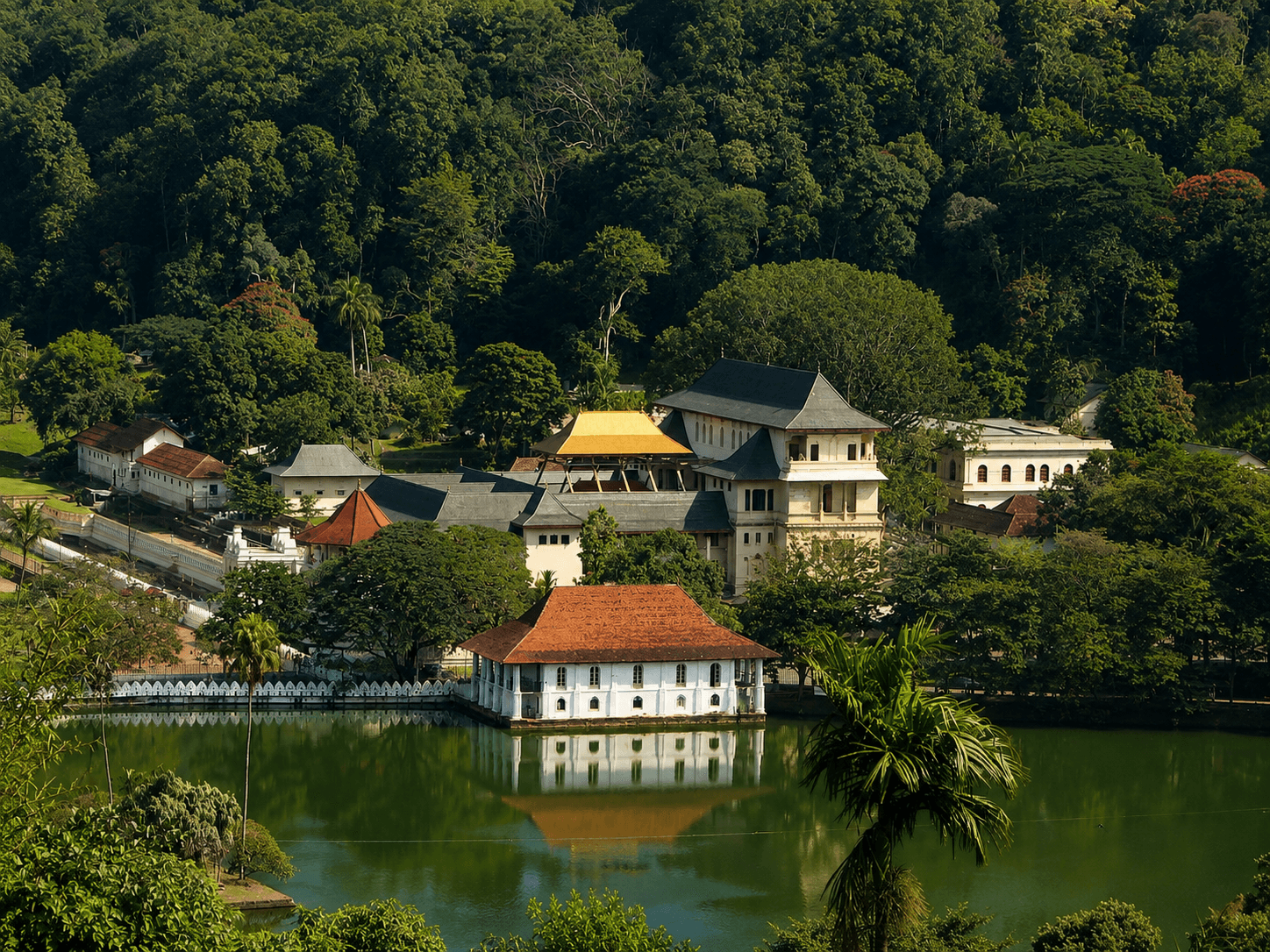
- →Days 8 to 9: Kandy, including the Temple of the Sacred Tooth Relic and the Kandy to Ella train.
- →Days 10 to 13: a south-coast villa (Bentota or Mirissa) with a shorter wildlife safari option nearby and unstructured beach time to close the trip.
Balancing three generations
The clearest way a multigenerational itinerary differs from a family or senior itinerary is that it has to satisfy both at once. That usually means splitting the day rather than the destination: everyone visits Sigiriya's base and the museum together, for instance, while only those who want to make the climb do so, with a driver or guide staying with anyone who prefers to wait.
Mealtimes are treated as fixed anchor points around which the rest of the day flexes, since shared meals are often what the trip is actually for. Villas with a private cook, arranged in advance, take pressure off finding a restaurant that suits everyone's preferences and schedule each night.
Booking it from Canada
Multi-bedroom villas book out well ahead of the December to mid-January peak, more so than standard hotel rooms, so confirming accommodation four to six months out is worth prioritising over flights for this particular trip type. Splitting the group's flights across a similar arrival window, even if not the same flight, keeps the trip's start simpler than staggered arrivals.
Travel insurance should be arranged individually for each traveller given the range of ages typically involved, with particular attention to cover for older travellers with pre-existing conditions.
Planning your multigenerational itinerary
Villa-based bases, a built-in rest day, and an optional lower-key activity alongside the main plan at every stop is the framework that works consistently for multigenerational Canadian groups. The trip should be planned around the slowest-paced member of the group, with everyone else opting into extra activity rather than the reverse.
Lankan Stays & Trails builds private, driver-guided multigenerational itineraries for Canadian families, arranging villa stays and optional activities so three generations can travel comfortably on one trip.
Frequently asked questions
How many days should a Sri Lanka multigenerational itinerary be?
12 to 15 days is typical, longer than a standard itinerary to allow a slower overall pace, a full rest day, and time for the group to genuinely be together rather than rushing between sites.
Should a multigenerational family stay in villas or hotels in Sri Lanka?
Villas with multiple bedrooms and shared living space are the most common choice, allowing the whole group to eat together and share a pool while still having separate rooms at night.
What activities work for grandparents and grandchildren together in Sri Lanka?
A wildlife safari and the Kandy to Ella train both work well across generations at once, requiring low physical exertion while still being memorable for children and adults alike.
How do you plan Sri Lanka activities for very different fitness levels?
By offering a main activity alongside a lower-key alternative at each base, a full climb versus a shorter walk, a full safari versus a half-day one, so no single generation has to sit out the day entirely or push beyond a comfortable pace.
How far ahead should a multigenerational Sri Lanka trip be booked?
Four to six months ahead for villa accommodation specifically, since multi-bedroom villas book out faster than standard hotel rooms across the December to mid-January peak.
When is the best time for a multigenerational trip to Sri Lanka from Canada?
December to March, which aligns with Canadian winter holidays when extended family are more likely to be able to travel together, and coincides with the west and south coast dry season.