
Quick answer
A Sri Lanka photography itinerary for Canadian travellers typically runs 10 to 12 days, timed around dawn arrivals at Sigiriya and the Cultural Triangle temples, a private rather than shared safari jeep at Yala or Wilpattu for flexibility to wait for a shot, and the golden-hour stretch of the Kandy to Ella train through tea country. Building in a buffer day at each major stop, rather than a single scheduled visit, allows a return for better light or a missed shot without disrupting the rest of the route.
Key takeaways
- Arriving at Sigiriya and other Cultural Triangle sites at opening time, around 7am, gives both softer light and considerably fewer people in frame than a mid-morning visit.
- A private safari jeep, rather than a shared one, is the single most valuable booking decision for wildlife photography, allowing the vehicle to wait at a sighting rather than move on for other passengers.
- The Kandy to Ella train's most photogenic stretch, after Nanu Oya through tea country, is best timed for the late-afternoon light on a westbound or well-timed eastbound service.
- A buffer day built into the schedule at major sites allows a return visit for better light or weather, without needing to compress or skip other parts of the trip.
- Sri Lanka's dry-season haze, common in the hottest midday hours, generally clears for sharper long-range shots in the early morning and again toward evening.
What a Sri Lanka photography itinerary looks like
A photography-focused itinerary treats timing as the primary planning variable, arriving early for soft light and thinner crowds, and building in flexibility to return to a site or wait longer at a wildlife sighting rather than moving on a fixed schedule. This generally means fewer sites covered per day than a standard itinerary, in exchange for meaningfully better images at each one.
Vehicle choice matters more here than on most other itinerary types. A private car and, specifically, a private safari jeep rather than a shared one, gives the flexibility to stop, wait or reposition without negotiating with other passengers who may not share the same priorities.
A sample 11-day route
This sample builds in a buffer day at the two most photography-heavy stops.
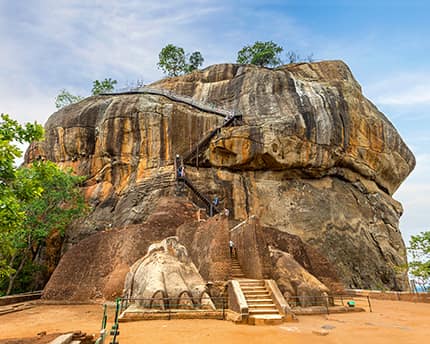
- →Days 1 to 4: Cultural Triangle (Sigiriya), with a dawn visit to Sigiriya Rock, a buffer day for a return visit or Dambulla and Polonnaruwa, and an evening at a village or lake for softer light.
- →Days 5 to 7: hill country (Ella or Nuwara Eliya), including the Kandy to Ella train timed for late-afternoon light, and a sunrise at Little Adam's Peak.
- →Days 8 to 11: a wildlife safari at Yala or Wilpattu with a private jeep, two full days of dawn and evening drives, plus a buffer day for a further game drive if the target shot hasn't landed yet.
Timing and light by region
Sri Lanka's dry-season haze tends to build through the hottest midday hours and clears again toward evening, which makes early morning and the last two hours before sunset the strongest windows for sharper long-range shots, particularly at elevated sites like Sigiriya. Midday is generally the weakest light for landscape photography anywhere on the island, though it can work for detail shots in shaded temple interiors.
Wildlife photography rewards patience over movement: a private jeep that can sit quietly at a promising sighting for 20 or 30 minutes, rather than moving on to satisfy other passengers, consistently produces better results than a fast-paced shared drive covering more ground.
Practicalities for a photography trip
A tripod is useful for low-light temple interiors and any long-exposure work but should be used discreetly and never obstruct other visitors at busy sites; some sites restrict tripods entirely, worth confirming locally. Drone use in Sri Lanka is restricted and requires permits in many areas, including near airports, military sites and some national parks, so anyone planning to fly one should research current rules well before travelling rather than assuming it will be permitted on arrival.
Dust and humidity are a genuine concern for camera gear over a two-week trip; a simple dry bag or silica packets in the camera bag are a sensible, low-cost precaution, particularly during the wetter shoulder months.
Planning your photography itinerary
Dawn arrivals at the Cultural Triangle, a private safari jeep for wildlife, and buffer days at the two or three most photography-heavy stops is the framework that produces meaningfully stronger results than a standard, fully scheduled itinerary. Fewer sites, more time at each, is the consistent trade-off.
Lankan Stays & Trails arranges private vehicles and jeeps timed around light and flexibility for Canadian photographers, rather than a fixed group schedule.
Frequently asked questions
How many days should a Sri Lanka photography itinerary be?
10 to 12 days is typical, with buffer days built in at the most photography-heavy stops, such as Sigiriya and a wildlife safari, to allow a return visit for better light or a missed shot.
What time is best to photograph Sigiriya Rock?
Around opening time, roughly 7am, for softer light and considerably fewer people in frame than a mid-morning visit, when tour groups and the day's heat both build.
Is a private safari jeep worth it for wildlife photography?
Yes, generally the single most valuable booking decision for this trip type. A private jeep can wait quietly at a sighting rather than moving on to satisfy other passengers, which consistently produces better images.
Can you fly a drone in Sri Lanka?
Drone use is restricted and requires permits in many areas, including near airports, military sites and some national parks. Research current rules well before travelling rather than assuming it will be permitted on arrival.
When is the best light for photography in Sri Lanka?
Early morning and the last two hours before sunset generally offer the clearest, softest light, since dry-season haze tends to build through the hottest midday hours and clears again toward evening.
Are tripods allowed at Sri Lanka's temples and ancient sites?
Rules vary by site; some restrict tripods entirely. It's worth confirming locally at each site and using one discreetly, without obstructing other visitors, where it is permitted.