
Quick answer
A Sri Lanka public transport itinerary for Canadian travellers typically runs 12 to 16 days, using trains between Colombo, Kandy, Ella and the south coast, and buses to fill in most other well-travelled routes. The Cultural Triangle and the main wildlife safari parks are the network's clearest weak points, reached slowly and infrequently by public transport, so most itineraries either skip these regions or book a single private driver or shared tour specifically for that stretch. A longer overall trip than a driver-guided equivalent is worth planning for, since public transport adds travel time throughout.
Key takeaways
- Colombo, Kandy, Ella and the south coast are well connected by train, forming the reliable core of a public-transport-only itinerary.
- Buses cover most other well-travelled routes but can be crowded and less predictable in schedule than trains, particularly on popular corridors.
- The Cultural Triangle and the main safari parks are the network's weakest points, best covered by a single booked driver or shared tour rather than public transport.
- Reserved second-class train tickets, booked a few weeks ahead online, are the most reliable way to guarantee a seat on the popular Kandy to Ella route.
- A public-transport-only trip generally needs 2 to 4 more days than an equivalent driver-guided itinerary to cover the same ground comfortably.
What a Sri Lanka public transport itinerary looks like
A public-transport-only itinerary leans heavily on the country's rail corridor, Colombo to Kandy to Ella, plus the coastal line, since these routes are well served, reasonably comfortable and simple to book. Buses fill in most of the remaining well-travelled connections between towns along this corridor.
The honest limitation is the Cultural Triangle and the main wildlife safari parks, both poorly served by public transport given how the network was originally built to connect the highlands and coast to Colombo rather than these regions specifically.
A sample 13-day route
This sample uses trains and buses for the well-served corridor and a single booked driver day for the Cultural Triangle gap.
- →Days 1 to 2: Colombo, by airport transfer.
- →Day 2: train from Colombo to Kandy, roughly three hours.
- →Days 3 to 5: Kandy, then a single booked driver or shared tour to the Cultural Triangle for two to three days, since rail doesn't reach Sigiriya or Polonnaruwa directly.
- →Days 6 to 7: back to Kandy or on to Nanu Oya to rejoin the rail line.
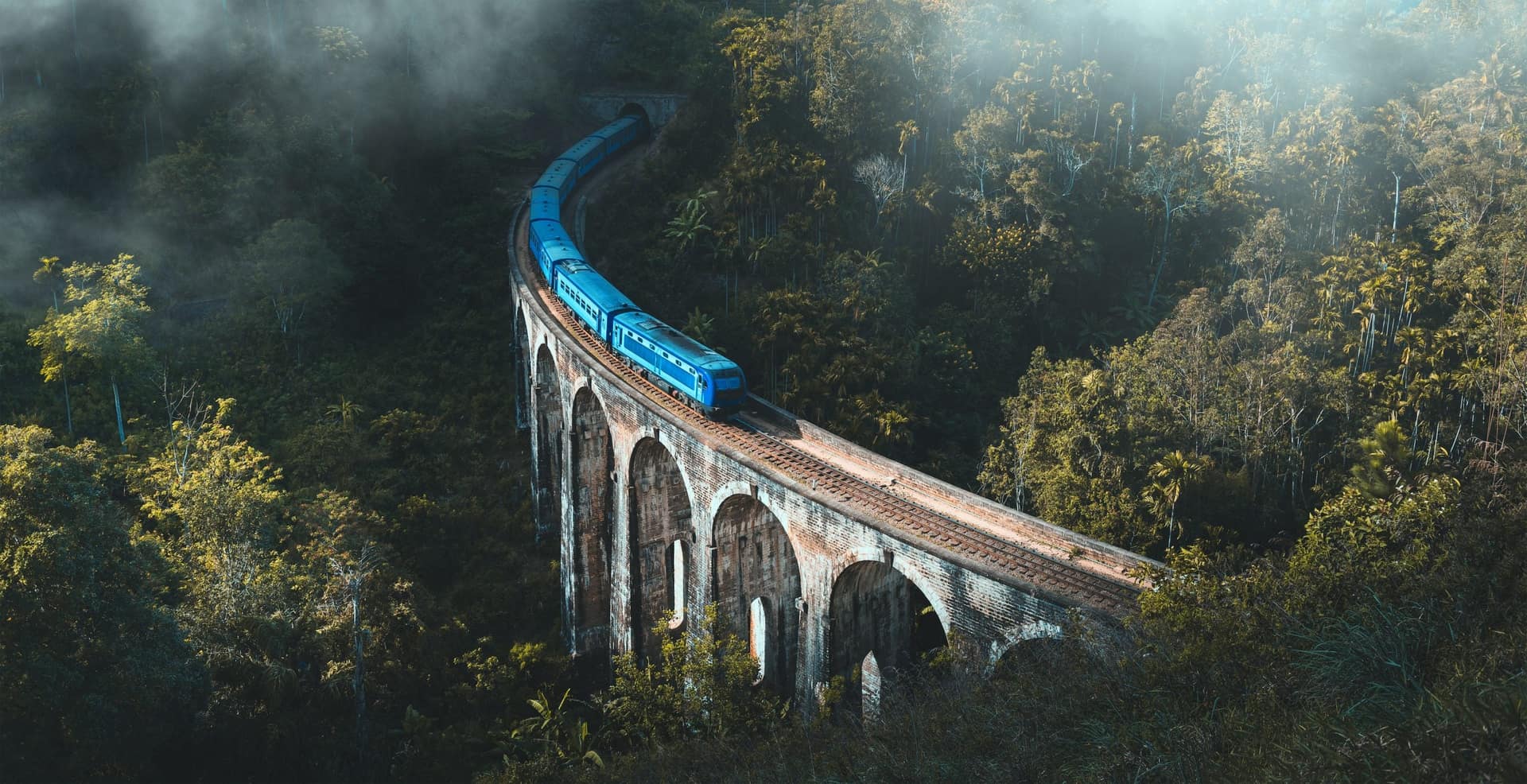
- →Day 8: train to Ella, the most scenic stretch of the network.
- →Days 9 to 10: Ella, by bus to a safari-adjacent town, or a shared tour for a single safari day.
- →Days 11 to 13: south coast by train (Mirissa or Unawatuna), to close the trip.
Where the network is weak, honestly
The Cultural Triangle and the safari parks are genuinely difficult to reach comfortably by public transport, with infrequent, slow bus connections that can consume the better part of a day for what would be a two-hour drive. Most public-transport itineraries accept this and book a single private driver or shared tour specifically for this stretch, rather than attempting the full trip car-free.
This hybrid approach, mostly independent with one or two booked exceptions, is more realistic than a purist public-transport-only trip and is how most Canadian travellers who otherwise prefer independent travel actually structure their route.
Booking trains and buses from Canada
Reserved second-class train tickets for the Kandy to Ella route should be booked a few weeks ahead online; unreserved third class on this specific route can mean standing for a significant part of the journey during peak season. Buses generally can't be booked from Canada in advance and are instead caught in person at the relevant station or stop, with fares paid on board.
Building 2 to 4 extra days into a public-transport itinerary compared with an equivalent driver-guided route is a sensible buffer, since waiting for connections, slower overall travel times and the occasional need to adjust plans around real-time schedules all add up over a multi-region trip.
Planning your public transport itinerary
Trains for the Colombo-Kandy-Ella-coast corridor, buses for shorter well-travelled hops, and a single booked driver or shared tour for the Cultural Triangle and safari parks specifically is the framework that makes a public-transport-focused Sri Lanka trip realistic rather than frustrating.
Lankan Stays & Trails can arrange a single driver-guide day or leg to fill the gaps in a mostly independent, public-transport-based itinerary for Canadian travellers.
Frequently asked questions
Can you see Sri Lanka entirely by public transport?
Mostly, but not entirely comfortably. The Cultural Triangle and main safari parks are poorly served by trains and buses, so most public-transport itineraries book a single private driver or shared tour for that specific stretch.
How many days should a Sri Lanka public transport itinerary be?
12 to 16 days is typical, generally 2 to 4 days longer than an equivalent driver-guided itinerary, since public transport adds travel time and waiting between connections throughout the trip.
Do you need to book Sri Lanka's trains in advance?
For the Kandy to Ella route specifically, yes, ideally a few weeks ahead online for a reserved second-class seat, since unreserved seating can mean standing for much of the journey in peak season.
Can you book Sri Lanka's buses from Canada?
No, generally. Buses are caught in person at the relevant station or stop, with fares paid on board, rather than booked in advance from abroad.
Is Sri Lanka's Cultural Triangle accessible by public transport?
Poorly. Bus connections to Sigiriya and Polonnaruwa are infrequent and slow, often consuming the better part of a day for what would be a two-hour drive, so most itineraries book a driver for this specific region.
Is it worth travelling Sri Lanka without a private driver?
Yes, for travellers comfortable with slower travel and some added planning, particularly along the well-served Colombo-Kandy-Ella-coast corridor. A hybrid approach with one booked driver leg for the Cultural Triangle is the realistic middle ground most travellers use.