
Quick answer
For Turkish travellers, getting around in Sri Lanka means daily movement between regions by private driver-guide, tuk-tuk for short local hops, and the scenic Kandy to Ella train through hill country. Getting around in the Maldives means one transfer, typically a speedboat or seaplane from Malé lasting roughly thirty minutes to two hours, straight to a single resort island, after which most travellers do not move again unless island-hopping to a second resort. Sri Lanka is a touring destination by design; the Maldives is a single-arrival destination by design.
Key takeaways
- A private driver-guide is the standard way to tour Sri Lanka, typically covering the whole trip from airport pickup to daily transfers between regions like Kandy, Ella, and the south coast.
- The Kandy to Ella train, roughly six to seven hours through tea estates and hill-country scenery, is a genuine tourist highlight rather than just functional transport.
- Maldives resort transfers from Malé are typically by speedboat, generally under an hour for closer atolls, or seaplane, generally thirty minutes to an hour, for resorts further out.
- Most Maldives holidays involve only two transfers total, arrival and departure, since the entire stay happens on one resort island.
- Tuk-tuks in Sri Lanka are useful for short local journeys within a town, generally with the fare agreed before the ride rather than metered.
The short answer on getting around
Getting around Sri Lanka and getting around the Maldives are almost opposite activities. Sri Lanka is a single island moved through by road (and occasionally rail), with transport happening most days of the trip as the itinerary shifts between regions. The Maldives is a nation of scattered coral islands where the only real journey is the single transfer from Malé to a resort, after which movement largely stops.
This shapes what each trip feels like day to day. Sri Lanka involves a driver-guide, changing scenery, and a itinerary that unfolds gradually. The Maldives involves one transfer, then a resort island that does not change for the rest of the stay.
- →Sri Lanka: daily movement by private driver-guide, tuk-tuk locally, train through hill country.
- →Maldives: one speedboat or seaplane transfer from Malé, then minimal further movement.
- →Sri Lanka's transport is part of the sightseeing; the Maldives' transport is a means to an end.
- →Sri Lanka needs a multi-day route plan; the Maldives needs only an arrival and departure transfer.
Touring Sri Lanka by private driver-guide
Sri Lanka's most common way for tourists to get around is a private driver-guide, arranged for the length of the trip and covering everything from the initial airport pickup to daily transfers between regions such as the Cultural Triangle, hill country, and the south coast. This is generally the most comfortable and flexible way to tour the country, since the pace and stops are set by the traveller rather than a fixed group schedule.
Distances between Sri Lanka's main regions are moderate rather than huge; Colombo to Kandy is a few hours, Kandy to the hill country another few, and onward to the south coast a longer half-day drive, so a driver-guided itinerary generally spends two to four hours on the road on transfer days, with sightseeing stops built in along the way.
- →Private driver-guide: covers airport pickup, daily transfers, and sightseeing stops throughout the trip.
- →Journeys between main regions generally range from a couple of hours to half a day.
- →Pace and stops are flexible, set by the traveller rather than a fixed group itinerary.
- →A knowledgeable driver-guide also adds local context that self-driving would miss entirely.
The hill-country train and local tuk-tuks
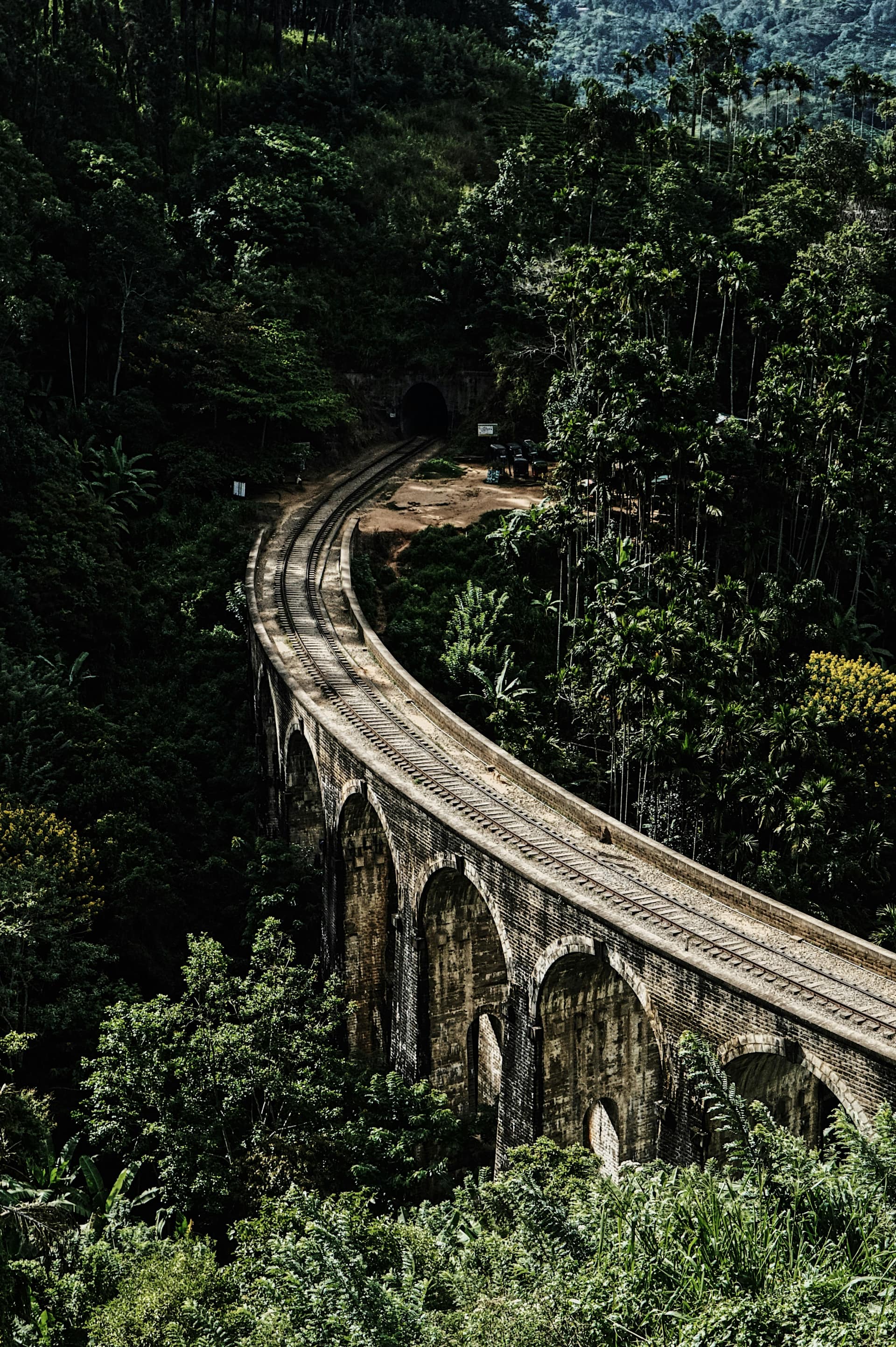
The train journey between Kandy and Ella, roughly six to seven hours (with shorter sections also possible, such as Nanu Oya to Ella), is one of Sri Lanka's most photographed experiences, climbing through terraced tea estates, misty hill-country scenery, and small mountain stations. Most driver-guided itineraries build this in as a highlight rather than pure transport, often with the car meeting travellers at the other end.
Tuk-tuks fill in the shorter, local gaps, a quick trip within a town, to a nearby restaurant, or around a beach area, and are generally cheap, though the fare should be agreed before the ride rather than assumed to be metered. Ride-hailing apps operating in Sri Lanka's larger cities can also arrange tuk-tuks or cars at a fixed, upfront price.
The single transfer to a Maldives resort
Getting to a Maldives resort involves exactly one significant journey after landing at Malé: a transfer by speedboat or seaplane, arranged by the resort, to the specific island. Speedboat transfers generally suit resorts on nearer atolls and take under an hour; seaplane transfers, used for resorts further from Malé, generally take thirty minutes to an hour and offer aerial views over the atolls as a memorable part of the journey itself.
Seaplanes in the Maldives generally operate daylight hours only and do not fly at night, which is worth factoring into flight arrival times when booking, since a late-arriving international flight can mean an overnight stop near Malé before the seaplane transfer the next morning.
- →Speedboat transfer: generally under an hour, suited to nearer atolls.
- →Seaplane transfer: generally thirty minutes to an hour, used for resorts further from Malé.
- →Seaplanes generally operate daylight hours only, affecting late-arrival flight timing.
- →The transfer is arranged directly by the resort as part of the booking.
Movement once at a Maldives resort
Once on the resort island itself, movement essentially stops in the way it continues throughout a Sri Lanka trip. Most Maldives resorts are small enough to walk across in minutes, and the entire stay, meals, activities, the beach, happens within that one island's footprint.
Travellers wanting to see more than one resort or atoll during a trip can arrange inter-resort transfers, generally another speedboat or seaplane leg, but this is the exception rather than the norm; most Maldives holidays involve just two transfers total across the whole trip, arrival and departure.
What this means for planning your trip
The getting-around difference is really a difference in what each trip asks of the traveller. Sri Lanka asks for comfort with daily movement and a multi-day route, in exchange for varied scenery and a driver-guide who becomes a genuine part of the trip. The Maldives asks for very little movement planning beyond the single transfer, in exchange for a fixed, unchanging setting for the rest of the stay.
Lankan Stays & Trails builds private, driver-guided Sri Lanka itineraries for Turkish travellers, and getting the route order and daily driving distances right, so no single day feels rushed, is one of the more practical parts of planning a Sri Lanka trip well.
Frequently asked questions
How do tourists get around Sri Lanka?
Most tourists use a private driver-guide for the length of the trip, covering airport pickup and daily transfers between regions. Tuk-tuks handle short local journeys, and the Kandy to Ella train is a popular scenic journey through hill country, generally used as a highlight rather than routine transport.
How long is the transfer from Malé to a Maldives resort?
It varies by resort. Speedboat transfers to nearer atolls generally take under an hour, while seaplane transfers to more distant resorts generally take thirty minutes to an hour, plus check-in and boarding time on both ends.
Do you need a car in Sri Lanka?
Most visitors do not self-drive; a private driver-guide is the standard and generally more comfortable way to tour Sri Lanka, handling navigation, local roads, and daily transfers between regions without the traveller needing to drive unfamiliar routes.
Do Maldives seaplanes fly at night?
Generally no. Maldives seaplanes typically operate daylight hours only, which is worth checking when booking international flights, since a late arrival into Malé can mean an overnight stop before the seaplane transfer the next morning.
Is the Kandy to Ella train worth doing?
Most visitors find it worthwhile. The roughly six to seven hour journey climbs through tea estates and hill-country scenery and is considered one of Sri Lanka's most scenic train rides, often included as a highlight within a driver-guided itinerary.
Do you move between resorts in the Maldives?
Most travellers do not; a typical Maldives holiday involves just two transfers total, arrival and departure, spent entirely on one resort island. Moving between resorts or atolls is possible via a further speedboat or seaplane transfer, but it is the exception rather than the norm.
Are tuk-tuk fares fixed in Sri Lanka?
Not usually metered; fares are generally agreed before the ride starts. Ride-hailing apps operating in Sri Lanka's larger cities offer tuk-tuks and cars at a fixed, upfront price, which can be a more predictable alternative to negotiating directly.