
Quick answer
A Sri Lanka waterfalls itinerary for Canadian travellers typically runs 7 to 9 days through the hill country, taking in Bambarakanda Falls, the country's tallest at roughly 263 metres, alongside St Clair's and Devon Falls near Talawakele and Ravana Falls near Ella. The wetter months, roughly October to January in the hill country, generally show the falls at their fullest, while the December to March dry season elsewhere on the island still allows reasonably strong flow at most of these sites given the hills' separate rainfall pattern.
Key takeaways
- Bambarakanda Falls, at roughly 263 metres, is Sri Lanka's tallest waterfall, reached via a short hike from a village near Haputale.
- St Clair's and Devon Falls sit close together near Talawakele, both visible from the road with minimal walking required.
- Ravana Falls, near Ella, is one of the most accessible falls on the island, a short stop rather than a hike.
- The hill country's rainfall pattern differs from the coast, so falls here can carry reasonable flow even during the coastal December to March dry season, though October to January is generally the fullest window.
- Swimming is possible at some falls but conditions vary with recent rainfall and should be assessed locally rather than assumed safe based on appearance alone.
What a Sri Lanka waterfalls itinerary looks like
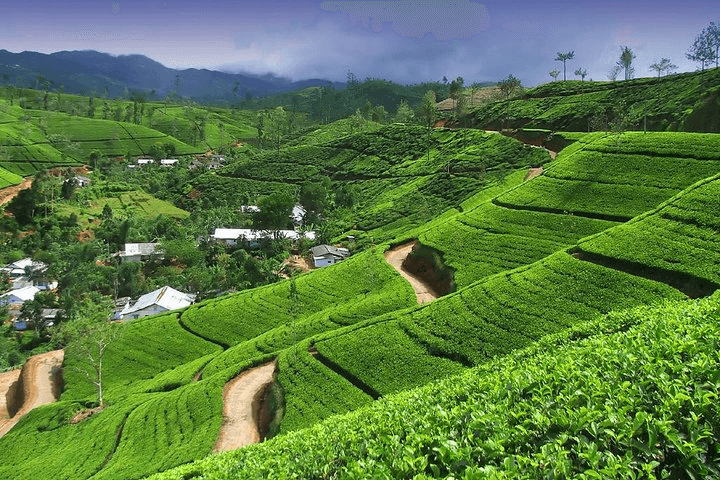
A waterfalls-focused itinerary threads through the hill country's tea-growing towns, Haputale, Talawakele and Ella among them, visiting several named falls of genuinely different character: some requiring a short hike, others visible directly from the road. This makes it a natural pairing with a broader hill-country or tea-trail trip rather than a standalone destination.
Distances between individual falls are often short on a map but slow in practice given the hill country's winding roads, so a realistic pace covers two or three falls per day rather than attempting a longer list in a single push.
A sample 8-day route
This sample moves through the hill country from west to east, ending near Ella.
- →Days 1 to 2: Nuwara Eliya area, for a tea-estate visit and acclimatising to the cooler climate.
- →Days 3 to 4: Talawakele, for St Clair's and Devon Falls, both visible with minimal walking.
- →Days 5 to 6: Haputale, for Bambarakanda Falls, the tallest in the country, reached via a short hike from a nearby village.
- →Days 7 to 8: Ella, for Ravana Falls and the wider hill-country hikes at Little Adam's Peak and Ella Rock.
When the falls actually carry water
Sri Lanka's hill country has a rainfall pattern distinct from the coast, so falls here can carry a reasonable flow even during the December to March dry season that governs the west and south coasts. October to January is generally considered the fullest window specifically for the hill country's waterfalls, worth knowing separately from the standard coastal season advice.
Water levels do shift meaningfully with recent rainfall regardless of the general seasonal pattern, so a specific fall's flow on any given day can't be fully predicted from the season alone; a local guide or driver will usually have a current sense of conditions.
Practicalities for a waterfalls trip
Swimming is possible at some falls, but currents, submerged rocks and slippery surfaces vary considerably and should be assessed locally rather than assumed safe purely from how a fall looks on arrival; following local guidance on where and whether to swim is the sensible approach. Sturdy, closed footwear is worth packing for any of the short hikes involved, since paths can be uneven and slippery even in dry conditions.
Bambarakanda Falls' hike, while short, gains some elevation on a rough path; it is manageable for most fitness levels but not paved or wheelchair accessible. St Clair's and Devon Falls are the most accessible of the four for travellers with mobility considerations, viewable largely from the road.
Planning your waterfalls itinerary
Bambarakanda, St Clair's, Devon and Ravana Falls, threaded through the hill country from west to east and timed for the October to January wet window where possible, is the framework for a genuinely rewarding waterfalls-focused trip. It combines naturally with a wider tea-trail or hiking itinerary.
Lankan Stays & Trails builds private, driver-guided hill-country itineraries for Canadian travellers, routing between the island's best-known waterfalls alongside tea estates and hiking trails.
Frequently asked questions
How many days should a Sri Lanka waterfalls itinerary be?
7 to 9 days is typical, threading through the hill country to take in Bambarakanda, St Clair's, Devon and Ravana Falls alongside tea estates and hiking trails in the same region.
What is Sri Lanka's tallest waterfall?
Bambarakanda Falls, at roughly 263 metres, near Haputale in the hill country, reached via a short hike from a nearby village.
When is the best time to see Sri Lanka's waterfalls?
Roughly October to January is generally the fullest window for hill-country waterfalls specifically, a different pattern from the coastal December to March dry season, since the hills have their own separate rainfall cycle.
Can you swim at Sri Lanka's waterfalls?
Possible at some falls, but currents, submerged rocks and slippery surfaces vary considerably and should be assessed locally rather than assumed safe from appearance alone. Follow local guidance on where and whether to swim.
Are St Clair's and Devon Falls easy to visit?
Yes, both are visible largely from the road near Talawakele with minimal walking required, making them the most accessible of the hill country's well-known falls.
Is Ravana Falls worth visiting near Ella?
Yes, as one of the most accessible falls on the island, a short roadside stop rather than a hike, and easy to combine with Ella's other hiking and sightseeing.