
Quick answer
Weligama on the south coast, from November to April, is the best place for children to learn to surf in Sri Lanka, with a long sandy beach break and many surf schools. On the east coast, from May to September, Arugam Bay's gentler spots such as Baby Point suit older children. Most schools teach children from around six to eight years who swim confidently, in short sessions with soft-top boards, one-to-one or small groups, and a rash vest is essential for sun protection.
Key takeaways
- Weligama is the top beach for children's lessons, November to April.
- Arugam Bay's gentler spots suit older children, May to September.
- Most schools take children from around six to eight who swim confidently.
- Short sessions, soft-top boards and small groups work best.
- Rash vests and reef-safe sun cream are essential.
Why Sri Lanka works for kids
The water is warm year-round, so there are no wetsuits and children stay in longer without getting cold. Several beach breaks have soft, rolling waves over sand, ideal for first lessons.
Surf schools are used to families, and many instructors are patient, playful and good with children. Lessons are inexpensive compared with Europe or Australia, so private sessions are affordable.
Surfing also fits well with other family activities: whale watching, safaris, turtle hatcheries and beach time.
Best beaches for children
Weligama is the standout. Its long, sandy bay has gentle, consistent waves in season, many surf schools and a beach where parents can watch. Hikkaduwa's beach break also works on smaller days.
On the east coast, Arugam Bay is in season from May to September. Its main point is for experienced surfers, but gentler spots such as Baby Point suit older children with a little experience.
Avoid reef breaks and beaches with strong shore dumps for children. Ask the surf school to choose the spot each day.
- →Weligama: best for first lessons, November to April.
- →Hikkaduwa beach break on small days.
- →Arugam Bay's gentler spots for older children, May to September.
Ages and readiness
Most surf schools teach children from around six to eight years old, sometimes younger in one-to-one sessions. The key is confidence in the water rather than age: children should be able to swim comfortably and not panic when a wave knocks them over.
Younger children usually start by lying on the board and riding whitewater, then pop up when they are ready. Teenagers often progress quickly and can join adult group lessons.
Let children set the pace. A fun first session matters more than standing up.
- →Usually from six to eight years.
- →Confident swimming matters most.
- →Teenagers can join adult groups.
What lessons include
A typical children's lesson lasts one to one and a half hours, sometimes shorter for little ones. It starts with a beach briefing on safety and the pop-up, then moves into the whitewater with an instructor pushing the board into waves.
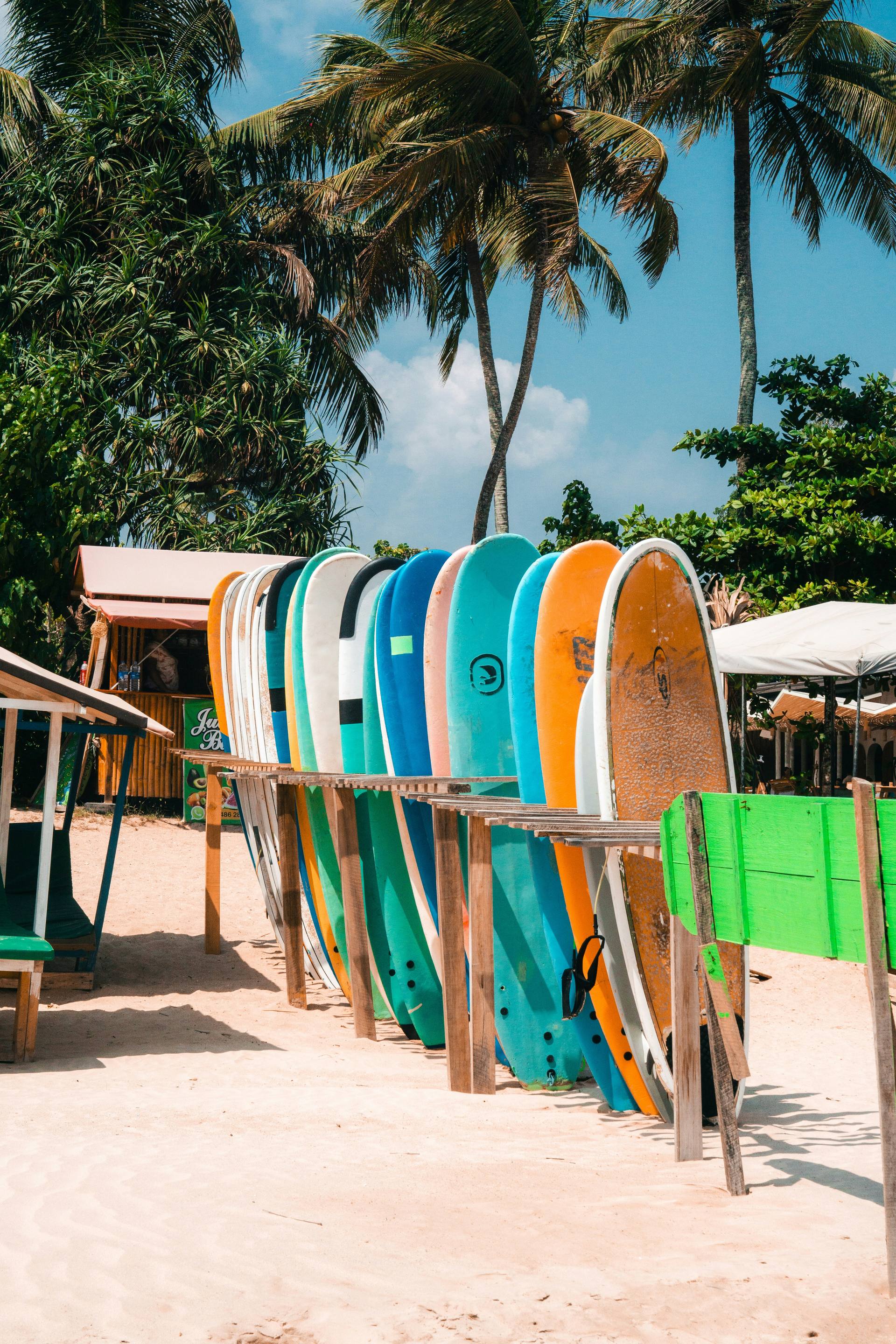
Soft-top boards, rash vests and sometimes helmets for small children are usually provided. One-to-one or one instructor to two children is ideal for younger learners.
Book a few lessons over several days rather than one long session. Children progress faster with repetition and rest.
- →One to one and a half hours per lesson.
- →Soft-top boards and rash vests provided.
- →One-to-one or one-to-two for young children.
Safety and sun
Choose a reputable school with instructors trained in water safety and first aid. Watch the first lesson, and make sure instructors stay close to children in the water.
Sun is the biggest risk. Lessons in the early morning or late afternoon avoid the strongest sun. Rash vests, hats between sessions and reef-safe sun cream reapplied often are essential.
Keep children hydrated, and avoid surfing out of season on any coast, when currents and waves are dangerous.
- →Reputable school with trained instructors.
- →Early morning or late afternoon lessons.
- →Rash vest and reef-safe sun cream.
Planning a family surf stay
Base yourselves in Weligama or nearby Mirissa for four or five nights, with lessons most mornings and other activities in the afternoon. On the east coast in summer, Arugam Bay works for families with older children.
Lankan Stays & Trails can arrange family-friendly accommodation near the beach and book lessons with schools experienced in teaching children.
Mix surf mornings with gentler afternoons: a turtle hatchery, a boat on Koggala lake, rock pools at low tide or simply a long lunch in the shade. Children tire quickly in the sun, and a calm afternoon keeps everyone keen for the next morning's lesson.
Frequently asked questions
What age can children start surf lessons in Sri Lanka?
Most surf schools teach children from around six to eight years old, and some take younger children in one-to-one sessions. More important than age is confidence in the water: children should swim comfortably and not panic when a wave knocks them over. Teenagers progress quickly.
Where is the best place for kids to learn to surf in Sri Lanka?
Weligama on the south coast is the best place, with a long, sandy bay, gentle waves and many surf schools from November to April. From May to September, older children with some experience can learn at Arugam Bay's gentler spots on the east coast.
How long are children's surf lessons?
Usually one to one and a half hours, sometimes shorter for young children. Several shorter lessons over a few days work better than one long session, because children progress with repetition and rest. Early morning lessons avoid the strongest sun and often bring the cleanest waves.
Are surf lessons safe for children in Sri Lanka?
With a reputable school, in season, on a gentle sandy beach, they are generally safe. Choose instructors trained in water safety, watch the first lesson and make sure instructors stay close. Avoid reef breaks, dumping shore breaks and any coast that is out of season.
What should children wear for surf lessons?
A rash vest or long-sleeved swim top is essential for sun protection, along with swimwear and reef-safe sun cream on any exposed skin. Schools usually provide rash vests and soft-top boards. Bring hats and water for breaks, and a towel and dry clothes for afterwards.
Can parents and children surf together in Sri Lanka?
Yes. Many schools offer family lessons, with one instructor for each child and an adult group nearby, or private family sessions. Weligama's wide beach makes it easy for parents to learn at the same time as their children while staying close.
Do surf schools in Sri Lanka provide equipment for children?
Most do. Schools usually provide soft-top boards sized for children, leashes and rash vests, and some offer small helmets for young learners. Bring your own reef-safe sun cream, hats, water and a towel. Check what is included when booking, especially for one-to-one lessons.