
Quick answer
The Kandy to Ella train is Sri Lanka's most famous rail journey for international visitors, running roughly six to seven hours through tea country, and reserved seats in the observation car or first and second class sell out weeks in advance given heavy demand from international tourists, so book online or through an agent as early as possible. Unreserved third class is available on the day but means standing or sitting in an open doorway for photos, which suits some travellers and not others. Compared with Amtrak, expect slower average speeds, more basic carriages, and a far more scenic, unhurried journey through hill country.
Key takeaways
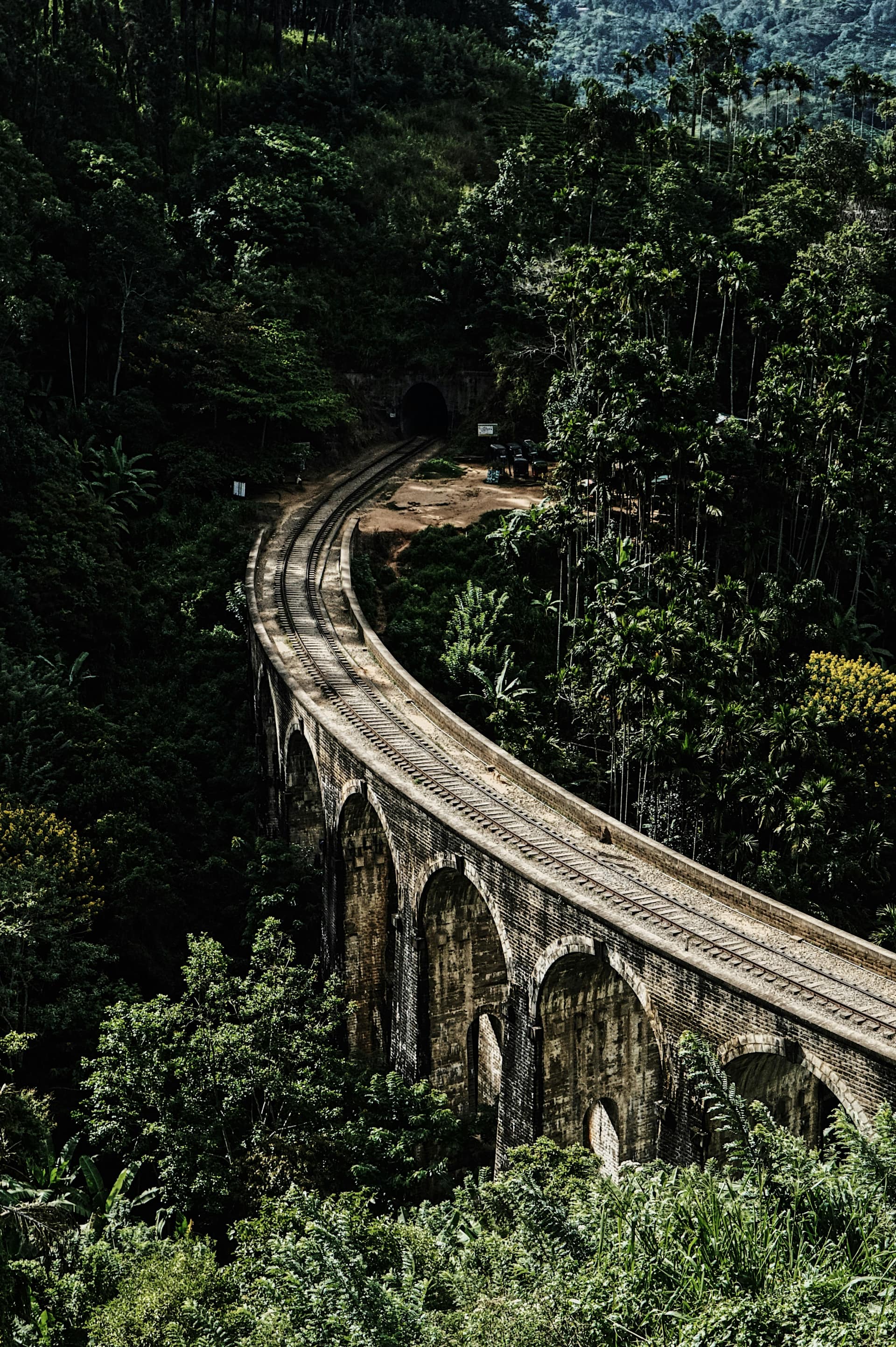
- The Kandy to Ella train takes roughly six to seven hours and passes through tea estates, misty hills and the Nine Arch Bridge near Ella.
- Reserved seats, especially in the observation car, sell out weeks in advance due to strong demand from international tourists; book online or through an agent early.
- Unreserved third class tickets are bought on the day and don't guarantee a seat, though it's a popular way to stand in an open doorway for photos.
- Compared with Amtrak, Sri Lankan trains run slower with more basic carriages, but the scenery through the hill country is considered among the world's great rail journeys.
- Nanu Oya, Ella and Kandy are key stations on this route, with Nanu Oya serving as the stop for Nuwara Eliya.
The Kandy to Ella route
The Kandy to Ella train runs roughly six to seven hours, climbing through tea estates, pine forest and misty hill-country ridgelines before descending toward Ella, with the Nine Arch Bridge visible not long before the final stop. Along the way, the line passes Nanu Oya, the station for Nuwara Eliya, and Haputale, another popular hill-country base.
For an American traveller more used to flying between cities or driving interstates, this is a genuinely different kind of journey: the destination matters less than the six or seven hours spent watching the scenery pass at a walking-pace crawl through some of Sri Lanka's most photographed countryside.
Booking reserved seats and the observation car
Reserved seating, and particularly the observation car with its large windows and forward-facing view, is in serious demand from international tourists, and seats commonly sell out weeks ahead of travel dates, especially in peak season. Booking as early as your itinerary allows, through the official online booking system or a travel agent, gives the best chance at a reserved seat.
First and second class reserved carriages offer a guaranteed seat without the observation car's premium and demand, and are a reasonable middle option if the observation car is already sold out by the time you book.
- →Observation car: highest demand, sells out weeks ahead in peak season, book as early as possible.
- →First and second class reserved: guaranteed seat, less demand pressure than the observation car.
- →Booking window and system details change periodically; confirm the current process before relying on older information.
The unreserved third class option
Unreserved third class tickets are bought on the day of travel and don't guarantee a seat, which means standing for at least part of the journey during busier periods. This is also the class most associated with the now-iconic photo of travellers sitting in the open doorway, feet dangling, watching the scenery pass.
This suits travellers comfortable with a more improvised, crowded experience and less comfortable seating, but isn't the ideal choice for anyone travelling with limited mobility, small children, or heavy luggage for the full six to seven hour route.
How it compares to Amtrak
Americans familiar with Amtrak should expect a slower, more basic version of that experience rather than a direct equivalent. Average speeds are noticeably lower given the terrain and track age, carriages are simpler with fewer amenities, and punctuality runs looser than a typical US schedule.
What the Sri Lankan route delivers instead is scenery that Amtrak's more utilitarian corridors rarely match: near-continuous tea country views, waterfalls, and a sense of travelling through, rather than past, the landscape. Most American travellers find the trade-off well worth it for this specific route.
What to expect onboard
Onboard, expect basic carriages, open windows in most classes, and vendors walking through selling snacks and drinks at various stops along the route. Toilets are basic and not always well stocked, so carrying tissues and hand sanitiser is a sensible precaution.
Temperatures shift noticeably as the train climbs, so a light layer for the cooler hill-country air is worth having in a daypack even if the day started warm at lower elevation.
Practical tips for booking and the day of travel
Booking well ahead, ideally as soon as your travel dates are confirmed, is the single most useful thing an American traveller can do for this route, given how far in advance reserved and observation car seats sell out. If travelling with a driver-guide, most operators, including Lankan Stays & Trails, can arrange the reserved tickets as part of the itinerary rather than leaving it to you to navigate the booking system alone.
Arrive at the station well before departure, since Sri Lankan trains can depart earlier than the printed time on rare occasions, and confirm current schedules close to your travel date rather than relying on an old timetable.
Frequently asked questions
How do I book the Kandy to Ella train?
Reserved seats, including the observation car, can be booked online through Sri Lanka Railways' official system or through a travel agent, ideally weeks in advance given strong demand from international tourists. Unreserved third class tickets are bought on the day at the station.
How long does the Kandy to Ella train take?
The journey takes roughly six to seven hours, depending on the specific service and any delays along the route. Confirm the current timetable close to your travel date, since schedules can shift.
What is the observation car on the Sri Lanka train?
The observation car is a carriage with large windows and forward-facing seats offering an especially good view of the hill-country scenery. It's in high demand from international tourists and commonly sells out weeks ahead of travel dates.
Is the Sri Lanka train like Amtrak?
Only loosely. Expect slower speeds, more basic carriages and looser punctuality than a typical Amtrak service, but scenery through the hill country that's considered among the more remarkable rail journeys anywhere, which is the main reason to take it.
Should I book first, second or third class?
First or second class reserved seating guarantees a seat and suits most American travellers; third class is unreserved and often standing-room, popular for the open-doorway photo but less comfortable for the full six to seven hour route.
Do I need to book the train in advance?
Yes, if you want a reserved seat or the observation car, given how far ahead these sell out, especially in peak season. Unreserved third class tickets are available on the day, but without a guaranteed seat.
What is the best seat on the Kandy to Ella train?
The observation car offers the best forward-facing views, though seats there sell out fastest. A window seat in first or second class reserved seating is a reliable second choice with strong views for most of the journey.