
Quick answer
A tea factory visit with kids in Sri Lanka takes 30 to 45 minutes and suits children from about four. A guide follows the leaf through withering, rolling, fermenting, drying and sorting, then serves tea in a tasting room. Factories line the road between Kandy and Nuwara Eliya, around Ramboda and Labookellie, and around Ella. Go in the morning, when the machines are running, and ask whether children can try plucking leaves with the pickers.
Key takeaways
- Most hill-country tea factory tours last 30 to 45 minutes and are free or cost a few US dollars.
- Tea factories usually process leaf from early morning; machinery is often idle by mid-afternoon and on Sundays or poya days.
- Sri Lanka's first commercial tea was planted in 1867 at Loolecondera estate, south-east of Kandy.
- A tea plucker typically gathers around 16 to 20 kilograms of leaf in a day, picking two leaves and a bud at a time.
- Rolling and drying machines are loud and have moving parts, so children must stay on the marked walkways.
What happens on the tour
A tea factory visit with kids follows the leaf in order. Sacks of green leaf arrive from the fields and are spread in long troughs upstairs, where fans wither them overnight. Downstairs, rolling machines twist the leaf, it darkens on tables as it oxidises, and ovens dry it into the black tea of the packet.
The final rooms sort tea by size through vibrating sieves, from large leaf to the dust used in tea bags. Children enjoy that the biggest pieces are not the strongest. The tour ends in a tasting room with a view over the estate.
What children like and what bores them
Children like the machines. Most hill-country factories still use iron rollers and belt drives installed many decades ago, which shudder and clank. They like the smell, the heat of the drying room, and being handed a pinch of leaf at each stage to compare.
The talk bores them if it runs long. Ask the guide at the start for the short version and tell them the children's ages. Guides are usually glad to adapt, and a child with a question about how many cups one bush makes gets a better tour than a silent adult.
- →Best ages: four to twelve.
- →Toddlers: carry them; the floors are busy and the noise is high.
- →Teenagers: the tasting and the estate history tend to interest them more than the machines.
Plucking tea with the pickers
Plucking is the part of a tea estate visit that children remember. Some estates run a short experience in which visitors wear a basket on a head strap and pick two leaves and a bud alongside a plucker for 15 to 20 minutes. It is harder than it looks.
The experience also opens a conversation worth having. Tea pluckers are mostly Tamil women whose families were brought from South India in the nineteenth century, and their work is hard and modestly paid. Tip the plucker who teaches your children directly, and ask before taking photographs.
- →Wear closed shoes; slopes are steep and can hold leeches after rain.
- →Go before 11am, when pluckers are in the nearer fields.
- →Offer a tip in person at the end.
Noise, machines and hot surfaces
Safety inside a tea factory depends on staying with the guide. Walkways pass close to rollers, conveyor belts and ovens, and guards are not always fitted to modern standards. Hold small children's hands throughout and keep loose scarves and long hair away from machinery.
Noise is high in the rolling room. Sensitive children may want ear defenders or a hand over the ears. Floors can be slippery with leaf, and stairs to the withering loft are steep. None of this is a reason to stay away, only to stay close.
Where and when to go
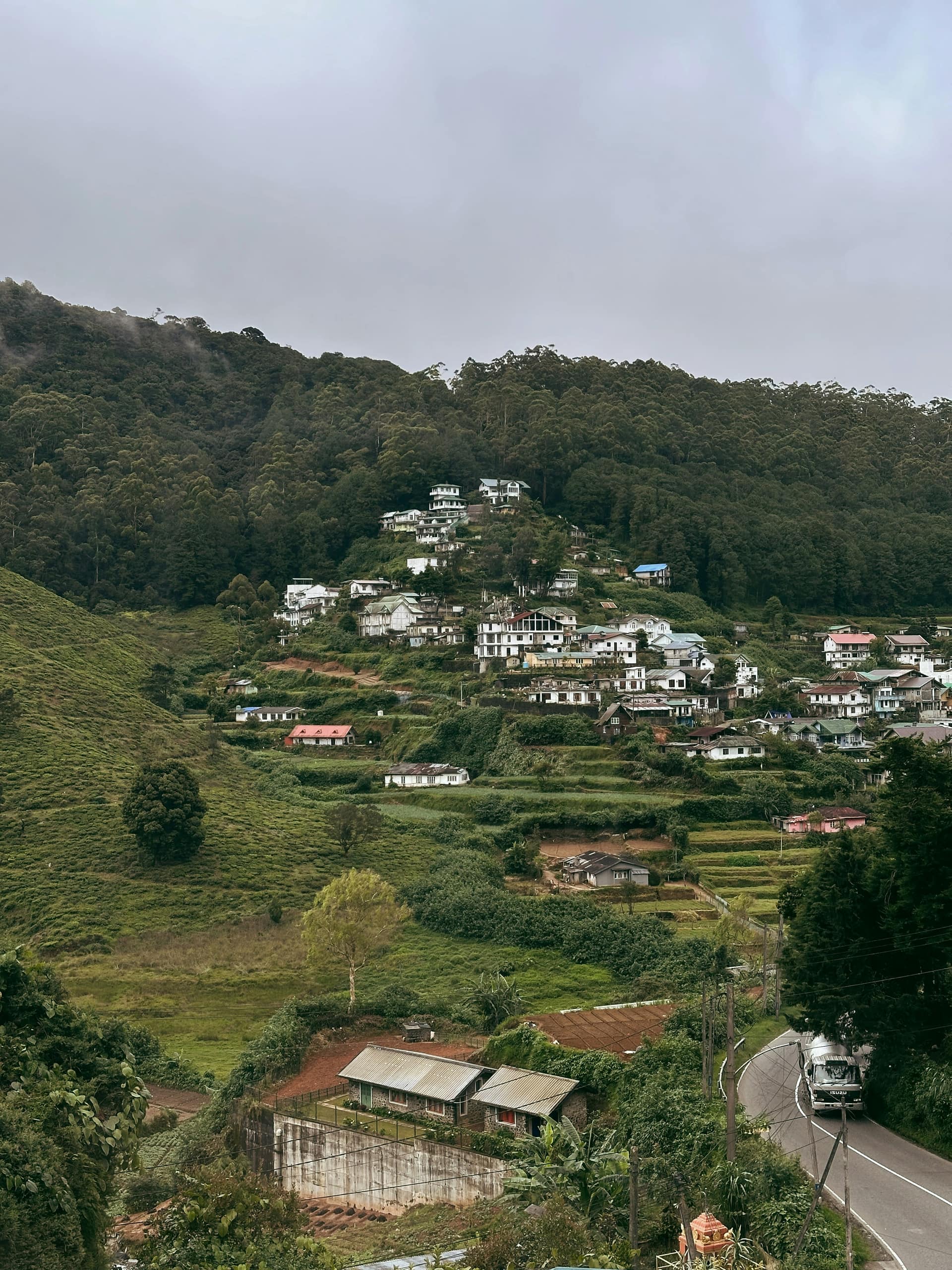
Tea factories with visitor tours are found along the A5 road from Kandy to Nuwara Eliya, especially around Ramboda and Labookellie, and in the hills around Ella, Haputale and Bandarawela. All are at 1,000 to 1,900 metres, so the air is cool and a jumper is useful.
Morning is the time to go. Leaf plucked the previous day is processed from early in the morning, and by 2 or 3pm many factories are being cleaned. Factories commonly close on Sundays and on poya days. Tasting rooms and shops stay open regardless.
- →Kandy to Nuwara Eliya: the classic stop on the drive, about two hours from Kandy.
- →Ella: several estates within 20 to 30 minutes of town.
- →Near Kandy: lower-altitude estates within half an hour.
Fitting it into the family route
A tea factory fits day five of the family 10-day route, on the drive from Kandy to Nanu Oya for the train to Ella. Leaving Kandy at 8am allows a 40-minute tour at about 10am and still reaches the station for an early-afternoon departure.
One factory is enough for any family. Lankan Stays & Trails chooses estates where the machinery is running on the day and where plucking with the pickers can be arranged, and avoids those that are mainly shops.
Frequently asked questions
Is a tea factory tour interesting for children?
A tea factory tour is interesting for most children from about four, because it is short and full of noisy machines. It works best in the morning, when the factory is operating, and with a guide who knows to keep the explanation brief.
Can kids pick tea in Sri Lanka?
Kids can pick tea at several hill-country estates that offer a plucking experience. Children are given a basket and shown how to take two leaves and a bud. Sessions last 15 to 20 minutes and should be arranged ahead, with a tip for the plucker.
How long does a tea factory visit take?
A tea factory visit takes 30 to 45 minutes for the tour, plus 15 to 20 minutes for tasting. With a plucking session and a stop for cake, allow about an hour and a half in total.
Do you have to pay to visit a tea factory in Sri Lanka?
Many tea factories in Sri Lanka offer free tours, hoping visitors will buy tea afterwards. Others charge a few US dollars a person. There is no obligation to buy. A small tip for the guide is appreciated.
Is tea suitable for children to taste?
Black tea contains caffeine, so many parents let children take only a sip at the tasting. Factories usually sell milk, juice or biscuits as well. The estate's chocolate cake is often the highlight of the visit for younger tasters.
Which is better for families, a tea factory near Kandy or near Ella?
Factories between Kandy and Nuwara Eliya are most convenient, since they break the drive on the day of the train. Estates near Ella are quieter and easier to combine with a plucking session. Either works; one visit is enough.