
Quick answer
A tea factory visit near Kandy takes about an hour and is usually free, with a tasting and a shop at the end. Working factories open to visitors lie along the Colombo road around Pilimathalawa and Kadugannawa, 20 to 40 minutes west of the city, and on estates to the south and east. Go in the morning on a weekday, when leaf is being rolled and fired. Kandy teas are mid-grown, from roughly 600 to 1,200 metres, and are darker and stronger than high-grown Nuwara Eliya teas.
Key takeaways
- Kandy teas are classed as mid-grown, from estates between roughly 600 and 1,200 metres above sea level.
- Most tea factories near Kandy offer free guided visits of 30 to 45 minutes, followed by a tasting.
- Factories usually do not process leaf on Sunday afternoons, Mondays or the day after a public holiday, because no leaf was plucked the day before.
- Loolecondera, where commercial tea growing in Ceylon began in 1867, lies about 35 kilometres south-east of Kandy.
- It takes roughly four to five kilograms of fresh leaf to make one kilogram of black tea.
Where the tea factories near Kandy are
Tea factories near Kandy fall into three groups. The most convenient are on or just off the Colombo road to the west, including the long-established factories at Giragama and Kadugannawa. They are used to visitors and can be combined with the three temples loop or Pinnawala.
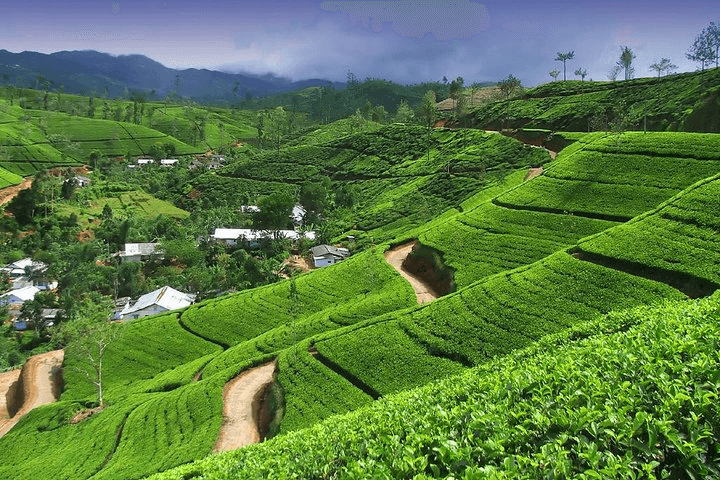
Other tea estates near Kandy lie on the Hantana ridge to the south, on the road to Hunnasgiriya in the north-east and along the route to Nuwara Eliya beyond Pussellawa. Those on the Nuwara Eliya road, such as the big factories near Ramboda, are passed on a transfer and need no detour.
- →West, 20 to 40 minutes: factories near Pilimathalawa and Kadugannawa.
- →South, 15 minutes: the Ceylon Tea Museum at Hantana, which is not a working factory.
- →South-east, about an hour and a half: Loolecondera, the first estate.
- →On the way to Nuwara Eliya, one and a half to two hours: Ramboda and Labookellie.
What a factory tour covers
A tea factory tour near Kandy follows the leaf through the building. A guide, often a factory employee, meets you at the door and walks you from the top floor to the bottom. Tours are informal and you can ask as many questions as you like.
The process of making black tea takes less than a day. Fresh leaf arrives from the fields, loses moisture overnight, and is rolled, oxidised, fired and graded the next morning. The machinery is often a century old and very loud.
- →Withering: leaf is spread in long troughs with air blown through for 12 to 16 hours.
- →Rolling: machines twist and break the leaf to release its juices.
- →Oxidation: the leaf turns coppery on tables or floors for one to three hours.
- →Firing: hot air stops oxidation and dries the tea.
- →Grading: sieves sort the tea into sizes such as pekoe, BOP and dust.
When to go
The best time for a tea factory visit near Kandy is between about 8 and 11 in the morning from Tuesday to Saturday. That is when the previous day's leaf is being rolled and fired, and every stage can be seen in motion.
Tea factories near Kandy are quiet when no leaf has been plucked. Pluckers do not work on Sundays or poya days, so factories often stand idle the following morning. A tour on those days still explains the process, although the machines are silent.
Tasting and buying
Tasting is the end of every tea factory visit near Kandy. You will usually be offered a cup of the estate's broken orange pekoe, sometimes with a few other grades side by side. Drink the first sips without milk or sugar to judge the flavour.
Buying tea at a factory near Kandy is convenient but not always cheap. Prices in factory shops are aimed at visitors, and supermarket tea of the same grade can cost less. What you gain is freshness and the certainty of a single estate. There is no obligation to buy.
- →BOP (broken orange pekoe): the standard strong breakfast grade.
- →OP and pekoe: larger leaf, lighter and more aromatic.
- →Silver tips and golden tips: hand-picked buds, expensive and delicate.
- →Flavoured teas: made for the gift market; taste before buying.
Loolecondera: the first estate
Loolecondera estate, near Deltota in the hills south-east of Kandy, is where James Taylor planted the first commercial tea in Ceylon in 1867. The original field is still marked. Nearby are the stone seat where he is said to have rested, the remains of his log cabin and a well.
The drive from Kandy to Loolecondera takes about an hour and a half on winding estate roads, and the sites are reached by short walks through tea. The trip suits enthusiasts and walkers more than casual visitors. Lankan Stays & Trails arranges it as a half-day with a driver who knows the estate tracks.
The people behind the tea
A tea factory visit near Kandy is also a chance to notice who does the work. Most pluckers are women from the Malaiyaha Tamil community, whose ancestors were brought from South India in the nineteenth century. Wages and housing on the estates remain low by national standards.
Responsible behaviour on a tea estate is simple. Ask before photographing pluckers and do not hand out money or sweets to children. Buying directly from an estate that publishes its welfare commitments, or tipping your factory guide, does more good.
Frequently asked questions
Are there tea plantations near Kandy?
There are many tea plantations near Kandy. The district was the first in Sri Lanka to grow tea commercially, and estates cover the hills to the west, south and east of the city. Several factories within 20 to 40 minutes welcome visitors.
How much does a tea factory tour near Kandy cost?
Most tea factory tours near Kandy are free, since the factories hope you will buy tea in the shop afterwards. A tip of one or two US dollars for the guide is appreciated. A few estates charge for extended tastings or plucking experiences.
What is the best tea factory to visit from Kandy?
The most convenient factories are those near Pilimathalawa and Kadugannawa on the Colombo road, which have regular guided visits. If you are driving on to Nuwara Eliya, the large factories near Ramboda and Labookellie are on your route and equally good.
How is Kandy tea different from Nuwara Eliya tea?
Kandy tea is mid-grown and gives a strong, bright, full-bodied cup that takes milk well. Nuwara Eliya tea is grown above about 1,800 metres and is lighter, paler and more floral. Tasting both is one of the pleasures of crossing the hill country.
Can you pick tea leaves on a visit near Kandy?
Some estates near Kandy offer a short plucking experience, where visitors try picking "two leaves and a bud" alongside a guide. It is a staged activity that lasts 20 to 30 minutes. Ask in advance, since most ordinary factory tours do not include it.
Is a tea factory or the Ceylon Tea Museum better?
A working tea factory shows the process in action, with noise, heat and the smell of fresh leaf. The Ceylon Tea Museum at Hantana explains the history and the old machinery more clearly. With time for only one, choose the factory unless it is a Monday.