
Quick answer
Travel for the Tests if you want the classic away trip: Galle's fort and ramparts, slow days in the sun, spin-friendly pitches and a week or two on the south coast. Choose the ODIs or T20s if you want bigger, louder crowds under lights, shorter commitments and more free days for sightseeing, usually in Colombo, Pallekele, Dambulla or Hambantota. Tests suit a longer trip; white-ball matches fit a shorter one.
Key takeaways
- Tests in Sri Lanka are usually played at Galle, the SSC in Colombo or Pallekele, starting around 10 am.
- ODIs are often day-night matches at the Premadasa, Pallekele, Dambulla or Hambantota, starting around 2.30 pm.
- T20Is are evening matches with the loudest crowds and the shortest time at the ground.
- A Test trip leans towards the south coast; a white-ball trip covers more of the island.
- Check Sri Lanka Cricket and Cricket Australia for which formats and venues a tour includes.
Travelling for the Tests
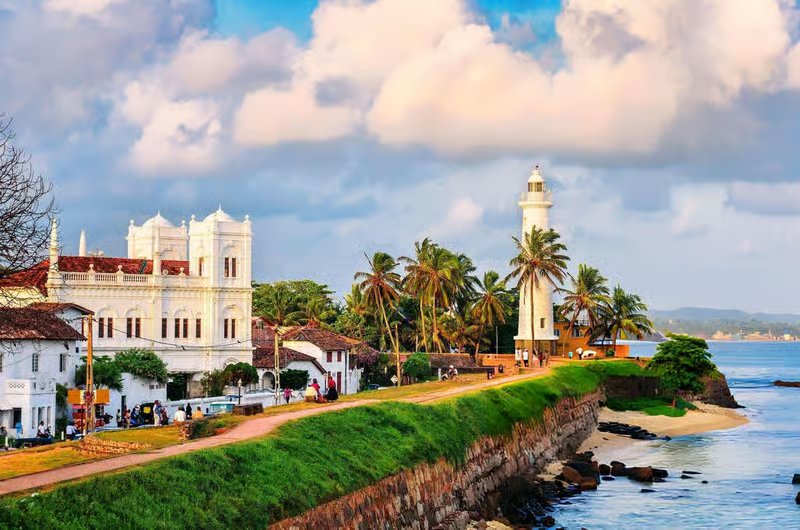
Test cricket in Sri Lanka has a particular feel. Galle, the most regular venue for Australian tours, sits beside a 17th-century fort, with spectators on the ramparts and the sea behind the boundary. The SSC in Colombo and Pallekele near Kandy have also hosted Tests. Play usually starts around 10 am and runs through the hottest part of the day.
A Test trip means committing to up to five days at one ground, which suits fans who love the long game and do not mind the heat. Pitches tend to help spin bowlers as a match goes on, so results often come before the fifth day, freeing up time.
A two-Test series usually keeps you on the south coast for about two weeks, with rest days for whales, reefs or a safari.
- →Grounds: Galle most often, also the SSC and Pallekele.
- →Hours: around 10 am to the evening, in the heat.
- →Trip shape: one or two weeks, mostly on one coast.
Travelling for the ODIs
One-day internationals in Sri Lanka are often day-night games, starting around 2.30 pm and finishing under lights. The R Premadasa Stadium in Colombo, the largest ground, and Pallekele, Dambulla and Hambantota have all hosted them. Crowds are bigger and noisier than at Tests, with bands playing through the innings.
An ODI series usually moves between two or three grounds, which suits fans who want to see more of the island. Mornings are free for sightseeing, and the evening finish avoids the worst of the afternoon heat for the second half.
The catch is late finishes and traffic leaving big grounds, so a driver waiting at the gate is worth having.
- →Hours: around 2.30 pm to late evening.
- →Grounds: Premadasa, Pallekele, Dambulla, Hambantota.
- →Mornings free for sightseeing.
Travelling for the T20s
T20 internationals are evening matches of about three and a half hours, with the loudest crowds and the least time in the sun. A T20 series can be over in under a week, making it the format for fans with limited leave or those who want a short trip with a lot of atmosphere.
Because each match takes only an evening, the days are entirely free. A T20 leg in Colombo or Pallekele pairs well with Sigiriya, Kandy or the hill country.
The trade-off is that a T20 series offers less cricket per flight, so many fans combine it with the ODIs or a longer holiday.
- →Hours: evening, about three and a half hours.
- →Trip length: often under a week.
- →Days fully free for sightseeing.
Comparing the trips
The formats also differ in cost and planning. Galle during a Test has the scarcest accommodation, so a Test trip needs early booking. White-ball grounds are larger and in towns with more hotels, so a later booking usually works.
Weather matters too. A mid-year Test in Galle risks showers from the southwest monsoon, while Dambulla and Hambantota, common white-ball venues, are usually drier at that time. In an early-year tour, Galle is at its best.
Lankan Stays & Trails plans trips for both, and often suggests the Tests for first-timers who want the full Galle experience and the white-ball leg for a second visit.
- →Tests: scarcer rooms, more time at one ground.
- →White-ball: more grounds, more hotels, more free days.
- →Mid-year: white-ball venues are often drier.
Doing both
A full tour with Tests and white-ball matches can run three weeks or more. Fans with the time can follow the Tests in Galle, take a week of sightseeing, then catch the ODIs in Colombo and Kandy. Those with less time often choose one Test and a couple of ODIs either side of a gap.
Whatever you choose, check the confirmed schedule before booking, as venues and formats change from tour to tour.
Frequently asked questions
Which cricket format is best to travel to Sri Lanka for?
Tests suit fans who want the classic Galle experience and a longer trip on the south coast. ODIs and T20s suit fans who want bigger crowds, cooler evening play and more free daytime for sightseeing. First-timers often choose the Tests; return visitors often try the white-ball leg.
Where are Tests played in Sri Lanka?
Galle International Stadium has been the most regular Test venue on Australian tours. The SSC in Colombo and Pallekele near Kandy have also hosted Tests, and the P Sara Oval in Colombo hosted Sri Lanka's first Test in 1982. Check the confirmed venues for each series.
What time do ODIs start in Sri Lanka?
Day-night ODIs in Sri Lanka usually start around 2.30 pm local time and finish under lights in the late evening. Day matches start earlier. Times change between series, so check the confirmed schedule. In eastern Australia, a 2.30 pm start is about 7 pm in winter.
Is a T20 series worth travelling for?
A T20 series is worth it if you have limited leave or want maximum atmosphere for minimum time at the ground. Each match is an evening, so the days are free for sightseeing. Many fans pair a T20 leg with the ODIs or a longer holiday to make the flight worthwhile.
Are Test crowds smaller in Sri Lanka?
Test crowds are usually smaller than white-ball crowds, especially on weekdays, though weekends and the final days of a close Test fill up. Galle has a lively atmosphere thanks to its small ground and the ramparts. ODIs and T20s under lights draw the biggest, loudest crowds.
Which format avoids the heat best?
T20s, played in the evening, avoid the heat best, followed by day-night ODIs, where the second innings is under lights. Tests run through the hottest hours of the day, so plan shade, water and breaks, and consider watching some sessions rather than every over.
Can you follow both the Tests and ODIs on one trip?
Yes, if you have about three weeks. A typical plan follows the Tests in Galle, uses the gap for sightseeing, then moves to Colombo, Kandy or Dambulla for the white-ball matches. With less time, choose one Test and two ODIs around a free week.