
Quick answer
The history of Ella and the Uva hills stretches from prehistoric occupation of caves such as Ravana Cave, through ancient Buddhist sites such as Dowa and Buduruwagala, to the Uva Rebellion of 1817 to 1818 against British rule, which was suppressed with great severity. In the nineteenth century the British planted coffee, then tea, bringing Tamil workers from southern India. The railway reached Badulla in the mid-1920s, and Ella grew from a small village into a tourist town mainly from the late twentieth century.
Key takeaways
- Caves around Ella, including Ravana Cave, show evidence of prehistoric human occupation.
- Buddhist sites near Ella include Dowa Rock Temple, linked by tradition to the 1st century BCE, and Buduruwagala, usually dated to around the 9th or 10th century.
- The Uva Rebellion of 1817 to 1818 against British rule was suppressed with great severity, devastating parts of the region.
- British planters grew coffee in the hills before tea replaced it after coffee leaf rust in the later nineteenth century.
- The main hill country railway reached Badulla in the mid-1920s, passing Ella and crossing the Nine Arch Bridge.
Ella's deep past: caves and early people
Ella's history begins long before written records. Caves in the area, including Ravana Cave, have yielded evidence of prehistoric human occupation, part of a wider pattern across Sri Lanka's hills, where early hunter-gatherer communities used rock shelters for thousands of years.
Much later, the same landscape became associated in popular tradition with the Ramayana, which is why names such as Ravana Falls and Ravana Cave appear around Ella. Those stories are part of the region's living culture rather than historical record.
Buddhist heritage around Ella
Uva has a long Buddhist history. Dowa Rock Temple, near Bandarawela, is linked by tradition to King Valagamba in the 1st century BCE, and its unfinished carved Buddha and painted cave shrine reflect centuries of devotion. Muthiyangana Raja Maha Vihara in Badulla is counted among the sixteen sacred places of Buddhist pilgrimage on the island.
Below the hills, Buduruwagala's seven rock-carved figures, usually dated to around the 9th or 10th century, show the influence of Mahayana Buddhism in the region. Together these sites show that Uva was an important part of the island's religious and cultural life long before the plantations.
- →Dowa Rock Temple: tradition links it to the 1st century BCE.
- →Muthiyangana, Badulla: one of the sixteen sacred places.
- →Buduruwagala: rock carvings from around the 9th or 10th century.
The Uva Rebellion of 1817 to 1818
After the British took control of the Kandyan Kingdom in 1815, discontent grew in the hill country. In 1817 a rebellion broke out in Uva and Wellassa and spread across much of the former kingdom, and it is often called the Great Rebellion or the Uva-Wellassa uprising.
The British suppressed it with great severity by 1818, with villages burned, crops and cattle destroyed and many people killed. Parts of Uva took generations to recover, and the rebellion is remembered in Sri Lanka as an important chapter of resistance to colonial rule.
Coffee, tea and the plantation era
In the nineteenth century the British cleared large areas of the hill country for coffee plantations. When coffee leaf rust devastated the crop from the 1860s onwards, planters turned to tea, and by the end of the century tea dominated the hills, including the Uva slopes around Ella and Haputale.
The plantations depended on labour brought from southern India, and the Hill Country Tamil communities who still live and work on the estates around Ella descend largely from those workers. Their history of hard conditions and, for many, a long struggle for citizenship is central to the region's story.
- →Coffee: widely planted in the nineteenth century.
- →Coffee leaf rust: devastated the crop from the 1860s.
- →Tea: dominant in the hills by the end of the century.
- →Hill Country Tamils: descendants of plantation workers from southern India.
The railway and the rise of tourism
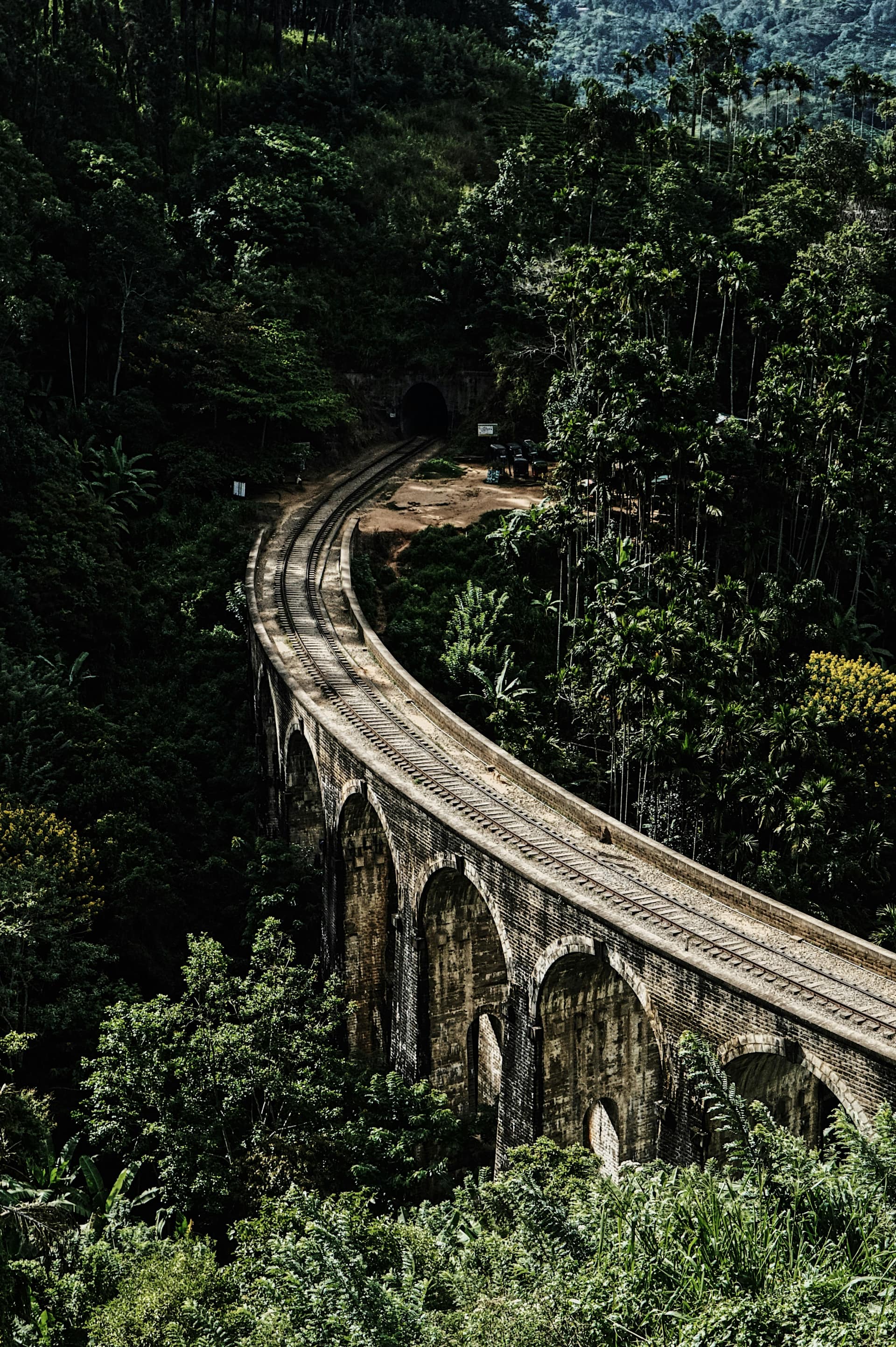
The main hill country railway was extended through Ella to Badulla in the early twentieth century, with the Nine Arch Bridge and the Demodara loop completed in the early 1920s and the line reaching Badulla in the mid-1920s. It carried tea to Colombo and connected Uva to the rest of the island.
For most of the twentieth century Ella remained a small village with a railway station and a rest house. Tourism grew mainly from the late twentieth century, accelerating after the end of the civil war in 2009, until Ella became one of the most visited towns in the hill country.
- →Early 1920s: the Nine Arch Bridge and Demodara loop completed.
- →Mid-1920s: the railway reaches its terminus at Badulla.
- →Late twentieth century: tourism begins to grow.
- →After 2009: rapid growth into a leading hill country destination.
Seeing Ella's history on your visit
Ella's history is visible if you know where to look: Ravana Cave, Dowa, Buduruwagala, Badulla's temples and colonial buildings, the tea estates and the railway itself. A day trip to Dowa and Badulla or Buduruwagala adds depth to a stay focused on walks.
Lankan Stays & Trails works with local guides who can tell the region's layered story, from the rebellion to the estates, with care for the communities whose history it is.
Frequently asked questions
What is the history of Ella?
The Ella area has prehistoric caves, ancient Buddhist sites, a role in the Uva Rebellion of 1817 to 1818, and a plantation history of coffee and then tea. The railway arrived in the early twentieth century, and Ella grew into a tourist town mainly from the late twentieth century.
What was the Uva Rebellion?
The Uva Rebellion, or Uva-Wellassa uprising, was a revolt against British rule that began in Uva and Wellassa in 1817 and spread across the former Kandyan Kingdom. The British suppressed it with great severity by 1818, devastating parts of the region.
When did tea come to Ella?
Tea replaced coffee in the hill country after coffee leaf rust devastated plantations from the 1860s onwards. By the end of the nineteenth century, tea dominated the hills, including the Uva slopes around Ella and Haputale.
When was the Nine Arch Bridge built?
The Nine Arch Bridge at Demodara was completed in the early 1920s as part of the extension of the main hill country railway to Badulla, which the line reached in the mid-1920s.
Who are the tea workers around Ella?
Many tea workers around Ella are Hill Country Tamils, descendants of workers brought from southern India in the nineteenth century to work on the plantations. Their communities remain central to the tea estates and to the region's history.
When did Ella become a tourist town?
Ella remained a small village for most of the twentieth century. Tourism grew mainly from the late twentieth century and accelerated after the civil war ended in 2009, turning Ella into one of the busiest towns in the hill country.
Are there ancient sites near Ella?
Yes. Dowa Rock Temple near Bandarawela, Buduruwagala near Wellawaya and Muthiyangana Raja Maha Vihara in Badulla are all within reach of Ella, alongside Ravana Cave, where evidence of prehistoric occupation has been found.