
Quick answer
The Kandy to Ella railway climbs from Kandy through Nanu Oya into the tea country, and the scenic stretch after Nanu Oya takes roughly two and a half to three hours of the six to seven hour journey. Travelling in the climbing direction is the better experience, which is why itineraries that visit Sigiriya first, then Kandy, then Ella place the train naturally mid-trip in its strongest direction.
Key takeaways
- Kandy to Ella takes roughly six to seven hours; the scenic half begins around Nanu Oya.
- The line climbs towards Ella, so the conventional route order rides it in its better direction.
- Reserved seats are limited and sell out well ahead, particularly from December to March.
- Driving from Kandy to Nuwara Eliya and boarding at Nanu Oya keeps the scenic half and saves hours.
- Leaning out of the open doorway for photographs causes serious injuries on this line every year.
What the journey actually involves
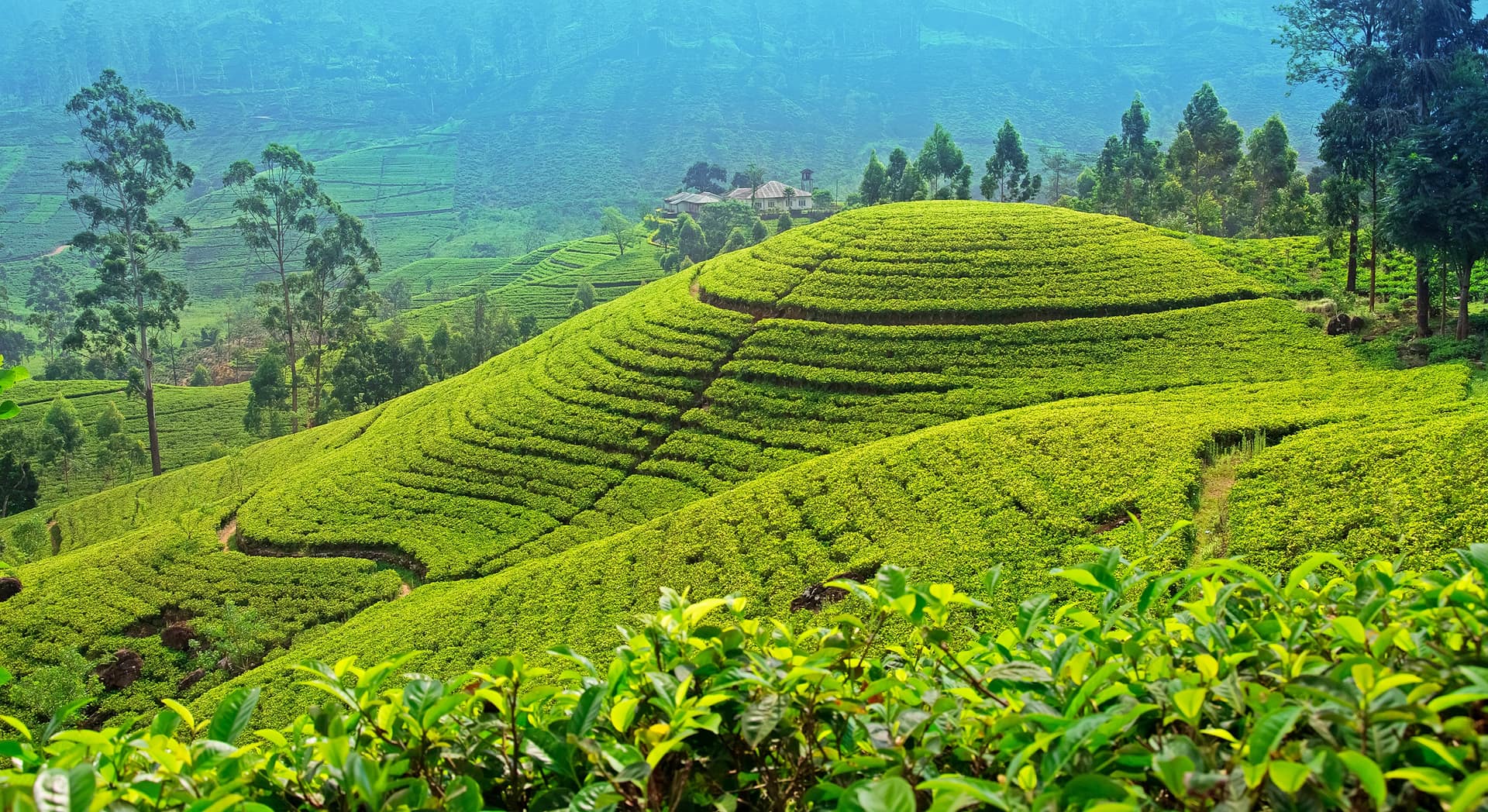
The Kandy to Ella train runs roughly six to seven hours across the central highlands. The first stretch out of Kandy is pleasant but unremarkable, working through suburbs and low hills. The line then begins climbing in earnest, and from roughly Nanu Oya onwards it crosses the tea estates, viaducts and ridges that account for the journey's reputation.
That scenic half takes roughly two and a half to three hours. It passes Haputale and Ohiya, crosses a series of bridges, and drops into Ella through terrain that changes character every twenty minutes. It is genuinely one of the great rail journeys, and the reputation is earned rather than inherited.
The full journey is long, though, and travellers with children or limited patience often find the first hours a trial. That is worth knowing in advance rather than discovering at hour three.
- →Roughly six to seven hours Kandy to Ella in total.
- →The first stretch out of Kandy is ordinary; the climb begins later.
- →Nanu Oya to Ella is the scenic two and a half to three hours.
- →The line passes Haputale and Ohiya through tea estates and viaducts.
Why the direction matters
A railway that climbs behaves differently in each direction. Travelling towards Ella the landscape opens progressively: the tea estates arrive, the drops get longer, and the journey builds towards its best stretch in the final hours. Travelling the other way it begins at its peak and gradually returns to ordinary country.
There is a practical dimension as well. Trains towards Ella tend to arrive in the afternoon, which suits a check-in and an evening in the town. Trains from Ella towards Kandy deliver you into a city at the end of a long day, which is a less appealing arrival.
None of this makes the reverse direction wrong, and travellers running a south-to-north route should still take the train. But it does explain why itineraries built around the railway tend to converge on the same order, and why Sigiriya first keeps appearing as the default.
- →Climbing towards Ella, the landscape builds through the journey.
- →Descending, the best stretch comes first and the journey unwinds.
- →Arriving in Ella in the afternoon suits an evening in the town.
- →The reverse direction still works; it is simply the weaker version.
The short version most travellers should consider
There is a well-established compromise that keeps the best of the line and removes the slow beginning. Drive from Kandy to Nuwara Eliya, stopping at a tea estate and factory on the way, then board the train at Nanu Oya for the two and a half to three hours into Ella.
This version suits families, anyone travelling with significant luggage, and travellers who would rather spend three hours on a tea estate than three hours on a train working through suburbs. It also makes the day more flexible, since a driver can carry the bags and meet you at Ella station.
The full ride remains the better experience for travellers who want the journey itself rather than the views alone. It is a genuine choice rather than a compromise, and it is worth making deliberately rather than by default.
- →Drive Kandy to Nuwara Eliya via a tea estate, then board at Nanu Oya.
- →Keeps the scenic two and a half to three hours and removes the slow start.
- →A driver can carry luggage and meet you at Ella station.
- →The full ride suits travellers who want the journey, not just the views.
Booking, seats and what sells out
Reserved seats on this line are limited and go quickly, particularly in the December to March high season and around local holidays. Book as early as the release window allows, and confirm that window locally rather than relying on a fixed figure, because the rules change.
Unreserved carriages are always available and are how most Sri Lankans travel, but on this route they can be extremely crowded and a six to seven hour standing journey is a poor start to a hill-country stay. Second-class reserved is the sweet spot for most visitors, with windows that open and reasonable seats.
If you have a fixed train date, book it before the accommodation on either side of it. The train is the least flexible element in the itinerary, so everything else should be arranged around it rather than the other way round.
- →Reserved seats sell out well ahead, especially from December to March.
- →Confirm the booking release window locally; the rules change.
- →Second-class reserved suits most visitors: opening windows, reasonable seats.
- →Book the train before the hotels on either side of it.
The thing that is not negotiable
The photographs that made this line famous, of people hanging out of open doorways, represent a genuine and recurring cause of serious injury and death. The carriages have open doors, the line runs close to rock faces and bridge structures, and there is no margin at all.
Sit at an open window instead. The views are the same, and the window frames are wide enough for photographs without any part of you leaving the carriage. If you want the doorway shot, take it while the train is stationary in a station, not in motion.
Lankan Stays and Trails briefs every traveller on this before a rail day, because it is the one part of a Sri Lankan itinerary where the risk is real and entirely avoidable. Everything else on this line is a matter of comfort and preference.
- →Door-leaning causes serious injuries and deaths on this route every year.
- →The line runs close to rock faces and bridge structures with no clearance.
- →Open windows give the same views with none of the risk.
- →Take doorway photographs only while the train is stationary.
Frequently asked questions
Which direction is best for the Kandy to Ella train?
Towards Ella. The line climbs from Kandy through Nanu Oya into the tea country, so the landscape builds through the journey and the best stretch comes last. Travelling the other way starts at the peak and gradually returns to ordinary country.
How long is the Kandy to Ella train journey?
Roughly six to seven hours in total. The scenic section begins around Nanu Oya and takes roughly two and a half to three hours, crossing tea estates and viaducts through Haputale and Ohiya before dropping into Ella.
Can I join the train at Nanu Oya instead of Kandy?
Yes, and many travellers do. Driving from Kandy to Nuwara Eliya via a tea estate and boarding at Nanu Oya keeps the scenic two and a half to three hours while removing the ordinary first stretch, and lets a driver carry luggage to Ella.
How far in advance should I book the Kandy to Ella train?
As early as the release window allows, and confirm that window locally because the rules change. Reserved seats are limited and sell out well ahead from December to March and around local holidays. Book the train before the hotels either side of it.
Which class should I book on the Kandy to Ella train?
Second-class reserved suits most visitors, with windows that open and reasonable seats. Unreserved carriages are always available but can be extremely crowded, and standing for six to seven hours makes a poor start to a hill-country stay.
Is it safe to hang out of the train doors for photos?
No. Door-leaning causes serious injuries and deaths on this line every year, because the track runs close to rock faces and bridge structures with no clearance. Photograph from an open window instead, or from the doorway only while stationary.
Should I skip the train if my route runs the other way?
No. Riding it descending is still worthwhile. Travellers on south-to-north routes often ride out from Ella towards Nanu Oya and return by road, which preserves the climbing direction for the scenic half and costs a morning rather than a day.