
Quick answer
Trincomalee is a natural harbour town on Sri Lanka's east coast, with Nilaveli beach and Pigeon Island National Park nearby, generally at its calmest and driest roughly May to September, broadly the reverse of the south coast's roughly December-to-March window. It suits Turkish travellers whose available dates fall during the northern-hemisphere summer, offering snorkelling among coral reef at Pigeon Island and, seasonally, whale watching in the bay itself.
Key takeaways
- Trincomalee's calmest season generally runs roughly May to September, the reverse pattern of Sri Lanka's south and west coasts.
- Pigeon Island National Park sits a short boat ride from Nilaveli beach, just north of Trincomalee town, and is known for snorkelling among coral reef.
- Trincomalee Bay is, seasonally, a spot for whale watching, alongside its role as one of the world's larger natural harbours.
- Trincomalee sits roughly four to five hours by road from Colombo's airport, often broken up with a Sigiriya or Habarana stop.
- Trincomalee generally suits a quieter, less developed beach experience than the more built-up south coast towns.
What Trincomalee offers
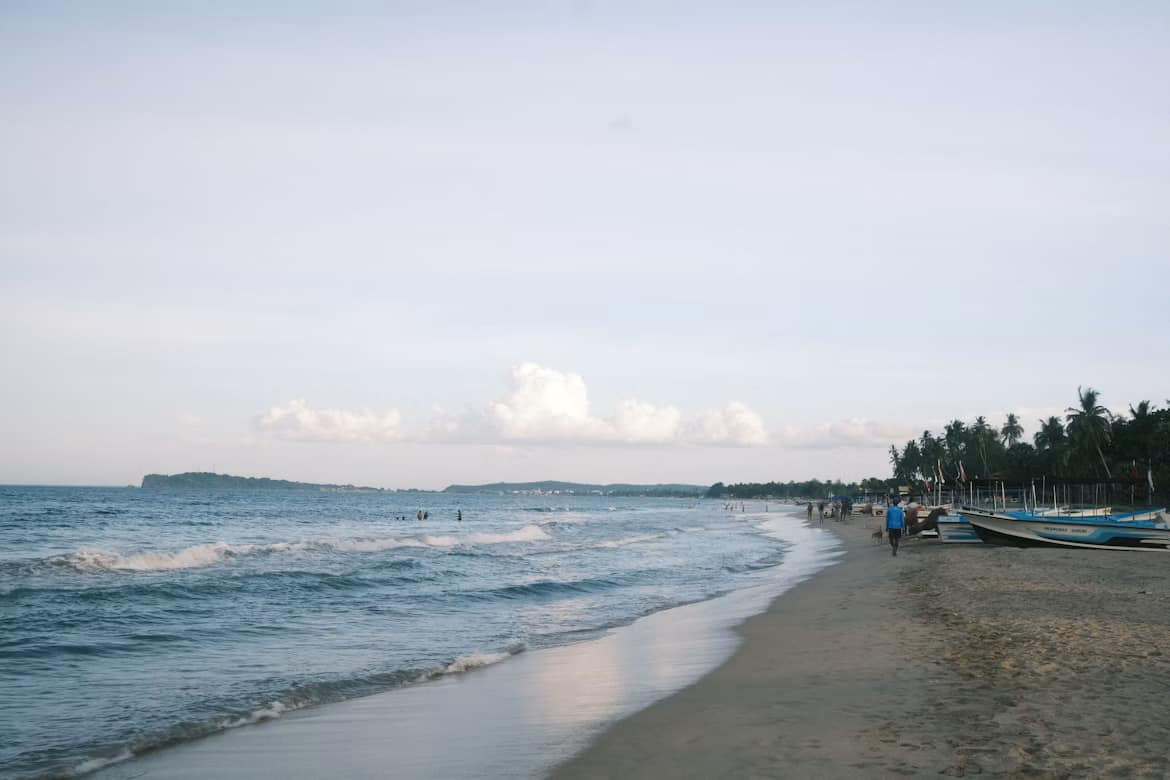
Trincomalee sits on Sri Lanka's north-east coast around one of the world's larger natural deep-water harbours, a strategic and historic port with a noticeably different pace from the tourism-first towns of the south coast. Nilaveli beach, a short drive north of the town centre, is where most beach-focused travellers actually base themselves.
For a Turkish traveller, Trincomalee's development level sits closer to Turkey's smaller, less-built Aegean coves than to its larger resort towns: fewer large hotels, more independent guesthouses, and a beach that feels less curated than Bentota's resort strip.
Trincomalee's season, the reverse of the south coast
Trincomalee sits on the coast affected by the north-east monsoon, which typically arrives around October or November and runs into January, bringing more rain and rougher seas during that period. This means Trincomalee's calmest, driest window generally falls roughly May to September, broadly the opposite of the south coast's roughly December-to-March peak.
This matters for Turkish travellers specifically because it broadly overlaps with when Turkey's own Riviera season peaks, roughly June to September. A Turkish traveller who can only travel during the northern-hemisphere summer may find Trincomalee, rather than the south coast, is the better-timed choice within Sri Lanka, always confirm current conditions before booking.
- →Roughly May to September: generally the calmest, driest window at Trincomalee.
- →Roughly October/November to January: the north-east monsoon period, expect more rain.
- →This broadly overlaps with Turkey's own domestic Riviera peak season.
Pigeon Island National Park
Pigeon Island National Park sits a short boat ride offshore from Nilaveli beach, and is known for snorkelling among coral reef, with reef fish and, in some areas, reef sharks commonly reported by visitors. Entry involves a national park fee and typically a boat operator fee, both worth confirming locally rather than assuming a fixed price.
Snorkelling gear can generally be hired locally, though bringing a personal mask is a reasonable precaution. As with any reef site, staying off live coral and avoiding touching marine life are the basic etiquette points worth following.
- →Reached by a short boat ride from Nilaveli beach, just north of Trincomalee.
- →Known for coral reef, reef fish and, in places, reef sharks.
- →Involves a national park entry fee and a separate boat operator fee, confirm current costs locally.
Whale watching in Trincomalee Bay
Trincomalee Bay is, seasonally, a spot for whale watching, an echo of the more established whale watching industry off Mirissa on the south coast. Sightings and the exact season window vary year to year, and this remains a smaller, less established operation than Mirissa's, so expectations should be set accordingly.
This is nonetheless a further example of the wildlife draw Sri Lanka offers that has no comparable equivalent on Turkey's own coastline, where marine tourism centres on gulet boat trips and coves rather than whale watching.
Planning a Trincomalee escape
Trincomalee sits roughly four to five hours by road from Colombo's airport, a longer transfer than the south coast, so it typically forms part of a longer trip or is broken up with a stop at Sigiriya or Habarana in the Cultural Triangle en route. Four to six nights generally allows time for Nilaveli beach, a Pigeon Island snorkelling day and some rest.
We at Lankan Stays & Trails typically route a Trincomalee escape via Sigiriya or Habarana, turning the transfer itself into a cultural stop rather than a long stretch of driving with nothing to break it up.
Frequently asked questions
What is the best time to visit Trincomalee?
Roughly May to September is generally the calmest, driest window at Trincomalee, since the north-east monsoon that affects this coast typically runs October or November through January instead. Confirm current conditions before booking.
Is Pigeon Island worth visiting from Trincomalee?
Yes, Pigeon Island National Park is a short boat ride from Nilaveli beach and is known for snorkelling among coral reef with reef fish commonly reported. It involves a national park fee and a boat operator fee, confirm current costs locally.
Can you see whales in Trincomalee?
Seasonally, yes, Trincomalee Bay is used for whale watching, though this is a smaller, less established operation than Mirissa's on the south coast. Sightings and season timing vary year to year and are never guaranteed.
How far is Trincomalee from Colombo airport?
Roughly four to five hours by road, noticeably further than the south coast towns. Many travellers break the journey with a stop at Sigiriya or Habarana, confirm current travel times before planning.
Is Trincomalee quieter than the south coast beach towns?
Generally yes, Trincomalee and Nilaveli beach have fewer large hotels and a less tourism-developed feel than the more built-up south coast towns such as Bentota, closer in scale to smaller Turkish Aegean coves.
Should you visit Trincomalee or Mirissa first?
This depends mainly on travel dates: Trincomalee generally suits roughly May to September, while Mirissa on the south coast generally suits roughly December to March. Choose based on when the trip actually falls.
Does Lankan Stays & Trails run trips to Trincomalee?
Yes, Lankan Stays & Trails routes private, driver-guided trips to Trincomalee, typically combined with a Sigiriya or Habarana stop en route, and can arrange Pigeon Island snorkelling as part of the itinerary.