
Quick answer
Whale watching on a Sri Lanka honeymoon is best done from Mirissa between November and April, with December to March the most reliable months, or from Trincomalee between May and September. Boats leave at roughly 6.00 to 6.30 in the morning and return after three to five hours. Blue whales, sperm whales and spinner dolphins are the main sightings, though none is guaranteed. Go on your first morning at the coast, keep a spare day for bad weather and take seasickness tablets beforehand.
Key takeaways
- Mirissa's whale season runs roughly November to April and Trincomalee's roughly May to September.
- Trips last three to five hours and leave at about six in the morning.
- Blue whales can reach around 30 metres in length and are the main draw off Dondra Head.
- Sri Lankan regulations require boats to keep a set distance from whales, and swimming with them is not allowed without a permit.
- A private charter gives a couple control over timing and behaviour around the animals.
Is it worth doing on a honeymoon?
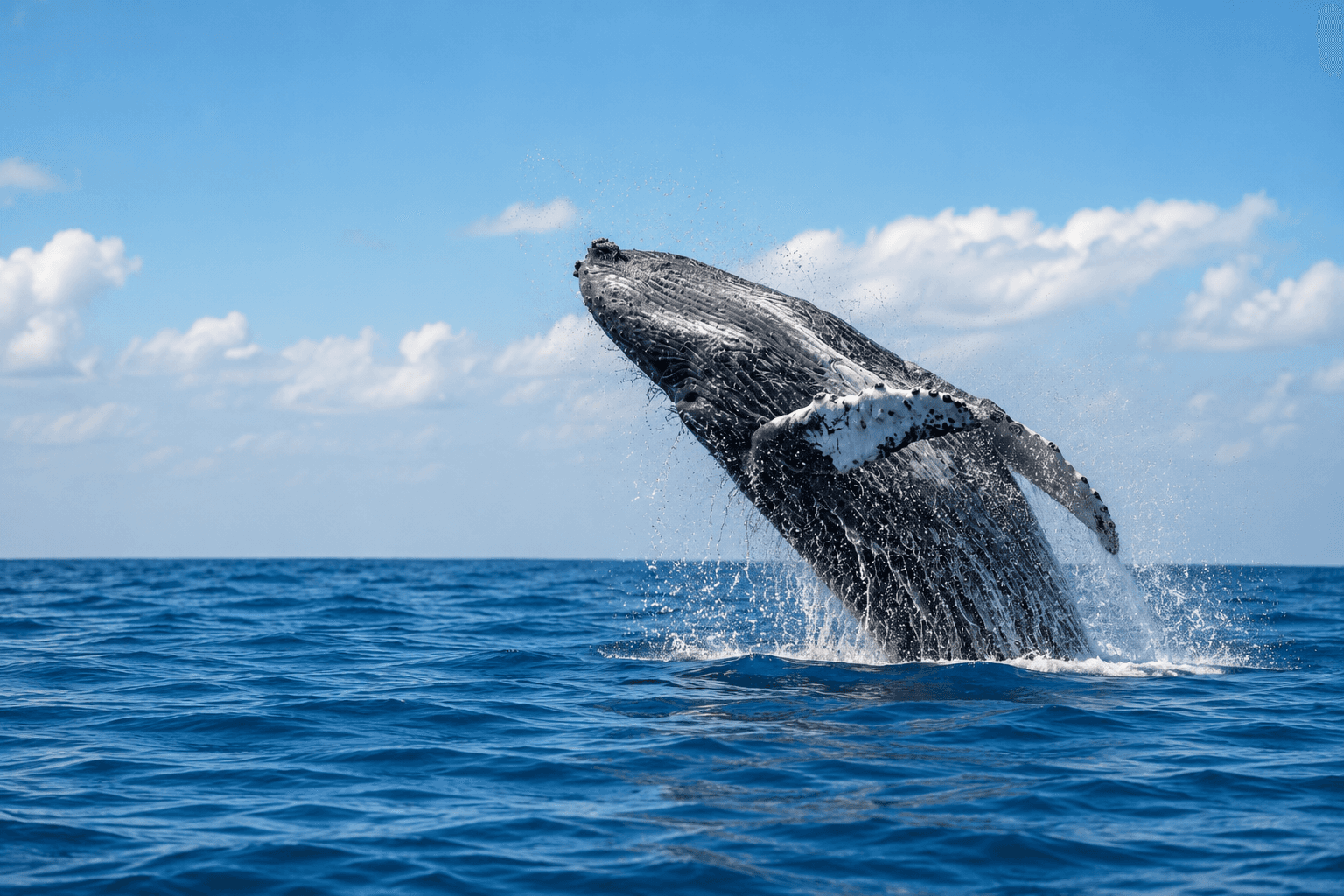
Whale watching is worth doing on a honeymoon for couples who are comfortable at sea. The moment a blue whale exhales beside the boat, a column of mist several metres high, and then lifts its tail to dive, is extraordinary. Dolphins riding the bow in their hundreds are a common bonus.
Honesty is useful. The trip means a five o'clock start, several hours on open water with swell, and long periods of scanning the horizon. Some days no whales appear. If either of you suffers badly from motion sickness, consider skipping it and sleeping in.
- →Do it if you love wildlife and have sea legs.
- →Skip it if you are prone to seasickness or short of sleep.
- →Never plan it for the day you fly home.
When and where to go
Mirissa is the base from November to April, when the sea off the south coast is calm. The harbour is at the western end of the bay, and most hotels between Weligama and Matara are within 20 minutes. The quietest water and most consistent sightings are from December to March.
Trincomalee takes over from May to September, with shorter runs to deep water and fewer boats. Kalpitiya, on the north-west coast, is known for large pods of spinner dolphins from roughly November to April. Whales move, and no month comes with a promise.
Private charter or shared boat
Shared boats are the standard way to go. They carry from 20 to more than 100 passengers on two decks, include a light breakfast and cost comparatively little. The better operators limit numbers, brief passengers and follow the rules on distance.
A private charter suits a honeymoon well. A smaller boat or catamaran for the two of you leaves when you are ready, lingers where you wish and returns early if one of you feels unwell. It costs several times as much. Catamarans are generally steadier in a swell.
- →Shared: economical, sociable, fixed schedule.
- →Private: flexible, quiet, considerably more expensive.
- →Either: choose an operator known for keeping its distance.
Watching responsibly
Responsible whale watching matters in Mirissa, where many boats may gather around one animal. Regulations set minimum approach distances and forbid chasing or cutting across a whale's path. Not every skipper observes them. Boats that race each other to a sighting stress the animals and their passengers.
Choose an operator with a reputation for patience, and tell the crew you are happy to watch from a distance. Swimming or snorkelling with whales is not permitted without special authorisation, and offers to arrange it informally should be declined.
Preparing for the morning
Preparation makes the difference between a wonderful morning and a miserable one. Take a seasickness tablet the night before and another an hour before sailing, following the packet. Eat lightly. Sit on the lower deck near the middle, where movement is least, and watch the horizon.
Bring a hat, sunscreen, a light jacket for the early breeze and a dry bag for cameras. Lankan Stays & Trails schedules the trip for a couple's first morning on the coast, so that a second attempt is possible if the sea is rough or the whales are elsewhere.
- →Seasickness tablets: the night before and one hour before.
- →Seat: lower deck, centre of the boat.
- →Bring: hat, sunscreen, jacket, water.
Frequently asked questions
Is whale watching in Mirissa worth it for couples?
Whale watching in Mirissa is worth it for couples who enjoy wildlife and do not mind an early start or a rolling sea. Seeing a blue whale together is a rare experience. Sightings are frequent in season but never guaranteed, and the trip takes most of a morning.
What is the best month to see whales in Sri Lanka?
December to March is the best period off Mirissa, with calm sea and regular blue whale sightings. The season extends from about November to April. Off Trincomalee on the east coast, the best months are roughly May to September.
How much does a private whale watching boat cost?
Prices vary by boat and season. A private charter for two costs several times the price of shared seats, commonly a few hundred US dollars for the morning. Shared trips are far cheaper per person. Ask what is included and confirm the boat's licence and safety equipment.
Will we get seasick on a whale watching trip?
Many people feel some queasiness, because the boats go several kilometres offshore into open swell. Tablets taken in advance, a light breakfast, a seat low and central in the boat and eyes on the horizon help greatly. Conditions are calmest from December to March.
Can we swim with whales in Sri Lanka?
Swimming with whales is not allowed in Sri Lanka without a special permit, which is rarely issued to tourists. Operators who offer it casually are breaking the rules. Watching from the boat at a respectful distance is the legal and responsible way.
What time do whale watching boats leave Mirissa?
Boats leave Mirissa harbour at roughly 6.00 to 6.30 in the morning, and passengers are asked to arrive 20 to 30 minutes earlier. Trips return between about 10 am and midday, depending on how far the whales are and how long the boat stays with them.