
Quick answer
On a first Sri Lanka trip from India, the sites that genuinely earn their place are Sigiriya Rock Fortress in the Cultural Triangle, the Temple of the Tooth in Kandy, the hill country around Ella or Nuwara Eliya (ideally including the Kandy-Ella train), a leopard or elephant safari at Yala or Udawalawe, and one south-coast stop combining a beach with Galle Fort or Mirissa whale watching. Pilgrims travelling for the Ramayana trail or Buddhist sites should prioritise those over the standard loop instead of trying to combine both on a short trip.
Key takeaways
- Sigiriya Rock Fortress involves roughly 1,200 steps to the summit and is one of eight UNESCO World Heritage Sites on the island.
- The Kandy to Ella train passes through the Nine Arch Bridge and tea country and is widely rated among the world's most scenic rail journeys.
- Yala and Udawalawe National Parks offer half-day or full-day jeep safaris with realistic leopard and elephant sightings, unlike anywhere in most of India.
- Mirissa's whale watching season runs roughly November to April, overlapping with the December to March window most Indian travellers already favour for the south coast.
- A five to seven day trip from India realistically covers three of these five priorities well; fitting all five usually needs nine to ten days.
Why a short India trip needs a priority list
Sri Lanka's short flight time from India, roughly ninety minutes from Chennai and two to four and a half hours from Mumbai, Delhi, Bengaluru, Kochi or Hyderabad, is exactly why most Indian trips are shorter than the two or three weeks European visitors often take. There is no jet lag to recover from and no long-haul flight to justify with extra nights, so a five or six day trip is genuinely common and genuinely worthwhile.
The trade-off is that Sri Lanka's roads are slower than the map suggests, and a 200 km journey between regions can take four to six hours once hill roads and town traffic are factored in. A short trip that tries to touch every region ends up spending more time in the car than at any single site, so choosing three or four priorities well beats attempting all seven regions badly.
Sigiriya and the Cultural Triangle
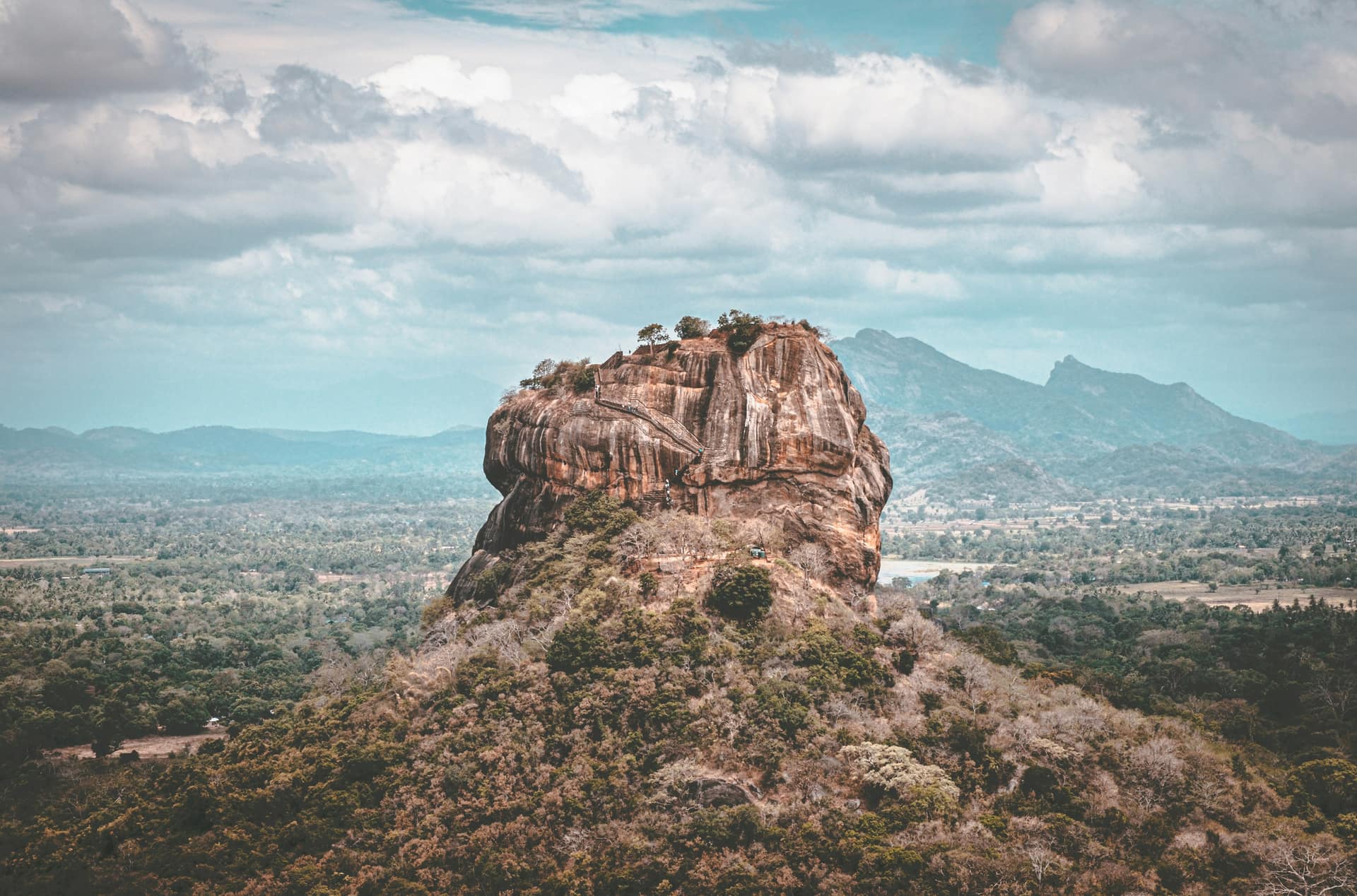
Sigiriya Rock Fortress is the single site most first-time visitors regret skipping. A fifth-century royal citadel built on top of a 200-metre granite outcrop, it involves roughly 1,200 steps to the summit, including a stretch past preserved frescoes and the famous Lion's Paw entrance, and the view from the top over the surrounding jungle is genuinely one of the best in the country.
Dambulla's cave temples, a short drive away, hold the largest concentration of Buddhist murals and statuary in Sri Lanka and need far less climbing, making them a good pairing for travellers who want cultural depth without another steep ascent. Polonnaruwa, the medieval capital with its cluster of stone Buddha carvings, rewards a half day if the itinerary allows it, but Sigiriya and Dambulla are the two that should not be cut.
- →Sigiriya Rock Fortress: roughly 1,200 steps, frescoes en route, one of eight UNESCO sites in the country.
- →Dambulla cave temples: the country's largest collection of Buddhist murals, minimal climbing.
- →Polonnaruwa: worth a half day for its stone-carved Buddha statues if time allows.
Kandy and the Temple of the Tooth
Kandy sits almost exactly between the Cultural Triangle and the hill country, which makes it a natural stop rather than a detour. The Temple of the Tooth Relic, or Sri Dalada Maligawa, houses what tradition holds to be a tooth relic of the Buddha and remains the most important Buddhist site in the country, drawing both pilgrims and general visitors.
An evening walk around Kandy Lake and, if timing allows, a traditional Kandyan dance performance round out a stop that rarely needs more than one night. Travellers on the Buddhist pilgrimage circuit should build in extra time here, since the temple alone can occupy a half day around the main puja ceremonies.
The hill country and the Kandy-Ella train
Sri Lanka's hill country, centred on Nuwara Eliya and Ella, is what tends to surprise Indian visitors most: cool, green, terraced with tea estates, and unlike anything on the plains most travellers arrive from. The Kandy to Ella rail journey, which takes roughly six to seven hours end to end, passes tea country and the Nine Arch Bridge and is one of the experiences most worth building an itinerary around, even if only a shorter stretch is ridden.
Ella itself is compact and walkable, with Little Adam's Peak a manageable 45 to 90 minute return walk and Nine Arch Bridge an easy morning visit. Nuwara Eliya, cooler and more colonial in character, suits travellers who want a quieter, tea-estate-focused stop rather than a hiking base.
- →Kandy-Ella train: roughly six to seven hours end to end through tea country and the Nine Arch Bridge.
- →Little Adam's Peak, Ella: a 45-90 minute return walk with hill-country views.
- →Nuwara Eliya: cooler, tea-estate-focused, a gentler alternative base to Ella.
A wildlife safari
A leopard or elephant safari is worth prioritising precisely because it is not something most Indian travellers can easily do at home. Yala National Park has one of the highest leopard densities recorded anywhere in the world, while Udawalawe is more reliable for elephant sightings and generally involves a shorter detour from a south coast or hill country route.
A single half-day or full-day jeep safari is enough to make the experience worthwhile; two sessions, typically an early morning and a late afternoon drive, improve the odds of a good sighting considerably if the itinerary has the extra half day to spare.
The south coast: Galle Fort and Mirissa
A single south coast stop, most often combining Galle Fort's Dutch colonial ramparts with a beach base at Mirissa or Unawatuna, is the natural way to close a first trip. Galle Fort rewards an unhurried half day of walking its walls and lanes, while Mirissa's whale watching season runs roughly November to April, overlapping neatly with the December to March window that already suits most Indian holiday timing.
Travellers with only five or six days often have to choose between the hill country and the south coast rather than fitting both; the honest advice is not to try to compress both into one or two rushed nights each, since the transfer time between them eats into whichever stop comes second.
- →Galle Fort: Dutch colonial ramparts, best explored on foot over half a day.
- →Mirissa whale watching: roughly November to April, mornings offer calmer seas and better sighting odds.
- →Choosing between hill country and south coast on a short trip beats rushing both.
Fitting it together on a short trip
Five to seven days from India realistically covers three of the five priorities above at a comfortable pace: most commonly Sigiriya, Kandy and one of either the hill country or the south coast. Nine to ten days is where all five genuinely fit without the trip becoming a sequence of transfer days, and it is the length we most often recommend to first-time Indian travellers who want the classic route without cutting anything essential.
Pilgrims should treat the Ramayana trail or the Buddhist circuit as a separate priority list rather than layering it on top of the standard route, since sites like the Sita Amman temple near Nuwara Eliya or Nagadeepa in the far north add genuine distance. Lankan Stays & Trails builds first-time Indian itineraries around exactly this kind of priority order, sequencing the must-see sites so the trip doesn't spend more time on the road than in front of what actually brought you here.
Frequently asked questions
What should first-time visitors from India not miss in Sri Lanka?
Sigiriya Rock Fortress, the Temple of the Tooth in Kandy, the hill country around Ella or Nuwara Eliya including the Kandy-Ella train, a leopard or elephant safari, and one south-coast stop combining Galle Fort with a beach or whale watching at Mirissa.
How many days do you need to see the highlights of Sri Lanka from India?
Nine to ten days comfortably covers the main highlights without excessive transfer time. Five to seven days is workable but usually means choosing three priorities, most often Sigiriya, Kandy and either the hill country or the south coast, rather than all five.
Is Sigiriya worth visiting on a short trip from India?
Yes, it is one of the sites first-time visitors most regret skipping. It involves roughly 1,200 steps to the summit and is one of eight UNESCO World Heritage Sites in Sri Lanka, with views over the surrounding jungle that are hard to match elsewhere in the country.
Should I do the Kandy to Ella train on a first trip?
It is one of the most worthwhile single experiences in the country, taking roughly six to seven hours end to end through tea country and past the Nine Arch Bridge. Even riding a shorter stretch, such as Nanu Oya to Ella, captures most of the scenery if the full journey doesn't fit.
Can I do a safari and the hill country in the same short trip?
It depends on the route: Udawalawe National Park sits conveniently between the hill country and the south coast, so a safari there adds relatively little detour. Yala is further south and works better paired with a south-coast beach stop than with Kandy or Ella.
Is whale watching in Mirissa worth including from India?
It pairs well with a south-coast stop, since the season runs roughly November to April, overlapping with the window most Indian travellers already favour. Mornings generally offer calmer seas and better sighting odds than later departures, so book an early trip where possible.
Should I prioritise the Ramayana trail over the standard Sri Lanka route?
If the Ramayana trail is the primary reason for the trip, yes: treat it as its own itinerary rather than trying to layer it onto the standard Cultural Triangle, hill country and south coast loop, since the pilgrimage sites add genuine extra distance and deserve unhurried time.