
Quick answer
Sita is the heroine of the Ramayana and the wife of Rama. Hindus worship her as a goddess, an incarnation of Lakshmi, the consort of Vishnu. Found as an infant in a ploughed field by King Janaka of Mithila, she married Rama, followed him into exile, was abducted by Ravana and held in Lanka, then rescued and proved her purity by fire. She is honoured for devotion, courage and endurance, and the Seetha Amman Temple marks her captivity in tradition.
Key takeaways
- Sita is the heroine of the Ramayana and the wife of Rama.
- Hindus worship her as an incarnation of the goddess Lakshmi.
- She was found as an infant in a field by King Janaka of Mithila.
- Ravana abducted her and held her in Lanka, in Ashok Vatika.
- She is honoured for devotion, courage, patience and strength.
Birth and childhood
Sita's story begins in Mithila, an ancient kingdom covering parts of today's Bihar and southern Nepal. King Janaka, ploughing a field as part of a ritual, found a baby girl in the furrow. He raised her as his daughter, and she was named Sita, which means furrow.
Because she came from the earth, Sita is also called Bhumija, daughter of the earth. Her other names, Janaki and Maithili, recall her father and her homeland. Janakpur in Nepal and Sitamarhi in Bihar are both honoured as places linked to her birth.
The story of her origin marks her as extraordinary from the start, a gift of the earth and of the gods.
- →Found in a furrow by King Janaka of Mithila.
- →Named Sita, meaning furrow.
- →Also Bhumija, Janaki and Maithili.
Marriage to Rama
When Sita came of age, Janaka held a contest for her hand: whoever could string the great bow of Shiva would marry her. Princes failed one after another until Rama, prince of Ayodhya, lifted the bow and broke it as he strung it.
Their wedding is one of the most celebrated events in Hindu culture, remembered each year at Vivah Panchami. Rama and Sita are seen as the ideal couple, bound by love, loyalty and dharma.
Their marriage is the reason so many couples seek blessings at Sita temples, including the Seetha Amman Temple in Sri Lanka.
Exile in the forest
Shortly before Rama was to be crowned, palace intrigue forced him into fourteen years of exile in the forest. Sita insisted on going with him, refusing to stay in comfort while her husband suffered. Rama's brother Lakshmana went too.
The three lived simply in forest hermitages, including at Panchavati, associated today with Nashik in Maharashtra. Sita's choice to share hardship is one of the reasons she is honoured as a model of devotion.
It was in the forest that the demoness Shurpanakha, Ravana's sister, was humiliated by the brothers, setting in motion the events that led to Sita's abduction.
- →Fourteen years of exile with Rama and Lakshmana.
- →Forest life at Panchavati, linked to Nashik.
- →The Shurpanakha episode sets the story in motion.
Abduction and captivity in Lanka
Ravana, king of Lanka, lured Rama and Lakshmana away using a golden deer and carried Sita off in his flying chariot. In Lanka he held her in Ashok Vatika, a grove guarded by rakshasis, and tried for months to win her over. She refused him every time.
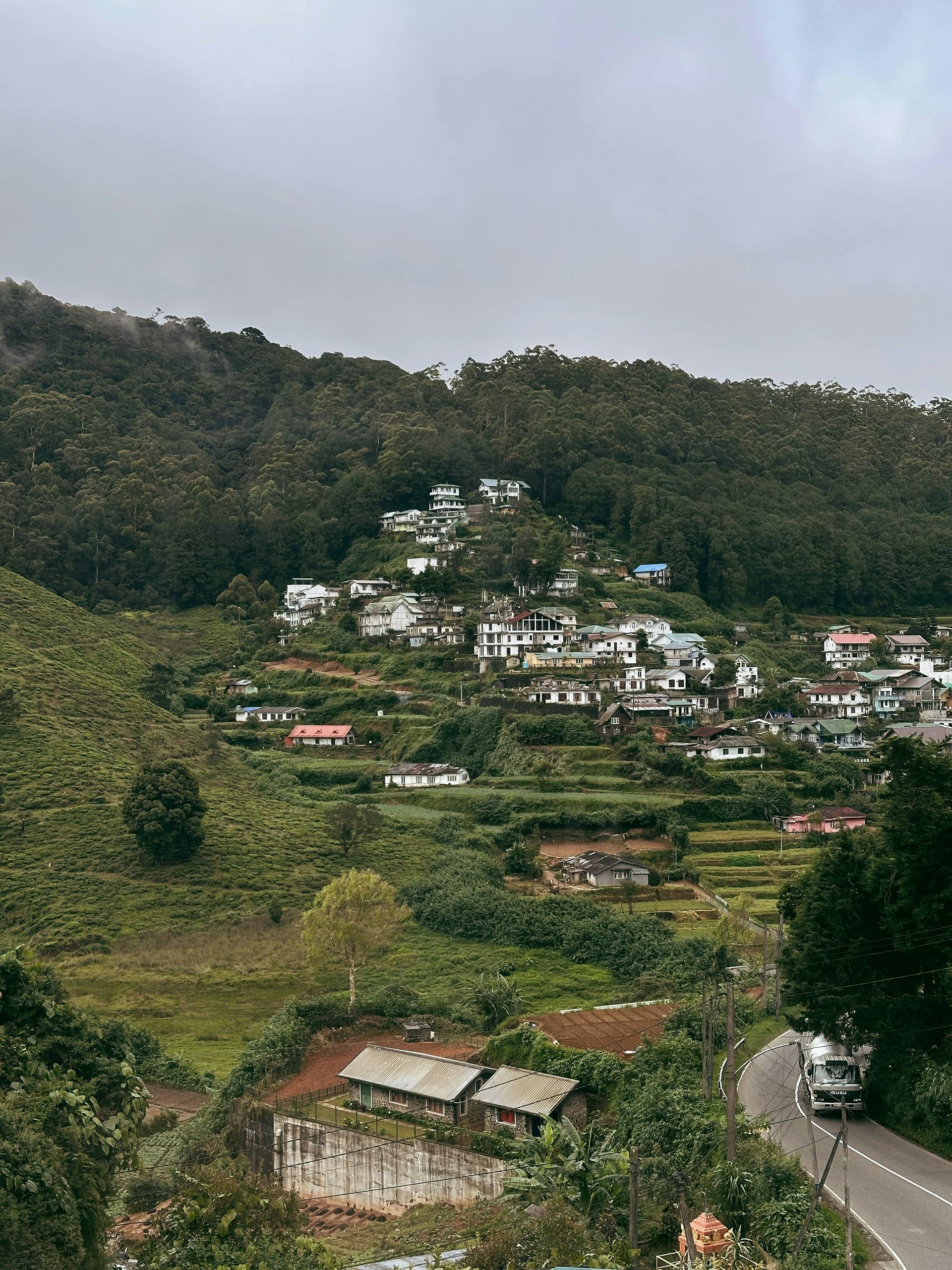
Tradition places this grove in the hills around Seetha Eliya, where the Seetha Amman Temple now stands. Here, the story says, Hanuman found her and gave her Rama's ring, bringing the first hope of rescue.
Sri Lankan tradition links other places to her journey too, including Weragantota, where Ravana's chariot is said to have landed, and Sita Kotuwa, her first place of captivity.
Rescue, fire ordeal and later life
Rama, with Hanuman and an army of vanaras, crossed to Lanka, defeated Ravana and freed Sita. To prove her purity, she underwent the agni pariksha, the trial by fire, and emerged unharmed. Sri Lankan tradition places this at Divurumpola, near Welimada.
The couple returned to Ayodhya, an event celebrated in North India at Diwali. Later versions tell of Sita's second exile, the birth of her twin sons Lava and Kusha in the hermitage of Valmiki and her return to the earth from which she came.
These later chapters deepen her image as a figure of endurance and dignity.
- →Rescue and Ravana's defeat.
- →Agni pariksha, linked to Divurumpola.
- →Return to Ayodhya; Lava and Kusha; return to the earth.
Why Sita is worshipped
Hindus see Sita as an incarnation of Lakshmi, goddess of prosperity and grace, just as Rama is an incarnation of Vishnu. She is worshipped as a goddess of devotion, purity, patience and inner strength, and as the ideal partner in marriage.
Women in particular pray to her for strength in hard times and for harmony in family life. Modern readers also see in her a figure of quiet resistance, who refused a powerful king and kept her dignity in captivity.
At Seetha Eliya she is honoured as Seetha Amman, the mother goddess. Lankan Stays & Trails guides can share more of her story on the drive to the temple.
Frequently asked questions
Who is Sita in the Ramayana?
Sita is the heroine of the Ramayana and the wife of Rama, prince of Ayodhya. She follows him into exile, is abducted by Ravana and held in Lanka, then rescued. Hindus worship her as an incarnation of the goddess Lakshmi.
Why is Sita worshipped as a goddess?
Hindus believe Sita is an incarnation of Lakshmi, consort of Vishnu, who descended with Rama. She is honoured for devotion, purity, courage and patience, and prayed to for strength, family harmony and a happy marriage.
Where was Sita born?
Tradition says King Janaka found her in a ploughed field in Mithila. Janakpur in Nepal and Sitamarhi in Bihar are both honoured as places linked to her birth, with major temples that draw pilgrims from across South Asia.
Where was Sita held in Lanka?
The epic says she was held in Ashok Vatika, a grove in Ravana's Lanka. Sri Lankan tradition places it in the hills around Seetha Eliya and Hakgala, near Nuwara Eliya, where the Seetha Amman Temple now stands.
What is the agni pariksha?
The agni pariksha is Sita's trial by fire after her rescue, which she passed unharmed to prove her purity. Sri Lankan tradition places it at Divurumpola, near Welimada, where a temple marks the site. It is often visited with Seetha Eliya.
What do Sita's names mean?
Sita means furrow, recalling her birth from the earth. Janaki means daughter of Janaka, Maithili means woman of Mithila, Vaidehi means princess of Videha and Bhumija means born of the earth. Each name reflects part of her story.
Do I need to know the story to visit the temple?
No, but a little background helps. Knowing who Sita, Rama and Hanuman are makes the painted figures and rituals easier to follow. A guide can explain the essentials on the drive, and the priests are often happy to share their version.