
Quick answer
A 10-day Sri Lanka family holiday in February follows the standard family route (Sigiriya three nights, Kandy one, Ella two, Udawalawe one, south coast two) in its best month. The Cultural Triangle is dry, the hill country has its clearest skies, the south coast sea is at its calmest and whale sightings off Mirissa are near their peak. Many schools break for only a week, so families either travel across two weekends for nine nights or shorten the route to seven.
Key takeaways
- February is on average the driest month of the year in Kandy, Ella and along the south-west coast.
- Whale sightings off Mirissa are most reliable from January to March, with February in the middle of the season.
- A one-week school break allows nine nights only when travel begins on the Friday evening and ends on the second Sunday.
- The Navam full moon poya usually falls in February, when alcohol is not sold and some sites are busier with pilgrims.
- Hotel rates in February are high season but typically below the late-December peak.
Why February is the best month
A 10-day Sri Lanka family holiday in February meets the island in settled weather. The north-east monsoon has faded from the Cultural Triangle, the south-west monsoon is three months away, and the hills are between rains. Every stop on the family route is in season at once.
For children that means reliability. The climb goes ahead on the planned morning, the train windows show hills instead of cloud, and the bay at Unawatuna is calm day after day. Few months offer that across five regions.
- →Sigiriya: dry, 30 to 32 degrees by day.
- →Ella: clear, 20 to 25 degrees; cool nights.
- →South coast: calm sea, around 28 degrees in the water.
Fitting a one-week school break
Many school systems give one week off in February, not two. Nine nights are still possible by flying on the Friday evening before the break and returning on the Sunday at its end, landing home in time for Monday. It is tiring, and it works.
The alternative is to cut the route to fit seven nights: Sigiriya three, Kandy one and the coast three, with Udawalawe as a day stop. Ella and the train wait for a longer holiday. A week of sunshine in February is worth having either way.
The route in February
The route in February needs no seasonal changes. Sigiriya Rock is climbed on day two, the elephant safari on day three goes to Kaudulla or Hurulu Eco Park, where herds usually are at this time, and Kandy and the train follow.
Two February bonuses are worth planning for. Horton Plains has its clearest mornings of the year for families with children of eight and over who can add a night in Nuwara Eliya. Yala and Udawalawe are dry, with animals gathering at water.
- →Add: whale watching for children of eight and over.
- →Consider: a night in Nuwara Eliya for Horton Plains.
- →Keep: pool time from 11am to 3pm; the sun is strong.
Sea, whales and beach choice
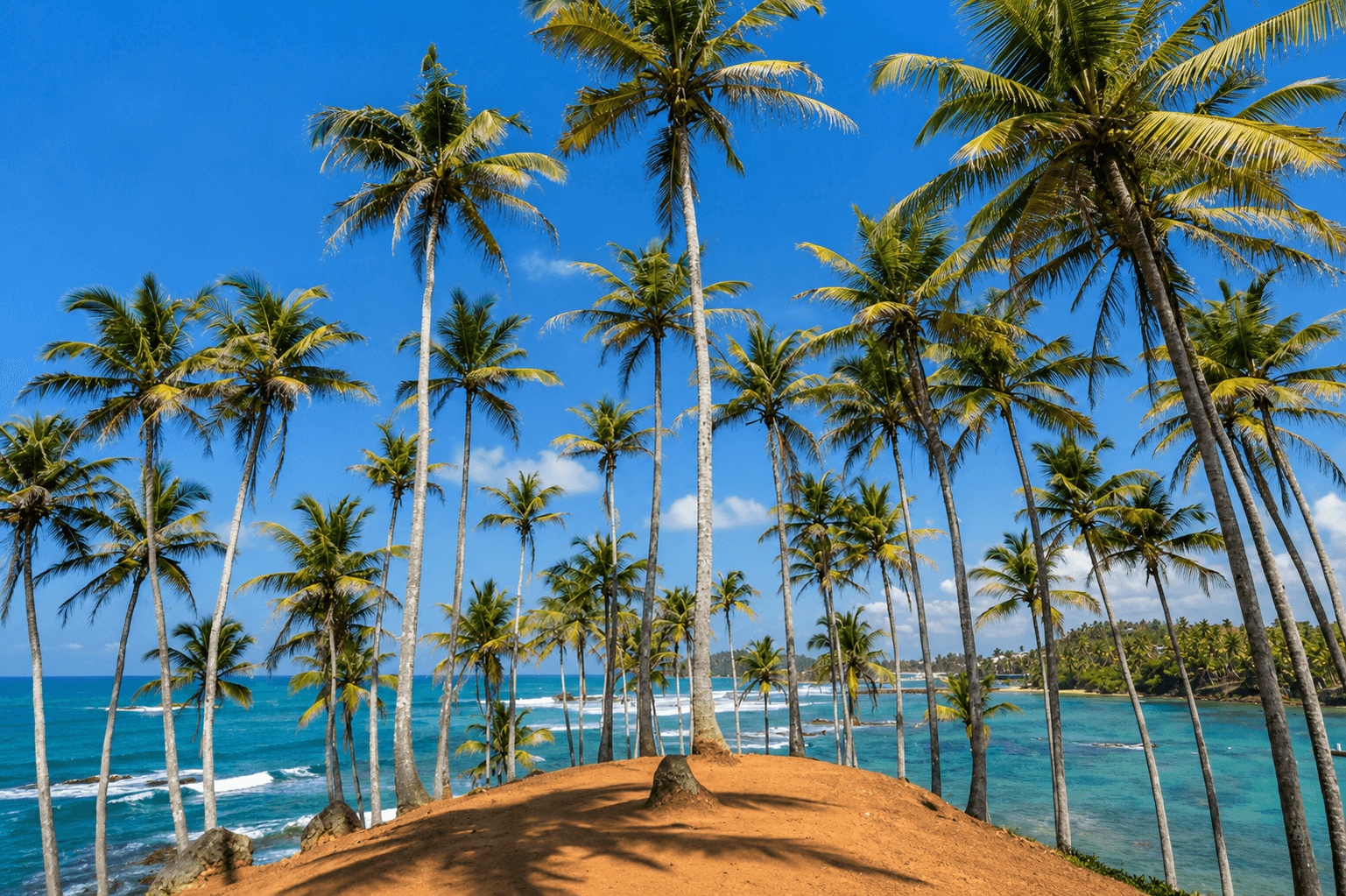
The sea is the reason many families pick February. On the south coast the swell is at its lowest, the water is clear, and sheltered bays such as Unawatuna and the western end of Mirissa are as gentle as they get. Snorkelling at Jungle Beach is at its best.
Whale-watching boats from Mirissa have their calmest crossings in February, which matters with children prone to seasickness. Blue whales are sighted on most trips. Surf at Weligama is small and regular, ideal for a first lesson.
Prices, crowds and poya
Prices in February are high-season rates without the festive premium. Popular family hotels still fill, particularly in weeks when several countries' school breaks coincide, so booking three to four months ahead is sensible. Train seats remain the scarce item.
The Navam poya, the full moon day in February, is marked in Colombo by a large temple procession and across the island by a public holiday. Dates shift each year with the lunar calendar. Alcohol is not sold on poya days, and temples are busier than usual.
- →Book three to four months ahead.
- →Check the poya date for your year.
- →Reserve train seats the day they open.
Sun and heat with children
Sun is the main hazard of a February holiday. Skies are clear and the UV index is very high from 10am to 3pm. Children need high-factor sunscreen reapplied after swimming, UV swim tops, hats and shade. The dry zone around Sigiriya is hot by late morning.
Dehydration creeps up on active children. Offer water at every stop, add rehydration salts after a climb, and watch for headaches and irritability. Lankan Stays & Trails builds a pool break into the middle of every family day for this reason.
Frequently asked questions
Is February a good time to visit Sri Lanka with kids?
February is one of the best times to visit Sri Lanka with kids. The Cultural Triangle, hill country and south coast are all dry, the sea is calm, and whale watching is at its most reliable. Prices are below the Christmas peak.
Can we do Sri Lanka in a one-week school holiday?
You can do Sri Lanka in a one-week school holiday. Travelling across both weekends gives eight or nine nights, enough for a slightly shortened family route. With seven nights, keep to Sigiriya, Kandy and a south coast beach.
What is the weather like in Sri Lanka in February?
In February most of Sri Lanka is dry and sunny. Expect 30 to 32 degrees at Sigiriya and on the south coast, 25 to 28 in Kandy and 20 to 25 in Ella, with cool nights in the hills. Rain is uncommon.
Is the sea calm in Sri Lanka in February?
The sea is calm on Sri Lanka's south and west coasts in February, the calmest it gets all year. Sheltered bays such as Unawatuna are well suited to children. The east coast is settling after its monsoon and improves through March.
Is February busy in Sri Lanka?
February is busy in Sri Lanka but less so than late December and early January. Sigiriya, Ella and Mirissa see steady numbers. Starting sightseeing early in the morning and booking hotels a few months ahead avoid most problems.
Is Sri Lanka a good alternative to a ski holiday in February?
Sri Lanka is a good alternative to a ski holiday in February for families who want warmth and variety. Flights are longer, but ground costs are often lower than a ski resort, and wildlife, beaches and culture replace lift passes.