
Quick answer
Day 3 of this 12-day Alps-to-beach itinerary transfers from the Cultural Triangle to Kandy, roughly 2 to 3 hours by road, with an optional stop at Polonnaruwa's ancient ruins adding a further hour or two depending on how much time is spent exploring. Arrival in Kandy is generally timed for the evening, so travellers can see the Temple of the Tooth's evening drumming ceremony on the day they arrive rather than waiting for day four.
Key takeaways
- The direct road transfer from the Cultural Triangle to Kandy typically takes roughly 2 to 3 hours, depending on the exact starting base and route.
- Polonnaruwa, Sri Lanka's medieval capital and a UNESCO World Heritage site, sits en route and can be visited as an optional stop, adding roughly 1 to 2 hours of exploring time plus some detour distance.
- The Temple of the Tooth's evening drumming and dance ceremony, roughly 45 minutes to an hour, is a realistic thing to catch on arrival evening if timing works out, rather than only on the fuller day four.
- Polonnaruwa's ruins can be explored partly by bicycle at a relaxed pace, a genuinely different way to see ancient sites compared with the on-foot climb at Sigiriya the previous day.
- Kandy sits at a slightly higher elevation than the Cultural Triangle, so evenings there are noticeably cooler, a first small hint of the temperature drop that builds through the hill country stretch ahead.
Leaving the Cultural Triangle for Kandy
Day three is a travel day, though a considerably shorter one than day one's arrival transfer. The direct road journey from a Sigiriya or Habarana base to Kandy typically takes roughly 2 to 3 hours, running through changing scenery as the flat plains of the Cultural Triangle give way to the first rolling hills that build towards Kandy.
Unlike the previous transfer, which was mostly about simply arriving, this drive has a genuine decision point built into it: whether to add Polonnaruwa's ruins along the way, which shifts the day from a straightforward transfer into something closer to a half-day of sightseeing plus a drive.
The morning generally allows for a relaxed check-out and breakfast, since there is no early climb scheduled today, a welcome contrast to the previous morning's pre-dawn start. Most driver-guides plan the day's exact route depending on which option is chosen the night before, so an evening conversation about the Polonnaruwa detour is worth having before turning in on day two.
The optional stop at Polonnaruwa
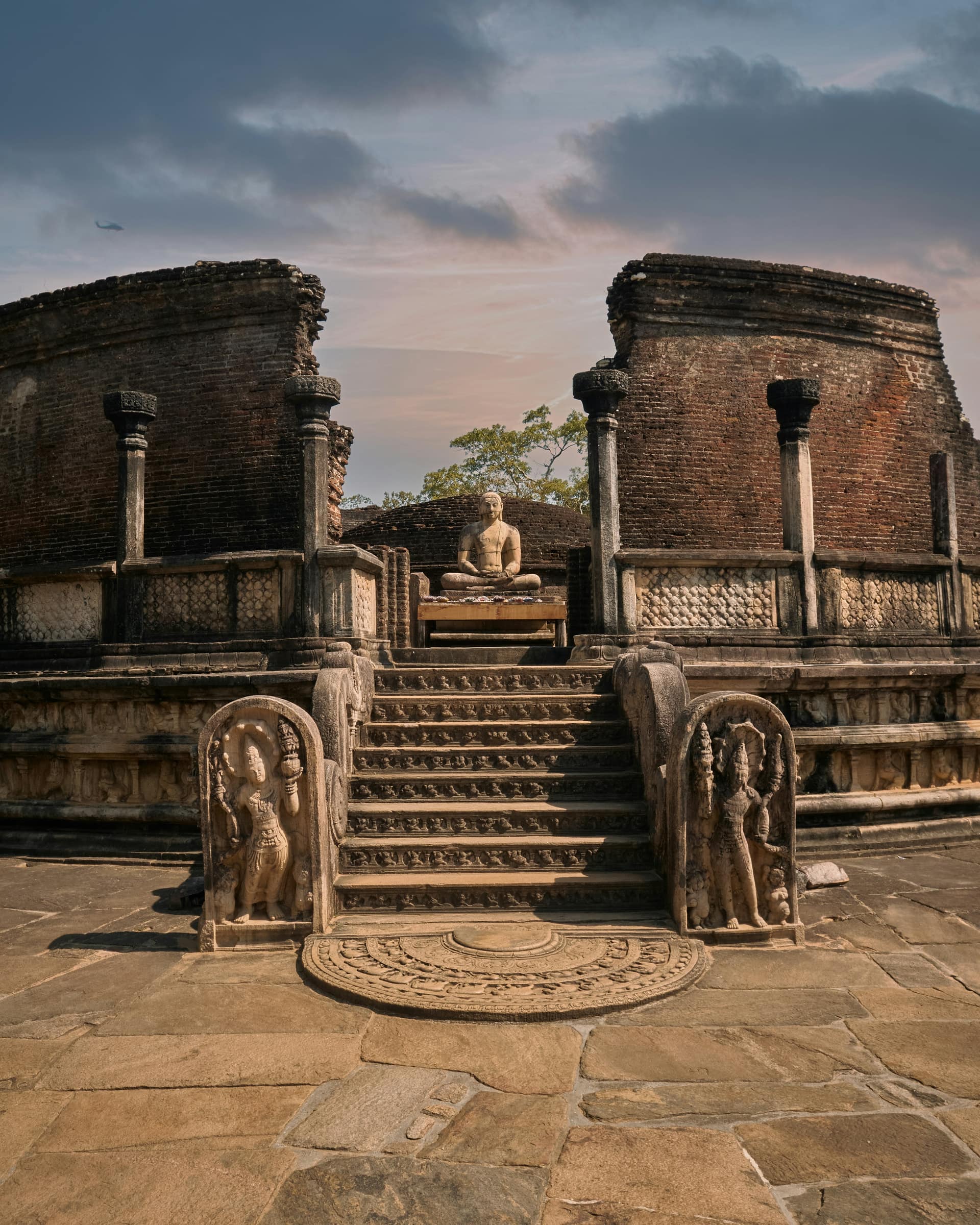
Polonnaruwa, Sri Lanka's second ancient capital and a UNESCO World Heritage site, sits within reasonable detour distance of the direct Cultural Triangle to Kandy route, and adds roughly 1 to 2 hours of exploring time depending on how much of the site is covered. The ruins include the Gal Vihara's rock-cut Buddha statues, the Royal Palace complex and a scattering of smaller temples spread across a wide, flat area.
Because the site is spread out and mostly flat, many visitors explore at least part of it by bicycle, a noticeably different pace and physical demand compared with the previous day's Sigiriya climb. Travellers who found day two's climb tiring may prefer to skip Polonnaruwa and take the direct route to Kandy instead, arriving with more time to rest before the evening.
Polonnaruwa flourished as Sri Lanka's capital roughly from the 11th to the 13th centuries, after Anuradhapura's decline, and the ruins reflect a comparatively later, more compact era of construction than the Cultural Triangle's oldest sites. For travellers who enjoyed the historical depth of Sigiriya, Polonnaruwa offers a genuinely different flavour of the same broad period, worth the added time for anyone with an interest in the region's ancient history.
- →Polonnaruwa highlights: the Gal Vihara rock-cut Buddha statues, the Royal Palace ruins, and the Quadrangle temple cluster.
- →Exploring by bicycle is a common, low-effort way to cover the site's flat, spread-out layout.
- →Adding Polonnaruwa typically extends day three by roughly 1 to 2 hours over the direct route.
Timing arrival for the evening ceremony
Kandy's Temple of the Tooth, home to a relic believed to be a tooth of the Buddha, holds a drumming and dance ceremony in the evening, roughly 45 minutes to an hour, that draws both worshippers and visitors. Timing the day's transfer, with or without the Polonnaruwa stop, to arrive in Kandy before this ceremony means seeing it on arrival evening rather than needing to fit it into day four's fuller schedule.
This is not guaranteed to work every time, since traffic around Kandy in the late afternoon can be unpredictable, but it is a realistic target when the day is planned with it in mind. Modest dress is expected inside the temple complex, so it is worth packing a layer that covers shoulders even for an evening visit straight off the road.
The drumming itself, played on traditional instruments including the geta bera, is loud and rhythmic, filling the temple courtyard in a way photographs rarely capture, and it is worth simply standing still for a few minutes to take it in rather than immediately reaching for a camera. Shoes come off before entering, as at every temple on this route, so slip-on footwear makes the whole process considerably easier after a day spent mostly in the car.
Settling into Kandy
Kandy sits at a noticeably higher elevation than the Cultural Triangle, and evenings there feel appreciably cooler, a welcome change after two days in flatter, hotter terrain and a small preview of the temperature drop that continues through the hill country later in the route. The city itself is built around Kandy Lake, with the temple complex and much of the old town within easy walking distance of most central accommodation.
Dinner on arrival evening is usually simple, and given the day's driving and, potentially, a Polonnaruwa stop plus the evening ceremony, an early night sets up day four's more relaxed pace comfortably.
- →Kandy Lake sits at the centre of the city, with the temple complex and old town within easy walking distance.
- →Evenings in Kandy feel noticeably cooler than the Cultural Triangle, a first preview of the hill country ahead.
- →Most central accommodation puts sightseeing, dining and the temple complex within a short walk.
Practical notes for the transfer
Road conditions between the Cultural Triangle and Kandy vary with the season, and the drive itself, even without the Polonnaruwa detour, is not a fast motorway run, so building in some flexibility around exact arrival time is sensible. Entry fees apply at Polonnaruwa if the stop is included, and current pricing is worth confirming before travel.
Bottled water and a light snack are worth having in the vehicle for the drive, since roadside stops vary in frequency and quality depending on the exact route taken. A driver-guide familiar with the road can generally judge, based on the time of departure, whether the Polonnaruwa stop and the evening ceremony are both realistically achievable on the same day, or whether one should be prioritised over the other.
Lankan Stays & Trails typically discusses the Polonnaruwa option with travellers the evening before, weighing interest in ancient history against how the Sigiriya climb was felt, so the day three plan can be adjusted to the group's pace rather than fixed in advance.
- →Direct Cultural Triangle to Kandy transfer: roughly 2 to 3 hours.
- →With the Polonnaruwa stop: add roughly 1 to 2 hours to the day.
- →Confirm entry fees and current opening times at Polonnaruwa before travel.
What follows on day 4
Day four is a considerably more relaxed day built around Kandy itself: a lake walk, further time at the Temple of the Tooth by daylight, and a Kandyan cultural dance performance in the evening, before an early night ahead of the scenic railway journey on day five. Day three's transfer, whichever version of it is chosen, exists mainly to get the itinerary to Kandy with enough of the evening left to make use of it.
Anyone still weighing up whether the Polonnaruwa detour was worth it will generally have their answer by the time they reach Kandy that evening: a genuinely satisfying half-day of ancient history for history-minded travellers, or, for those who preferred to conserve energy after Sigiriya, simply more time to settle into Kandy before day four's fuller schedule of temple, lake and dance.
Frequently asked questions
How long is the drive from Sigiriya to Kandy?
The direct road transfer typically takes roughly 2 to 3 hours, depending on the exact starting point in the Cultural Triangle and road conditions. Adding a stop at Polonnaruwa extends the day by roughly 1 to 2 hours further.
Is Polonnaruwa worth adding to the Kandy transfer?
For travellers interested in ancient history, generally yes. Polonnaruwa is a UNESCO World Heritage site with well-preserved ruins including the Gal Vihara Buddha statues, and much of it can be explored at a relaxed pace by bicycle.
Can you see the Temple of the Tooth ceremony on arrival day?
Often, yes, if the day's transfer is timed to reach Kandy before the evening drumming and dance ceremony, roughly 45 minutes to an hour. Traffic can affect timing, so it is not fully guaranteed, but it is a realistic target.
Do you need to dress modestly for the Temple of the Tooth?
Yes, shoulders and knees should be covered for any visit, including an evening stop straight off a day of travel. It is worth packing a light layer specifically for this even if the rest of the day's clothing is casual.
Is Kandy cooler than the Cultural Triangle?
Yes, Kandy sits at a higher elevation and feels noticeably cooler in the evenings compared with Sigiriya or Habarana, a first hint of the more significant temperature drop that follows later in the hill country stretch of the route.
Should you skip Polonnaruwa if the Sigiriya climb was tiring?
It is a reasonable choice. Skipping the optional stop and taking the direct route to Kandy leaves more time to rest before the evening, which some travellers prefer after a physically demanding day two.