
Quick answer
Day 2 of the 14-day Sri Lanka itinerary climbs Sigiriya Rock at opening, roughly 1,200 steps and two to three hours through the water gardens, the frescoes, the Mirror Wall and the Lion's Paw to the summit palace. The afternoon is deliberately slow: a long lunch, a rest through the heat and, for those with energy, Pidurangala at sunset. Dambulla Cave Temple waits for the morning of day 4, when it sits on the road to Kandy.
Key takeaways
- Sigiriya Rock takes roughly two to three hours and roughly 1,200 steps, and is best started at opening, before the heat and the tour groups.
- The 14-day route moves Dambulla Cave Temple to day 4 because it lies on the road south to Kandy.
- Freeing the afternoon gives the body a real rest on only its second day in the tropics.
- Pidurangala, roughly 1.5 km north of Sigiriya, gives the classic view of the rock at sunset in roughly an hour to an hour and a half return.
- A village walk or bullock-cart ride suits travellers who have climbed enough for one day.
Day 2 of the 14-day itinerary at a glance
Day 2 of the 14-day Sri Lanka itinerary is shaped by the sun. The climb goes in the cool first hours, the heat of the middle of the day is spent resting, and the optional outing waits until the light softens again in the late afternoon.
Because the route has three nights at Sigiriya, nothing needs packing and the day can be adjusted on the spot. If the sky is clear at dawn, climb; if a shower passes through, wait an hour. The flexibility is part of the design.
- →Around 6.30am: leave the hotel for the Sigiriya ticket office.
- →Opening to around 10am: the climb and the descent through the boulder gardens.
- →Late morning: the Sigiriya Museum near the entrance, if you are curious about the site's history.
- →Midday to around 3.30pm: lunch and a long rest.
- →Late afternoon: Pidurangala at sunset, a village walk or simply the pool.
Climbing Sigiriya Rock at opening
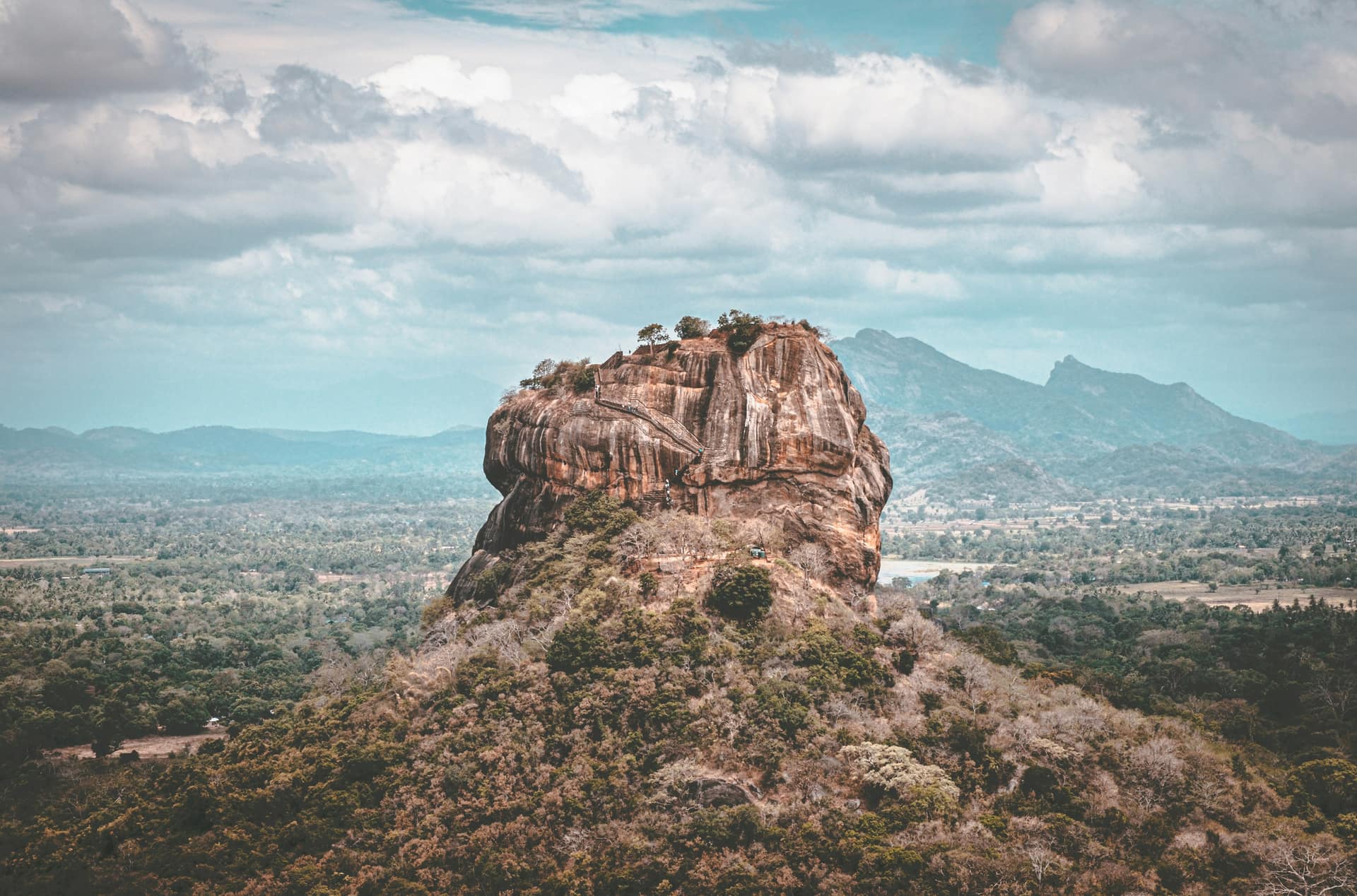
Sigiriya Rock, the fifth-century fortress of King Kashyapa and a UNESCO World Heritage Site, rises roughly 200 metres above the surrounding plain. The climb of roughly 1,200 steps takes most people two to three hours return, including time at the frescoes and on the summit.
Starting at opening matters for three reasons: the air is coolest, the light on the frescoes and the summit is kindest, and the staircases are least crowded before tour buses arrive from the coast. The final section, from the Lion's Paw terrace to the summit, is on steep metal stairs on the rock face.
- →The water gardens: symmetrical pools and channels at the foot of the rock.
- →The frescoes: the painted maidens in a sheltered gallery reached by a spiral staircase.
- →The Mirror Wall: once-polished plaster scratched with centuries-old verses.
- →The Lion's Paw terrace: the huge carved paws that once framed the entrance to the summit.
- →The summit: foundations of the palace, cisterns and views across the forest to the tanks.
Why Dambulla waits until day 4 on a fortnight
On the 7-day and 10-day routes, Dambulla Cave Temple is squeezed into the afternoon after Sigiriya, which makes day 2 long and hot. The 14-day route moves it to the morning of day 4, because Dambulla sits roughly 30 minutes from Sigiriya on the main road south to Kandy.
The change costs no extra driving and gives two benefits: day 2 becomes a genuine half-day, and Dambulla is seen at opening, when the cave interiors are quiet and the climb up to them is cool. It is the kind of small reordering that a two-week trip makes possible.
What to do with the slow afternoon near Sigiriya
The free afternoon near Sigiriya can be as active or as idle as you like. Many travellers do nothing at all, which is a perfectly good use of a second day after a long-haul flight.
For those who want more, Pidurangala Rock offers the best view of Sigiriya itself, especially at sunset. The final scramble over boulders is rougher than anything on Sigiriya, so it suits the reasonably agile, and a torch helps on the way down.
- →Pidurangala at sunset: roughly an hour to an hour and a half return, with the famous view of the rock.
- →A village walk: paddy fields, a farmer's house and a home-cooked lunch or tea.
- →A cycle around the tank: flat lanes and birdlife close to most hotels.
- →The pool and a book: underrated on day 2 of a fortnight.
Practical tips for day 2 at Sigiriya
Carry at least a litre of water per person, a hat and sunscreen, and wear shoes with good grip. Shoulders and knees do not need covering at Sigiriya, but they do at Dambulla and every other temple on the route, so keep a light layer in the car.
Hornets live on the rock face, and in rare cases staff pause the climb if a nest is disturbed; keep quiet on the upper staircases and follow any instructions. Anyone nervous of heights can stop at the Lion's Paw terrace and still see the frescoes and the Mirror Wall.
Planning day 2 of the 14-day route
Buy Sigiriya tickets at the counter on the morning or through official channels where available, and confirm current opening times locally before you go. A licensed guide at the entrance adds the story of Kashyapa and his rock, and is worth it for first-time visitors.
Lankan Stays & Trails times the day 2 pick-up for opening and books a village lunch for guests who want one. Day 3 of this series covers Polonnaruwa by bicycle and an afternoon with the wild elephants.
Frequently asked questions
What time should I climb Sigiriya?
At opening, which is usually early morning; confirm current hours locally. The first two hours are cooler, less crowded and better for photographs. Late afternoon is the second-best window, but on the 14-day route the afternoon is kept for rest or Pidurangala.
How long does it take to climb Sigiriya?
Most people take two to three hours return for the roughly 1,200 steps, including stops at the water gardens, the frescoes, the Mirror Wall, the Lion's Paw and the summit. Fit walkers can do it faster, but the site rewards a slow pace.
Can you do Sigiriya and Pidurangala on the same day?
Yes. Sigiriya at opening and Pidurangala at sunset is a popular pairing, with a long rest between them. Pidurangala takes roughly an hour to an hour and a half return and ends with a boulder scramble, so skip it if your legs are tired after the morning.
Should I do Dambulla on the same day as Sigiriya?
On a shorter trip, often yes. On a 14-day route there is a better option: Dambulla sits roughly 30 minutes from Sigiriya on the road to Kandy, so visiting it on the morning of the Kandy transfer keeps the Sigiriya day short and costs no extra driving.
Is Sigiriya suitable for people afraid of heights?
Partly. The lower sections are enclosed and gentle, but the spiral staircase to the frescoes and the final metal stairs above the Lion's Paw are exposed. Many nervous climbers stop at the Lion's Paw terrace, which still includes the frescoes and the Mirror Wall.
What should I wear to climb Sigiriya?
Light, breathable clothing, a hat and shoes with good grip. Sigiriya is not an active temple, so covering shoulders and knees is not required there, but carry a light layer for Dambulla and the other temples later in the trip.