
Quick answer
A 14-day Sri Lanka itinerary with Jaffna spends two nights in Anuradhapura, two in Jaffna, two at Sigiriya, one in Kandy, two in Ella after the train, one near Yala, two at Mirissa and a final night inside Galle Fort. It drops Polonnaruwa, Nuwara Eliya and the slow beach day to fit the north. The best window is roughly February to April, when both the north and the south coast are usually dry.
Key takeaways
- The nights split as Anuradhapura two, Jaffna two, Sigiriya two, Kandy one, Ella two, Tissamaharama one, Mirissa two and Galle Fort one.
- Anuradhapura to Jaffna takes roughly three to four hours; Jaffna to Sigiriya roughly four and a half to five and a half hours.
- Roughly February to April is the best window, after the north-east monsoon has left the north and before the south-west monsoon reaches the south.
- Anuradhapura replaces Polonnaruwa as the Cultural Triangle's ancient city on this version.
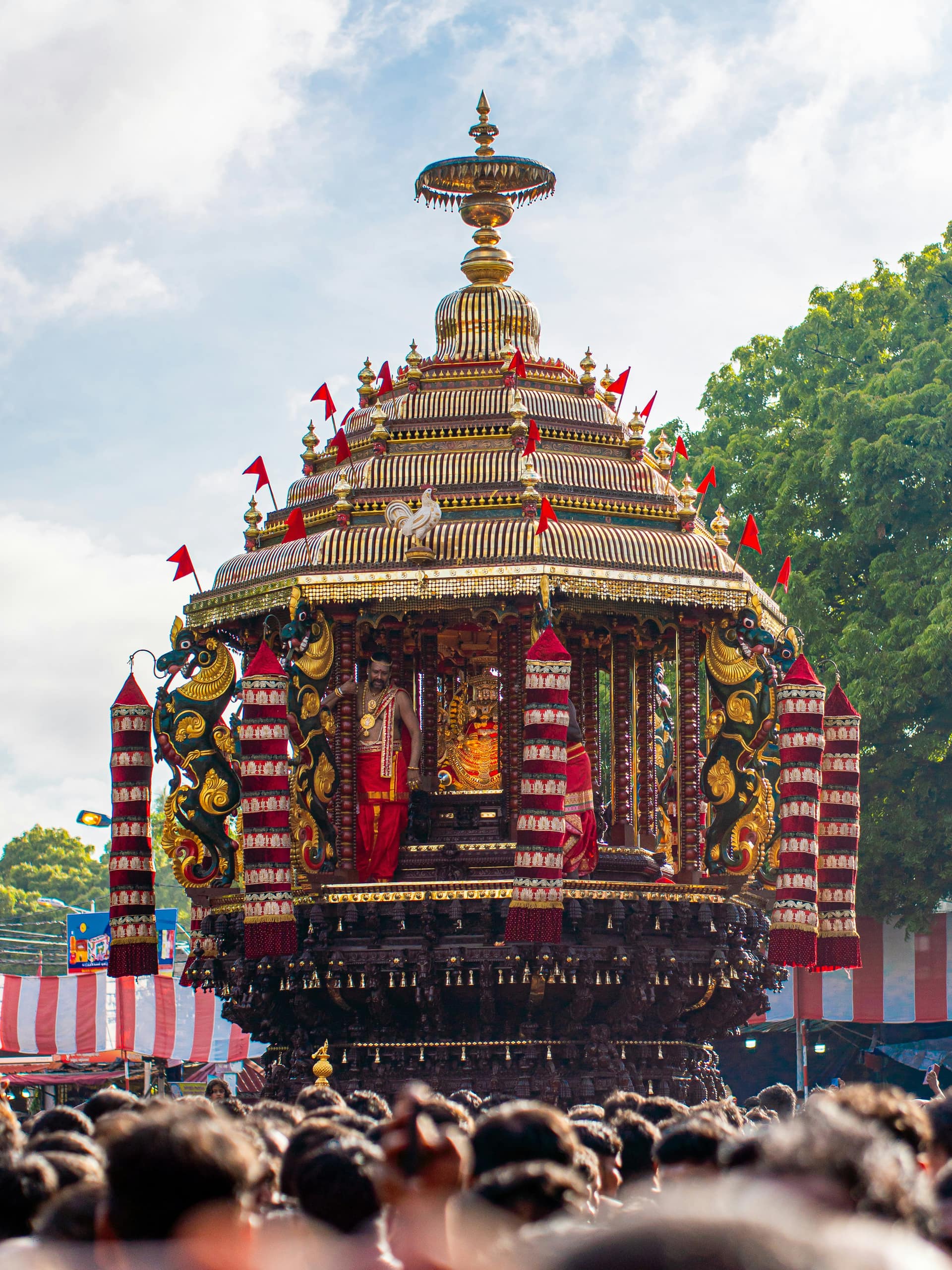
- Two nights in Jaffna allow the Nallur Kandaswamy Kovil, the Jaffna Fort and a boat to Nainativu island.
Why add Jaffna to a 14-day Sri Lanka itinerary
Jaffna, on a flat peninsula at the island's northern tip, is the heart of Sri Lanka's Tamil culture. Its temples, markets and cooking are distinct from the south, and its landscape of palmyra palms, lagoons and islands is unlike anywhere else on the island.
Adding the north to a 14-day trip gives a fuller picture of Sri Lanka's history and people. It also suits travellers with a second visit in mind, and those with a strong interest in culture, food and religion rather than beaches.
- →Nallur Kandaswamy Kovil: Jaffna's great Hindu temple, especially atmospheric at the evening puja.
- →The Jaffna Fort: a large star-shaped Dutch fort beside the lagoon.
- →Nainativu: an island reached by causeway and boat, with Hindu and Buddhist shrines.
- →Jaffna cooking: crab curry, odiyal kool and spicy Tamil dishes.
The 14-day route with Jaffna, day by day
The 14-day Sri Lanka itinerary with Jaffna runs north first, then turns south through the Cultural Triangle to the hills and the coast. It has two long drives, to and from Jaffna, and trades a few slower days for the extra region.
- →Day 1: Airport to Anuradhapura, roughly four to five hours.
- →Day 2: Anuradhapura's sacred city by bicycle, Mihintale at sunset.
- →Day 3: Drive roughly three to four hours to Jaffna; Nallur Kovil in the evening.
- →Day 4: Jaffna Fort, the market and a boat to Nainativu.
- →Day 5: Drive roughly four and a half to five and a half hours to Sigiriya.
- →Day 6: Sigiriya Rock at opening, Dambulla Cave Temple in the afternoon.
- →Day 7: Drive to Kandy via Aluvihare; the evening puja.
- →Day 8: The train from Kandy to Ella, roughly six to seven hours.
- →Day 9: A full day in Ella.
- →Day 10: Ella to Tissamaharama and an afternoon safari in Yala.
- →Day 11: An optional dawn safari, then along the coast to Mirissa.
- →Day 12: Whale watching or a beach day.
- →Day 13: Mirissa to Galle Fort.
- →Day 14: Galle Fort in the morning, then the airport.
Anuradhapura in place of Polonnaruwa
Anuradhapura, Sri Lanka's first great capital and a UNESCO World Heritage Site, is a sacred city of vast stupas, monasteries and the Sri Maha Bodhi, a fig tree grown from a cutting of the tree under which the Buddha is said to have attained enlightenment. It is a living pilgrimage site, not just a ruin.
Because the route passes Anuradhapura on the way north, it replaces Polonnaruwa as the ancient city of this version. Mihintale, roughly 20 minutes east, is where Buddhism is said to have been introduced to the island, and its hilltop at sunset is a fine end to day 2.
The best season for the north and south together
The north is affected by the north-east monsoon, roughly October to January, while the south coast is best roughly December to April. The overlap, when both are usually dry, is roughly February to April, which makes it the best window for this version of the 14-day route.
From roughly May to September, the north and east are dry but the south coast is not; a better fit then is Jaffna combined with Trincomalee and the Cultural Triangle, as on our Sri Lanka Grand Tour.
- →Best: roughly February to April.
- →Workable: late January, with some risk of rain in the north.
- →Change the route: May to September, when the south coast is wet.
What this version gives up
Fitting Jaffna into fourteen days means cutting elsewhere. Polonnaruwa and the Cultural Triangle elephant safari are dropped, Kandy gets one night rather than two, Nuwara Eliya and Horton Plains are removed, and Mirissa loses its slow day.
The trade suits travellers who value culture and variety over rest. Those who want both the north and a slow pace should consider three weeks, where the north fits without cutting the hills or the beach.
- →Dropped: Polonnaruwa and the elephant safari, Nuwara Eliya and Horton Plains, a Kandy night, a Mirissa night.
- →Added: Anuradhapura, Mihintale, Jaffna and its islands.
Planning a 14-day itinerary with Jaffna
Book the Kandy to Ella train early and the Jaffna hotel, where good choices are fewer than in the south. Pack modest clothing for Hindu temples, where men often remove shirts at Nallur, and bring small notes for offerings and boat fares.
Lankan Stays & Trails plans northern routes with drivers who know Jaffna well, and our thirteen-day Sri Lanka Grand Tour combines Jaffna with Trincomalee and the Cultural Triangle. The pillar guide explains the standard fortnight this version adapts.
Frequently asked questions
Is Jaffna worth visiting on a two-week trip?
Yes, for travellers interested in culture, food and history. Jaffna offers Tamil temples, cooking and a distinct landscape of palmyra palms and islands. It costs a few days elsewhere, usually a slower beach day and the hill-country extras, so it suits curious travellers more than those seeking rest.
How long does it take to get from Anuradhapura to Jaffna?
Roughly three to four hours by road on the A9 highway, depending on stops. From Jaffna back south to Sigiriya takes roughly four and a half to five and a half hours. Trains also run between Colombo, Anuradhapura and Jaffna.
How many days do you need in Jaffna?
Two nights is a good minimum, giving one full day for the Jaffna Fort, the market, Nallur Kandaswamy Kovil and a boat trip to Nainativu island. Three nights allow Delft island or a slower pace. One night is possible but rushed.
When is the best time to visit Jaffna?
Roughly February to September is usually dry in the north. The north-east monsoon brings rain roughly October to January. For a route combining Jaffna with the south coast, roughly February to April works best, since both regions are usually dry then.
Should I visit Anuradhapura or Polonnaruwa?
On a route to Jaffna, Anuradhapura, since it lies on the way north. It is larger, older and a living pilgrimage site. Polonnaruwa is more compact and easier to see in a morning, which is why the standard 14-day route uses it instead.
What should I wear to temples in Jaffna?
Cover shoulders and knees. At Nallur Kandaswamy Kovil, men are usually expected to remove shirts before entering, and shoes are left outside. Women should wear modest clothing. Follow local guidance and ask before taking photographs inside.