
Quick answer
A 2-week Sri Lanka plan for divers and snorkellers puts the hills before the diving. From roughly November to April: Sigiriya two nights, Kandy one, Ella two, Yala one, Mirissa two, Unawatuna two and Hikkaduwa three. From roughly May to September: Sigiriya three nights, Trincomalee five, Kandy two, Ella two and Negombo one. Leave roughly 18 to 24 hours between the last dive and a flight or a drive up to the hill country.
Key takeaways
- Sri Lanka's west and south coasts are dived from roughly November to April, and the east coast from roughly May to September.
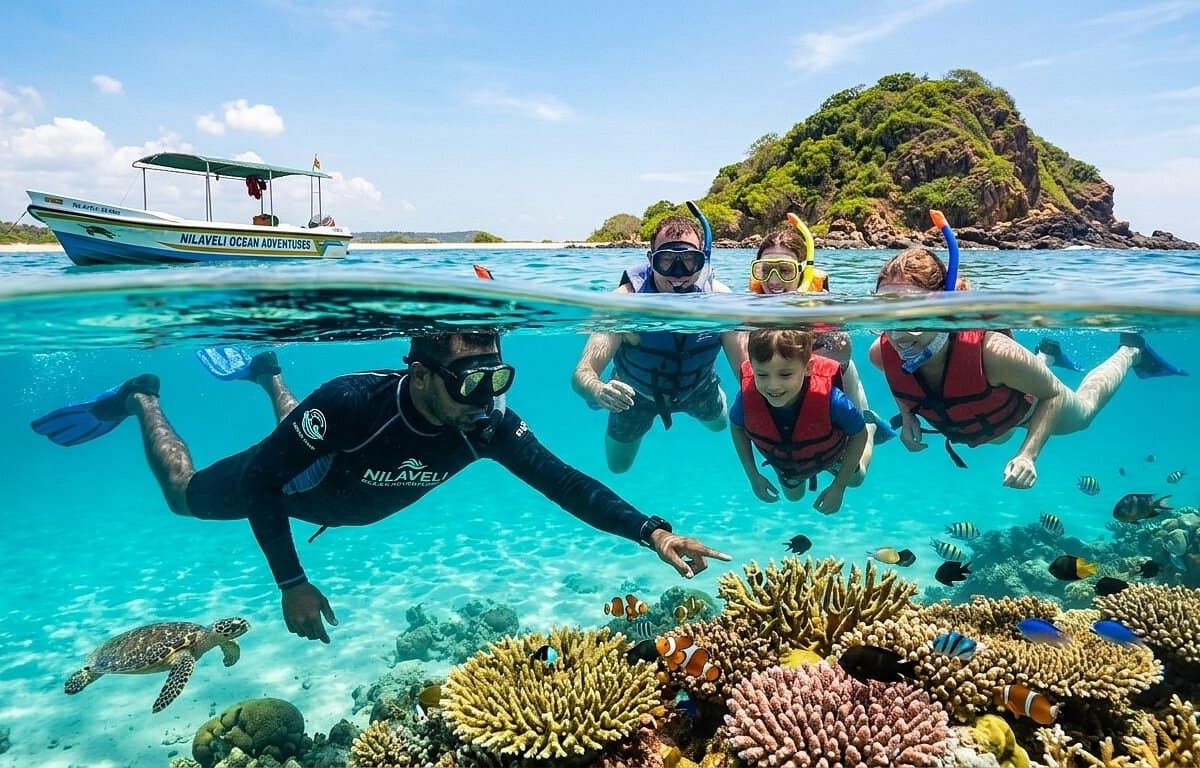
- Pigeon Island National Park, off Nilaveli, is the country's best-known snorkelling site, with blacktip reef sharks and turtles in shallow water.
- Divers should leave roughly 18 to 24 hours between their last dive and flying, and treat a drive up to the hill country the same way.
- HMS Hermes, a British aircraft carrier sunk in 1942 off Batticaloa, lies at roughly 50 metres and is for technical divers only.
- Visibility in Sri Lanka typically ranges from roughly 10 to 25 metres, depending on the season and site.
Why the order of a diving fortnight matters
Diving and altitude do not mix. After diving, the body needs time to release absorbed nitrogen before air pressure drops, which is why divers wait before flying. Sri Lanka's hill country reaches roughly 1,900 metres at Nuwara Eliya and more than 2,000 metres at Horton Plains, high enough for the same caution to apply to a car journey.
The simple answer is to see the hills first and dive last, keeping the final day of the trip dry before the flight home. Where the route makes that impossible, as it does on the east coast, a non-diving day and a night at moderate altitude in Kandy, at roughly 500 metres, should come between the last dive and the climb. Follow your training agency's guidance and your dive computer.
November to April: the south and west coasts
From roughly November to April the sea on the south and west coasts is calm. The winter route runs inland first and then works along the coast towards the airport, with seven nights by the water.
- →Sigiriya, two nights; Kandy, one night; Ella, two nights; Yala, one night.
- →Mirissa, two nights: snorkelling with turtles in the bay, and whale watching.
- →Unawatuna, two nights: shore-accessible reefs and several wrecks off Galle.
- →Hikkaduwa, three nights: the marine national park, deeper reefs and wrecks.
- →Kalpitiya's Bar Reef, on the north-west coast, is an alternative for experienced snorkellers in calm weather.
May to September: Trincomalee and the east
From roughly May to September the diving moves east. Trincomalee and Nilaveli, roughly two to three hours from Sigiriya, have the island's most reliable summer conditions, and five nights give four diving or snorkelling days and a rest.
The summer route places the diving in the first week, so the order rule needs care. After the last dive, spend a full dry day at the beach, then two nights in Kandy before the train up to Ella.
- →Sigiriya, three nights; Trincomalee or Nilaveli, five nights.
- →Kandy, two nights; Ella, two nights; Negombo, one night.
- →Pigeon Island: coral gardens and reef sharks; boats from Nilaveli take roughly 10 to 15 minutes.
- →Swami Rock and nearby reefs: shore and boat dives for all levels.
What you will see, and what you will not
Sri Lanka's underwater strengths are wrecks, rocky reefs and large fish, not vast coral gardens. Much of the shallow coral was damaged by bleaching and by the 2004 tsunami, and recovery is uneven. Turtles are common on both coasts, and reef sharks are almost guaranteed at Pigeon Island.
Choose Sri Lanka for a diving and travel combination. Choose the Maldives if diving is the only purpose of the trip. The wreck of HMS Hermes off Batticaloa is world-class, but at roughly 50 metres it is for trained technical divers.
Diving and snorkelling responsibly
Marine life in Sri Lanka is under pressure from visitor numbers at a handful of sites. A few habits make a real difference, and reputable operators insist on them.
- →Never stand on or touch coral, at Pigeon Island or anywhere else.
- →Do not touch, feed or chase turtles; feeding at Hikkaduwa's beach harms them.
- →Use reef-safe sunscreen, or better, a long-sleeved rash vest.
- →Choose dive centres affiliated with a recognised training agency, and check the equipment.
- →Carry certification cards and a logbook; refresher dives are widely offered.
Planning a diving fortnight in Sri Lanka
A diving fortnight needs the dive days booked before the hotels, since good centres limit numbers per boat. Learner courses take three to four days, which fits the Hikkaduwa or Trincomalee stay.
Lankan Stays & Trails can arrange the inland route around your diving dates and keep the driving days clear of the no-fly window. The standard 14-day route shows the stops this plan shortens.
Frequently asked questions
Is Sri Lanka good for scuba diving?
Sri Lanka is good for wreck diving, rocky reefs and large fish, and for combining diving with sightseeing. It has less extensive coral than the Maldives. The best areas are Hikkaduwa, Unawatuna and Colombo in winter, and Trincomalee and Batticaloa in summer.
When is the diving season in Sri Lanka?
The diving season on the west and south coasts runs roughly from November to April. On the east coast it runs roughly from May to September. Outside those windows, seas are rough and visibility is poor on the affected coast, and many dive centres close.
Where is the best snorkelling in Sri Lanka?
Pigeon Island National Park, off Nilaveli near Trincomalee, has the best snorkelling, with coral, reef sharks and turtles from roughly May to September. In winter, the bays at Mirissa, Unawatuna and Hikkaduwa offer easy snorkelling with turtles close to shore.
Can I go to the hill country after diving in Sri Lanka?
Not straight away. Nuwara Eliya and Horton Plains are high enough to pose a risk after diving. Leave roughly 18 to 24 hours after your last dive before driving up, or longer after several days of repetitive diving, and follow your dive computer.
Can beginners learn to dive in Sri Lanka?
Yes. Hikkaduwa, Unawatuna and Trincomalee all have dive centres offering entry-level courses, which usually take three to four days. Conditions in season are calm and warm, with water temperatures around 27 to 29 degrees Celsius. Choose a centre affiliated with a recognised agency.
Can I see sharks while snorkelling in Sri Lanka?
Yes. Blacktip reef sharks are regularly seen in the shallows at Pigeon Island National Park, often in water less than two metres deep. They are small and wary of people. Whale sharks are seen occasionally off both coasts but cannot be planned for.