
Quick answer
Two weeks in Sri Lanka while working remotely works best with sightseeing at the weekends and two working bases: two nights at Sigiriya, one in Kandy, four in Ella and six on the south coast around Ahangama, Weligama or Hiriketiya. Mobile 4G is good along this route, and coworking spaces on the south coast have fibre and back-up power. Sri Lanka is five and a half hours ahead of UTC, which suits European and Asia-Pacific working hours.
Key takeaways
- Sri Lanka's time zone is UTC plus five and a half hours, all year, with no daylight saving.
- Mobile 4G coverage is good in towns and along the main routes, and a local SIM or eSIM with data is inexpensive.
- Ahangama, Weligama and Hiriketiya on the south coast have coworking spaces with fibre connections and back-up power.
- Power cuts and brief internet drops still occur, especially in the hills during storms, so a charged power bank and a mobile hotspot are essential.
- Tourist entry permits are intended for visitors; check the current rules on remote working before travelling.
A two-week route built around working days
Two weeks in Sri Lanka while working remotely should treat weekends as travel time and weekdays as stationary. Arriving on a Friday night or Saturday morning gives a first weekend in the Cultural Triangle and Kandy, a working week in Ella, a second weekend on safari, and a final working week by the sea.
- →Sigiriya, two nights (Saturday and Sunday): the rock at opening and an elephant safari.
- →Kandy, one night (Monday): a half day of work, the evening puja.
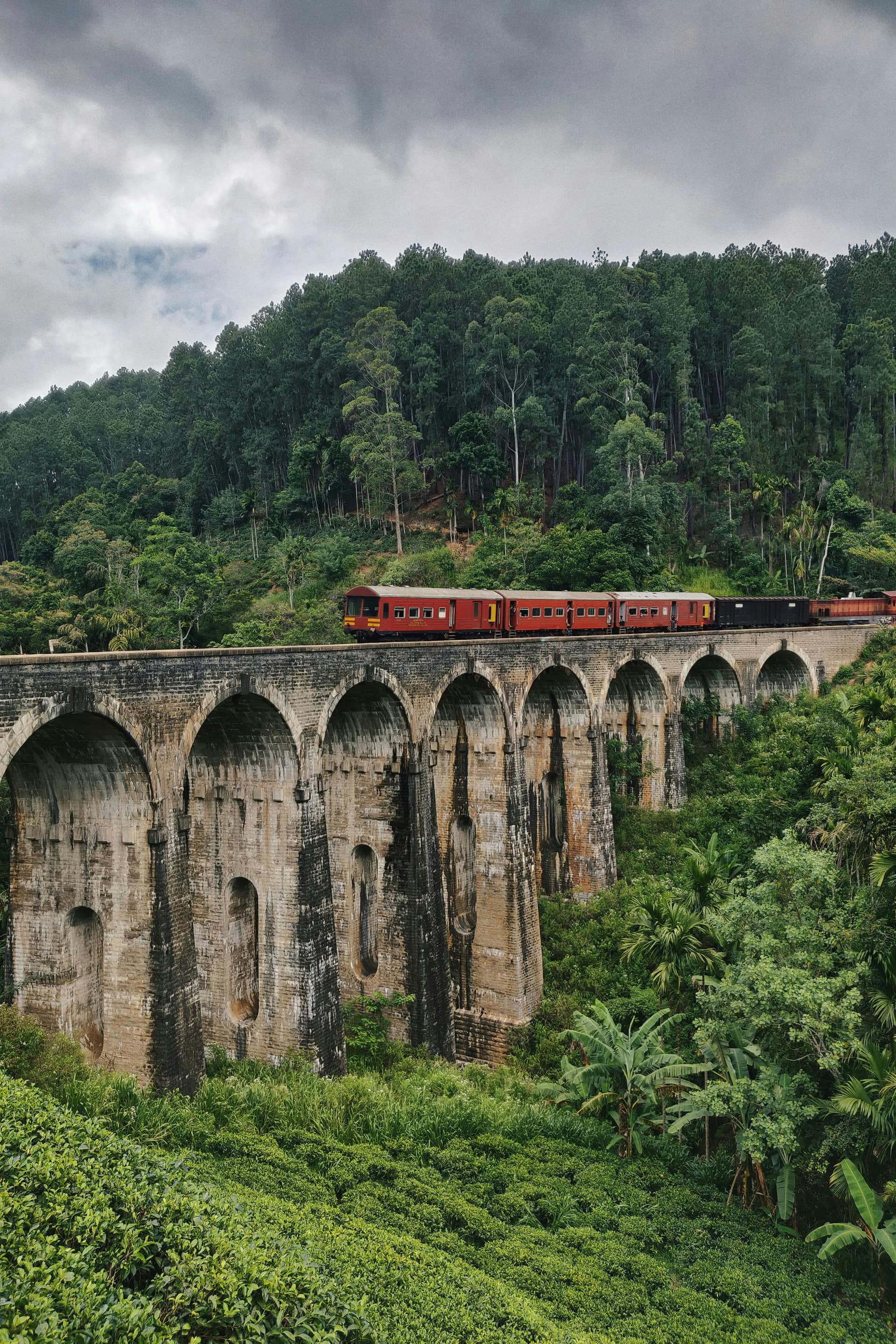
- →Ella, four nights (Tuesday to Friday): the train in, then working days with dawn walks.
- →South coast, six nights: Yala on the Saturday drive down, then Ahangama, Weligama or Hiriketiya.
Internet, SIM cards and power
Internet in Sri Lanka is better than its reputation and less dependable than an office. Mobile 4G is the backbone: it is fast enough for video calls in most towns on this route, and a tourist SIM or eSIM with a large data allowance can be bought at the airport on arrival.
Hotel Wi-Fi varies widely, even within one building. Ask for a recent speed test before booking, and for a room near the router. Coworking spaces on the south coast are the most reliable option, with fibre lines, generators or batteries, and air conditioning.
- →Carry two connections: hotel Wi-Fi and a phone hotspot on a different network.
- →Keep a power bank charged; short power cuts happen during storms and maintenance.
- →Bring a universal adaptor; sockets take type D, M and G plugs at 230 volts.
- →Download files before travelling days; coverage drops on hill roads and in national parks.
Time zones and the shape of the day
Sri Lanka's time zone decides whether a working fortnight is a pleasure or a strain. At five and a half hours ahead of UTC, the island suits colleagues in Europe and the Asia-Pacific region, and is hard work for those tied to the Americas.
Choose mornings for exploring and afternoons for work if your team is in Europe: a European working day starts in the early afternoon in Sri Lanka and ends late in the evening. Choose the reverse for Australia and East Asia, starting early and finishing by mid-afternoon. For the Americas, expect evening and night-time calls.
The two working bases: Ella and the south coast
Ella is a good first working base because everything is close. Little Adam's Peak takes 45 to 90 minutes and can be walked before breakfast, cafés with reasonable Wi-Fi line the main street, and the climate is cool enough to think. Connections are less robust than on the coast, so plan important calls with a hotspot ready.
The south coast between Weligama and Ahangama has become the island's remote-working centre, with coworking spaces, long-stay guesthouses and surf before work. Hiriketiya, further east, is smaller and quieter. From roughly May to September, the south coast is in the monsoon and Arugam Bay becomes the alternative, with simpler facilities.
What a working fortnight leaves out
A working fortnight sees less than a holiday one, and it is better to accept that than to squeeze. This route drops Polonnaruwa, Nuwara Eliya, Horton Plains, whale watching and Galle Fort as an overnight stop, though the fort is an easy evening trip from Ahangama, roughly 30 to 40 minutes away.
The gain is depth: four days in one hill town and six in one bay, long enough to have a regular café and to know the tuk-tuk drivers by name.
- →Use the second weekend for Yala and one free beach day.
- →Keep one weekday afternoon clear for a tea factory or a cooking class.
- →Do not schedule calls on travelling days.
Planning the trip, and the paperwork
Entry rules deserve a check. Sri Lanka's tourist authorisation is intended for holidaymakers, and the rules on working remotely for an overseas employer have been under review, with a dedicated digital nomad visa announced. Confirm the current position with official sources, and your employer's policy on working abroad, before booking.
Lankan Stays & Trails can arrange the weekend legs with a driver and suggest stays with dependable connections for the working weeks. The standard 14-day route shows what a full holiday version covers.
Frequently asked questions
Is the internet in Sri Lanka good enough for remote work?
Usually, yes. Mobile 4G is fast enough for video calls in most towns, and coworking spaces on the south coast have fibre and back-up power. Hotel Wi-Fi is inconsistent, and outages happen, so always have a mobile hotspot as a second connection.
Where is the best place to work remotely in Sri Lanka?
The south coast between Weligama and Ahangama is the best-equipped area, with coworking spaces and long-stay accommodation. Hiriketiya and Ella are popular smaller bases. From May to September, when the south coast is in the monsoon, Arugam Bay is the main alternative.
What time zone is Sri Lanka in?
Sri Lanka is five and a half hours ahead of Coordinated Universal Time, with no daylight saving changes. That is four and a half or five and a half hours ahead of the United Kingdom, depending on the season, and it overlaps well with European and Asia-Pacific working hours.
Can I work remotely in Sri Lanka on a tourist visa?
The rules have been changing. Sri Lanka's tourist authorisation is meant for holiday visits, and a digital nomad visa has been announced. Check the latest guidance from the Department of Immigration and Emigration, and your employer's policy, before you travel.
Are there power cuts in Sri Lanka?
Occasional short power cuts occur, mostly during storms or maintenance, and are more common in the hills. Coworking spaces and larger hotels have generators or batteries. A charged power bank and a laptop with good battery life cover most interruptions.
Can I see Sri Lanka's main sights while working full time?
You can see some of them. With two weekends and early mornings, a working fortnight covers Sigiriya, an elephant safari, Kandy's temple, the scenic train, Ella's walks, Yala and the south coast. Polonnaruwa, Horton Plains and whale watching usually have to wait.