
Quick answer
A 5-day Sri Lanka trip in the shoulder months works best on the Cultural Triangle and Kandy route, which has the most indoor and shaded fallbacks. In April, the south coast is usually still good, but it is hot, and Sinhala and Tamil New Year around 13 and 14 April fills the hills. In October and November, inter-monsoon rain can fall across the island, often as afternoon storms. Put sights in the morning, keep one day flexible and expect fewer crowds.
Key takeaways
- Sri Lanka's shoulder months, roughly April and October to November, fall between the south-west and north-east monsoons.
- Inter-monsoon rain in October and November often arrives as heavy afternoon or evening storms, with clearer mornings.
- April is usually hot and humid, with the south coast still in reasonable condition early in the month.
- Sinhala and Tamil New Year usually falls on 13 and 14 April, when domestic travel peaks and some businesses close.
- Yala often closes for part of September and October; confirm the dates before planning a south coast safari.
What the shoulder months mean for a short trip
The shoulder months in Sri Lanka, roughly April and October to November, fall between the island's two monsoons. The south-west monsoon runs roughly May to September and the north-east roughly November to February. Between them, inter-monsoon weather can bring rain to any part of the island, often as heavy afternoon storms.
For a five-day trip, that means two things: no coast is guaranteed to be at its best, and mornings are usually more reliable than afternoons. It also means fewer visitors and, often, lower hotel prices.
Five days in April
April is a hot, humid month in Sri Lanka, with the first afternoon showers in the south and west. The south coast is usually still good for a five-day trip in the first half of April, and the Cultural Triangle is hot but dry enough for early-morning sightseeing.
Sinhala and Tamil New Year, usually on 13 and 14 April, is the island's biggest domestic holiday. Families travel to the hills, Nuwara Eliya fills up, some shops and restaurants close, and traffic is heavy. It is a wonderful time to see local traditions, but not the easiest for a tight five-day route.
- →Early April: south coast or Cultural Triangle.
- →Around 13 and 14 April: book the hills well ahead or avoid them.
- →Late April: the south and west become wetter; the east coast starts to improve.
Five days in October and November
October and November are the least predictable months in Sri Lanka. Inter-monsoon rain can fall across much of the island, and the north-east monsoon begins on the east coast around November. Rain often comes as heavy afternoon or evening storms after clearer mornings, rather than all-day downpours.
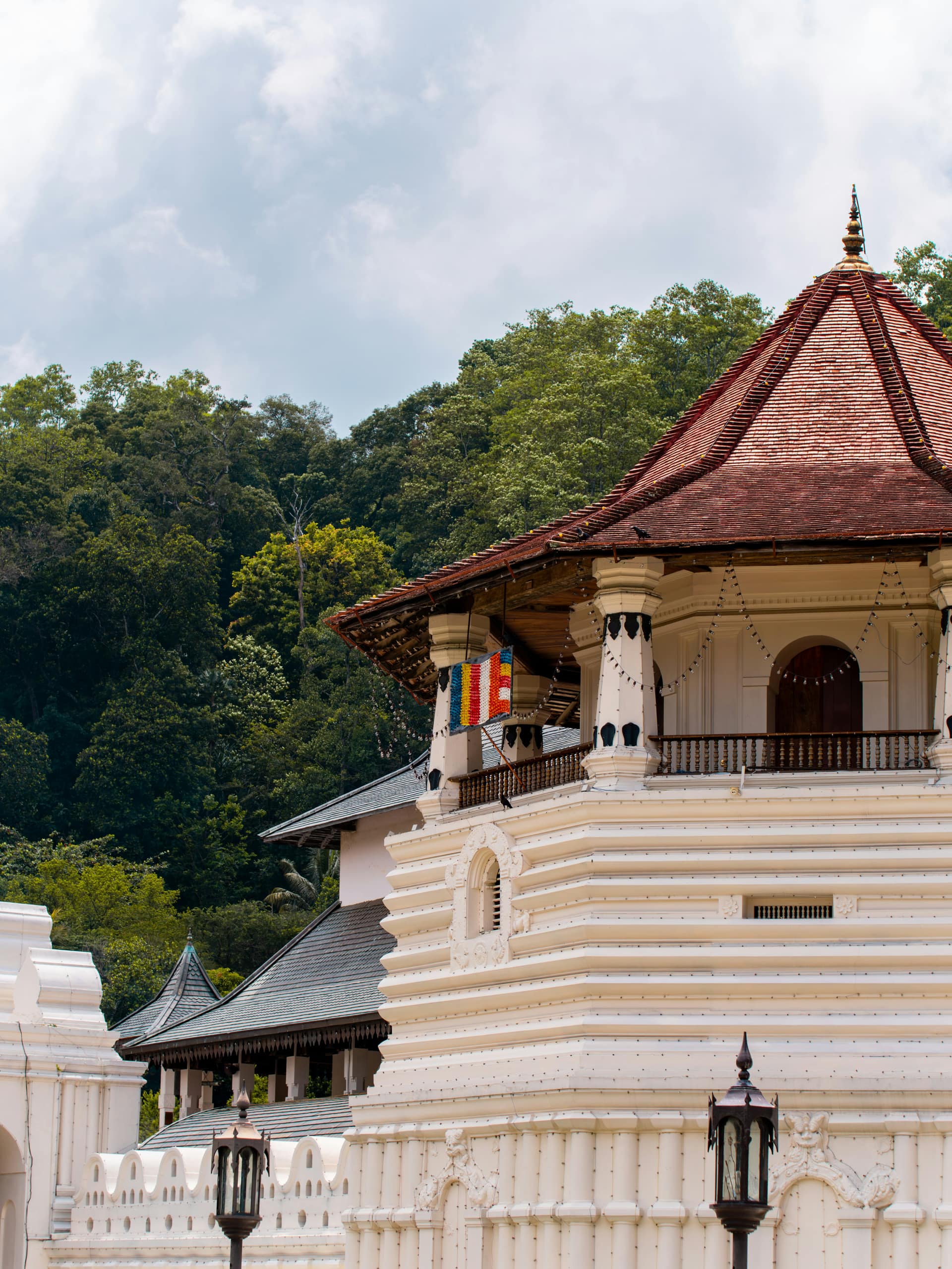
For a five-day trip, the Cultural Triangle and Kandy route is usually the safest choice, because it has the most sights that work in rain: Dambulla's caves, the Temple of the Tooth, museums and tea factories. The south coast can be pleasant, but the sea is often rough. The east coast is best avoided from November.
- →Safest route: Cultural Triangle and Kandy.
- →South coast: possible, but rougher sea and a Yala closure risk in October.
- →Hill country: often wet and misty; views less reliable.
- →East coast: avoid from roughly November.
A strategy for shoulder-month weather
A five-day trip in the shoulder months works best with a simple strategy: put the important outdoor sights in the morning, keep the afternoons for shaded or indoor visits, and leave one day flexible so a rained-out sight can move.
On the Cultural Triangle route, that means Sigiriya on day 2 with day 3 as a backup, and Polonnaruwa or the safari swapped as needed. A private driver makes these swaps easy, because the plan can change over breakfast.
- →Outdoor sights in the morning.
- →Indoor or shaded sights in the afternoon.
- →One flexible day to absorb a washed-out morning.
- →A light rain jacket and quick-drying clothes.
The upsides of travelling between the monsoons
The shoulder months have real upsides for a five-day trip. Sites such as Sigiriya and the Temple of the Tooth are quieter, hotels are easier to book at shorter notice, and prices are often lower than in the peak months. The landscape is also at its greenest after the rains.
For travellers who value quiet over certainty, a well-planned shoulder-month trip can feel more relaxed than one in the peak season.
Planning a shoulder-month five days
Choose the Cultural Triangle for October and November, the south coast or Cultural Triangle for early April, and build one flexible day into the route. Lankan Stays & Trails watches the weather through the trip and adjusts the order of sights each morning, which matters most in these months.
Frequently asked questions
Is October a good time for a 5-day trip to Sri Lanka?
It can be, with flexibility. Inter-monsoon rain can fall across the island, usually as afternoon storms. The Cultural Triangle and Kandy route works best, with sights in the morning. Check whether Yala is closed if you are considering the south coast.
Where should I go in Sri Lanka in November for 5 days?
The Cultural Triangle and Kandy, which have the most sights that work in rain. The south coast can be pleasant later in the month but the sea is often rough. The east coast enters its wet season around November and is best avoided.
Is April a good month for a short Sri Lanka trip?
Yes, especially early April, when the south coast is usually still good. It is hot and humid, so start early. Sinhala and Tamil New Year, usually on 13 and 14 April, brings heavy domestic travel and some closures.
Does it rain all day in the shoulder months?
Usually not. Inter-monsoon rain often falls as heavy afternoon or evening storms, with clearer mornings. That is why the best strategy is to put outdoor sights early in the day and keep afternoons for indoor or shaded visits.
Is Sri Lanka cheaper in the shoulder months?
Often, yes. Hotel prices outside the peak season are frequently lower, and availability is better. The savings vary by region and hotel, so compare before booking. The trade-off is less predictable weather, so build one flexible day into a five-day plan.
What is Sinhala and Tamil New Year?
Sri Lanka's biggest domestic holiday, usually on 13 and 14 April, marking the traditional new year with family rituals, games and food. Many businesses close for a few days, and domestic travel, especially to the hills, is very busy.