
Quick answer
A rain plan for a 5-day Sri Lanka trip has three parts: put outdoor sights in the morning, when rain is less likely; keep one flexible day so a rained-out sight can move; and have indoor or shaded fallbacks ready. On the Cultural Triangle route, swap Sigiriya with Dambulla or Polonnaruwa's museum; in the hills, swap Horton Plains for a tea factory; on the coast, swap the beach for Galle Fort. In very heavy rain or landslide warnings, follow local advice.
Key takeaways
- Rain in Sri Lanka usually falls as heavy showers or afternoon storms, with mornings often clearer.
- A five-day trip with two nights at one base has a built-in flexible day for weather swaps.
- Dambulla Cave Temple, the Temple of the Sacred Tooth Relic, tea factories and museums all work well in rain.
- Sigiriya can close or become slippery in heavy rain and lightning; Horton Plains views disappear in cloud.
- In the hill country, heavy rain can cause landslides and road closures; follow local advice and official warnings.
How it usually rains in Sri Lanka
Rain in Sri Lanka usually arrives as heavy showers or afternoon and evening storms, rather than steady all-day rain, especially in the inter-monsoon months. Mornings are often the clearest part of the day. During the main monsoons, the affected coast and slopes can see longer spells, but even then breaks are common.
That pattern shapes the rain plan for a five-day trip. Put the sights that need clear weather early, keep afternoons for sights that work in any weather, and treat one day as flexible.
Rain swaps on each five-day route
Each five-day route has natural rain swaps, where a sight that needs dry weather changes places with one that does not. A private driver makes these swaps easy, because the day can change over breakfast.
- →Cultural Triangle: Sigiriya moves from day 2 to day 3; Dambulla's caves and the Sigiriya museum fill the wet morning.
- →Kandy: the Temple of the Tooth and a tea museum work in rain; Peradeniya is lovely in light rain.
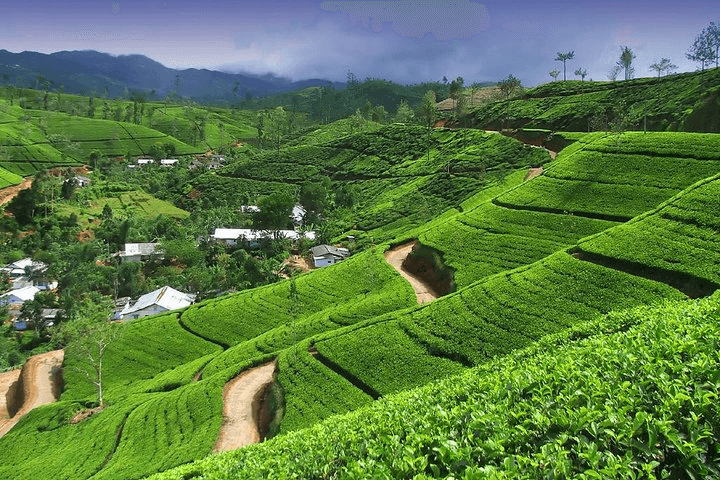
- →Hill country: a tea factory or the train replaces Horton Plains if the plateau is in cloud.
- →Ella: Little Adam's Peak moves to the next morning; a cooking class fills the afternoon.
- →South coast: Galle Fort's covered lanes, cafes and museums replace a beach session.
- →Safaris: light rain is fine; heavy storms may cut drives short.
Building in a flexible day
A flexible day is the most useful rain protection on a five-day trip. It comes from staying two nights somewhere: with two nights at Sigiriya, the climb can happen on either morning; with two nights at Mirissa, whale watching has a backup; with two nights in Ella, Little Adam's Peak can wait for clear air.
Trips that change hotel every night have no flexible day, and a single wet morning can remove a sight entirely. That is one more reason to choose two bases over four.
- →Two Sigiriya nights: two chances at the rock.
- →Two Mirissa nights: a backup whale morning.
- →Two Ella nights: a second sunrise for Little Adam's Peak.
When heavy rain means changing the plan
Sometimes rain is heavy enough to change the plan rather than just the order. Sigiriya can close or become dangerous in heavy rain and lightning. Hill country roads can be affected by landslides after prolonged rain. Sea conditions can cancel whale watching and make swimming unsafe.
In those cases, follow local advice, listen to your driver and check official weather warnings. A good operator will reroute a five-day trip rather than push through, for example by spending an extra night in Kandy instead of driving to Nuwara Eliya.
What to pack for rain on a short trip
Packing for rain on a five-day trip is light work, because it is warm rain in most places. A compact rain jacket, quick-drying clothes and shoes with grip are enough for most routes. In the hill country, add a warm layer, as wet weather at altitude can feel cold.
A dry bag or ziplock bags protect a phone and passport, and leech socks help on forest paths in wet weather. An umbrella is useful in towns and at temples, where rain jackets can feel out of place.
- →A compact rain jacket and a small umbrella.
- →Quick-drying clothes and shoes with grip.
- →A warm layer for the hill country.
- →Ziplock or dry bags for a phone and passport.
- →Leech socks for forest paths after rain.
Planning a rain-proof five days
Choose the coast that is in season, stay two nights at one base or more, and put outdoor sights early. Lankan Stays & Trails adjusts five-day trips each morning to the forecast, and plans rain swaps for each route so a wet day rarely costs a highlight.
Frequently asked questions
What can I do in Sri Lanka when it rains?
Dambulla Cave Temple, the Temple of the Sacred Tooth Relic, tea factories, museums in Sigiriya, Polonnaruwa and Galle, cooking classes and spa treatments all work in rain. Light rain also suits the Peradeniya gardens and safaris.
Can you climb Sigiriya in the rain?
In light rain, often yes, with care, as the steps become slippery. In heavy rain or lightning, the rock may close for safety. On a five-day trip, stay two nights at Sigiriya so the climb can move to the other morning.
Does it rain all day in Sri Lanka?
Usually not. Rain often falls as heavy showers or afternoon storms, with clearer mornings. During the main monsoons, longer spells are possible on the affected coast and slopes, but breaks are common even then, so a flexible plan usually finds a dry window.
What happens if whale watching is cancelled for rain?
Operators cancel when the sea is too rough, and usually offer a refund or a new date. With two Mirissa nights, the trip can move to the next morning. With one night, there is usually no second chance.
Are there landslides in Sri Lanka's hill country?
After prolonged heavy rain, landslides and road closures can occur in parts of the hill country. Follow local advice and official warnings, and let your driver reroute if needed. It is one reason to keep plans flexible in the wetter months.
Is a rain jacket enough for Sri Lanka?
For most of the island, yes: a compact rain jacket, quick-drying clothes and shoes with grip. In the hill country, add a warm layer, as wet weather at altitude feels cold. An umbrella helps in towns and at temples.