
Quick answer
A 5-day hill country itinerary for October and November should use two bases and short drives: two nights in Kandy and two in Nuwara Eliya, or two in Kandy and two in Ella. Walk in the mornings, when showers are less likely, and keep afternoons for tea factories, temples and cafes. Expect heavy rain some days, landslide warnings on hill roads and fewer visitors, which brings quieter sights and good hotel availability.
Key takeaways
- October and November are usually the wettest months across the hill country.
- Two bases and short drives reduce the impact of rain on travel days.
- Mornings are often clearer than afternoons, so walk early.
- Hill roads can see landslides after heavy rain; follow local advice.
- Fewer visitors mean quieter sights and easier hotel booking.
What the weather is like
October and November fall between the two monsoons, and the inter-monsoon brings heavy showers and thunderstorms across much of Sri Lanka, including both sides of the hill country. Rain often comes in the afternoon, after clearer mornings, but full wet days happen too.
The hills are lush and the waterfalls dramatic, but views from Horton Plains, Lipton's Seat and Little Adam's Peak are less certain. Paths are muddy, and leeches are common.
The upside is quiet. Hotels have rooms, trains are less crowded and the main sights are calm.
- →Wettest: October and November.
- →Rain: often afternoons.
- →Quiet: fewer visitors.
The route for these months
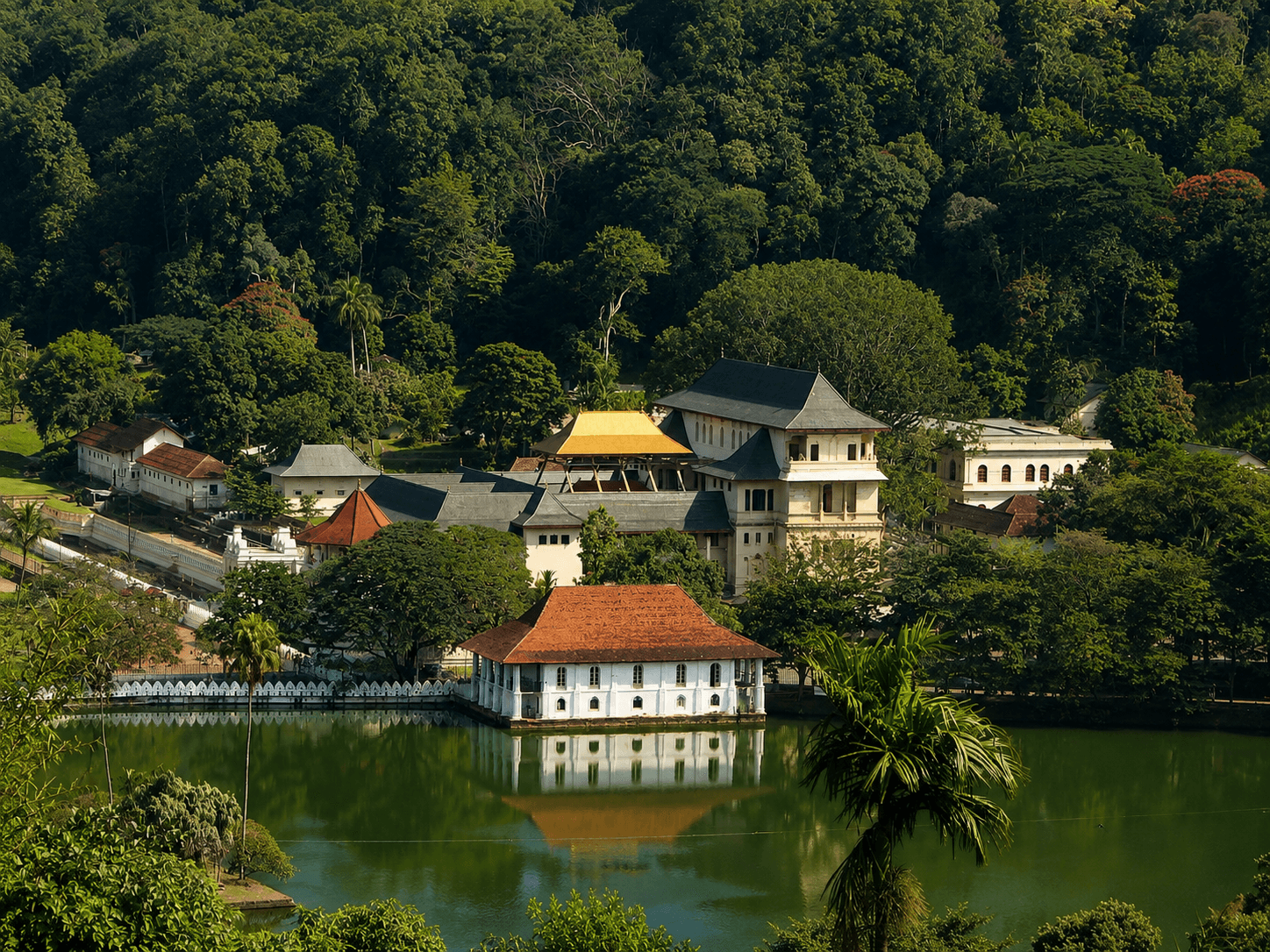
The recommended route spends two nights in Kandy and two in Nuwara Eliya. Day one drives to Kandy, roughly 3 to 4 hours, for the evening puja. Day two is a Kandy day: the Temple of the Tooth in the morning, Peradeniya gardens between showers, a museum or a dance show if it rains.
Day three climbs to Nuwara Eliya, roughly 2.5 to 3 hours, with a tea factory on the way, which is an ideal rainy-afternoon stop. Day four is an early estate walk or Horton Plains if the forecast allows, then Gregory Lake, the town and a fire in the evening.
Day five drives to the airport, roughly 5 to 6 hours. Kandy and Ella, with the train, is the alternative if Ella is a must.
Kandy is a good base in these months because so much of what it offers is under cover: the Temple of the Tooth and its museums, the National Museum, gem and craft workshops, and the Kandyan dance performances held in the evenings. Even a wet day there is a full one.
- →Kandy 2, Nuwara Eliya 2.
- →Short drives.
- →Tea factories for wet afternoons.
Rain backups
Every outdoor plan in these months needs an indoor alternative. Tea factories, the Temple of the Tooth, Kandy's museums, cooking classes, a spa afternoon and colonial hotels with a fire and a good library are all reliable.
Keep walks short and close to your base, and go early. If a morning is clear, take it; if it is pouring, wait an hour and see.
Lankan Stays & Trails watches forecasts during these months and can swap days so the best weather falls on walking days.
- →Tea factories.
- →Temples and museums.
- →Cooking classes and spas.
Roads, landslides and trains
Heavy rain can cause landslides on hill roads, and occasionally roads close for clearing. Local drivers know the warning signs and the alternative routes; follow their advice and that of local authorities.
Trains also run with delays after heavy rain, and services can be suspended on some stretches. Have a road backup for any train day, and do not plan a tight connection to a flight.
Avoid driving on hill roads after dark in heavy rain.
- →Follow local advice on landslides.
- →Have a road backup for trains.
- →Avoid night driving in rain.
If you want a beach as well
In these months no coast is reliably dry. The south-west coast begins to improve towards December, and the east coast is entering its wetter season. A beach day is possible, but plan it as a bonus.
Many travellers in October and November keep the trip to culture and the hills, where the rain matters least.
Late November can bring the first drier spells to the south-west coast, so a trip at the very end of the month sometimes finds the beaches improving. Check forecasts close to your dates, and keep any beach plan flexible enough to swap for another day in the hills.
Who this route suits
Travellers who dislike crowds, those whose holidays fall in autumn, photographers who love mist and drama, and anyone looking for good hotel availability are the route's natural audience.
Travellers set on clear views from Horton Plains or long hikes should consider January to April instead.
Frequently asked questions
Is October a good time to visit the hill country?
October is one of the wettest months in the hill country, with afternoon showers and some full wet days. It is still possible and rewarding, with quiet sights, green estates and full waterfalls. Use two bases, walk in the mornings and keep indoor backups ready.
Is November a good time for Ella?
November is often wet in Ella, as the inter-monsoon and the start of the north-east monsoon bring rain to the eastern hills. Mornings can still be clear, so plan walks early. Little Adam's Peak is short enough to fit into a dry window.
Is it safe to drive in the hill country in the rain?
Driving in the hill country in the rain is usually safe with an experienced local driver, but heavy rain can cause landslides and road closures. Follow local advice, avoid night driving on hill roads in heavy rain and allow extra time between stops.
Do trains run in October and November?
Trains usually run, though delays are common after heavy rain, and services can be suspended on some stretches after landslides. Have a road backup for any train day, and avoid planning a train close to your flight.
What should I pack for the hills in November?
Pack a good rain jacket, quick-drying clothes, shoes with grip, long socks against leeches, a warm layer for cool evenings and a small umbrella. A dry bag for your phone and camera is useful on walks.
Should I avoid the hill country in October?
You do not need to avoid it, but plan differently. Two bases, short drives, morning walks and indoor backups make October work well. Travellers who need clear views or long hikes should choose January to April.