
Quick answer
On the Kalpitiya peninsula, everyday arrack costs roughly US$10 to US$14 for 750 ml at licensed shops in Kalpitiya town, Puttalam or Chilaw, and pure coconut arrack roughly US$20 to US$35. Kite camps and lagoon lodges charge roughly US$3 to US$8 for arrack with a mixer, sometimes with service charge. Many camps are far from shops, so buy a bottle on the way in.
Key takeaways
- Everyday arrack costs roughly US$10 to US$14 a bottle at shops in Kalpitiya, Puttalam or Chilaw.
- Kite camps and lodges charge roughly US$3 to US$8 for arrack with a mixer.
- Many camps are remote; buy a bottle on the drive in.
- The coconut triangle nearby is one of the island's arrack heartlands.
- Early starts for dolphins and kite sessions keep evenings moderate.
Kalpitiya for arrack drinkers
Kalpitiya is about three to four hours north of Colombo, past Negombo and Chilaw. The peninsula is known for kitesurfing, which has two main seasons, roughly May to October and December to March, and for dolphin watching from boats in the early morning between November and April.
Accommodation is mostly in kite camps, eco lodges and small resorts spread along the lagoon and the sea. Many are reached by sandy tracks and have their own bars or simple drinks service.
The surrounding districts of Puttalam and Kurunegala form part of the coconut triangle, the heart of Sri Lanka's coconut growing. Coconut toddy from this belt goes into much of the island's arrack.
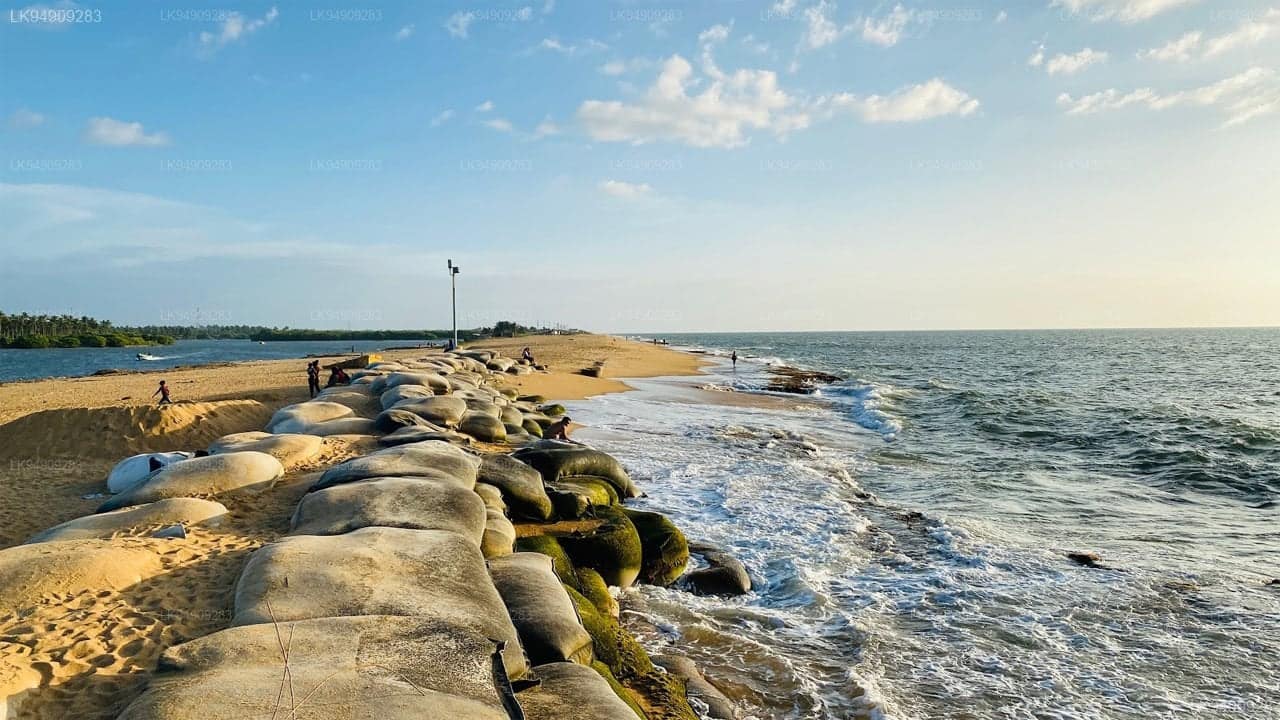
The peninsula has a different feel from the south coast. Villages are spread out, roads are sandy in places, and evenings are dark and starry, with little light beyond the camps. Visitors come for wind, water and quiet rather than nightlife, and drinks are part of a simple evening at the camp.
Buying a bottle
Kalpitiya town has licensed shops, and Puttalam and Chilaw, on the main road north, have more wine stores and supermarket liquor counters. Everyday extra special arrack costs roughly US$10 to US$14 for 750 ml, old arrack US$12 to US$22 and pure coconut arrack US$20 to US$35.
Shops open around 9.00 or 10.00 and close in the evening. Buy on the drive from Colombo or Negombo, since a return trip from a camp to town can take a long time on peninsula roads.
Ice and mixers are sold in towns and at some camps. Bring extra water too, as the peninsula is hot and windy.
- →Everyday arrack: roughly US$10 to US$14.
- →Pure coconut arrack: roughly US$20 to US$35.
- →Buy on the drive in.
Kite camps and lagoon lodges
Kite camps and eco lodges typically serve arrack with soda, ginger beer or king coconut for roughly US$3 to US$8, and simple cocktails for roughly US$6 to US$10. Some add service charge. Prices are a little higher than in town because of the remote location.
Many camps allow guests to bring their own bottle for drinking in their cabana or on their veranda, sometimes with a corkage fee in communal areas. Ask when booking.
Evenings at kite camps are sociable, with guests sharing stories around a fire or a long table. A room bottle shared with new friends is part of the atmosphere.
Food at camps is often served as set meals, with fresh fish, crab and curries from the lagoon. Arrack with ginger beer or king coconut suits spicy seafood well, and some camps make a simple house cocktail with local fruit such as passion fruit or lime.
- →Camp arrack with mixer: roughly US$3 to US$8.
- →Camp cocktail: roughly US$6 to US$10.
- →Ask about bringing your own bottle.
Kite days and dolphin mornings
Dolphin watching boats leave very early, often before 7.00, to catch calm seas. Kite sessions depend on the wind, which often picks up from late morning. Both reward a clear head, so most visitors keep evening drinks moderate.
Never drink before kitesurfing or going out on a boat. Wind and water sports in strong conditions need full concentration, and instructors will not take out anyone who has been drinking.
Lankan Stays & Trails can add Kalpitiya to a west coast or Wilpattu itinerary, with a shop stop in Puttalam or Chilaw on the way.
- →Dolphin boats leave early.
- →No drinking before kite sessions or boat trips.
- →Keep evenings moderate.
Local tips
Poya days close liquor shops and stop sales in most venues. On a remote peninsula, that can mean no drinks unless you bought ahead. Some camps serve guests discreetly; do not rely on it.
Drinking on the open beach is not allowed. Camps and lodges with private beach areas and gardens are the right places for an evening drink.
The peninsula has Muslim and Catholic communities alongside Buddhist and Hindu ones. Dress modestly in villages and be discreet with alcohol away from your accommodation.
- →Buy before poya days.
- →No drinking on the open beach.
- →Be discreet in villages.
Frequently asked questions
How much is arrack in Kalpitiya?
Everyday arrack costs roughly US$10 to US$14 a 750 ml bottle at licensed shops in Kalpitiya town, Puttalam or Chilaw, and pure coconut arrack roughly US$20 to US$35. Kite camps and lodges charge roughly US$3 to US$8 for arrack with a mixer.
Where can I buy arrack near Kalpitiya?
Kalpitiya town has licensed shops, and Puttalam and Chilaw, on the main road north from Colombo, have more wine stores and supermarket liquor counters. Buy on the drive in, since camps are often far from town.
Do Kalpitiya kite camps serve alcohol?
Most kite camps and lodges serve arrack, beer and simple cocktails, and many allow guests to bring their own bottle for their cabana. Some charge corkage in communal areas. Ask when booking.
Is Kalpitiya near the coconut triangle?
Yes. Puttalam district, which includes the peninsula, is part of the coconut triangle with Kurunegala and Gampaha, the heart of Sri Lanka's coconut growing. Coconut toddy from this belt goes into much of the island's arrack.
Can I drink before kitesurfing?
No. Kitesurfing in strong wind needs full concentration, and instructors will not take out anyone who has been drinking. Save arrack for the evening, and remember that dolphin boats leave very early the next morning.
What happens on poya days in Kalpitiya?
Liquor shops close and most venues stop serving alcohol. On a remote peninsula, that can mean no drinks unless you bought a bottle in advance. Some camps serve guests discreetly, but it is better to plan ahead.
Is Kalpitiya near Wilpattu National Park?
Yes. Kalpitiya is a common base for Wilpattu, whose western entrance is within reach by road. As with all national parks, alcohol is not allowed inside. Safaris start early, so keep evening drinks moderate the night before a park visit.