
Quick answer
The most common tourist-targeted scams American travellers encounter in Sri Lanka are unmetered tuk-tuk drivers quoting inflated fares, unofficial guides insisting a temple or attraction is closed and redirecting visitors to a shop that pays them commission, gem and jewellery shops pushing overpriced stones through friendly strangers who receive a cut, and minor overcharging at unmarked stalls. Bargaining itself is a normal, expected transaction rather than a scam, unlike the fixed-price retail culture most Americans are used to, and agreeing prices before committing, plus treating unsolicited offers with polite scepticism, avoids nearly all of it.
Key takeaways
- Agree tuk-tuk fares before the journey, or use a metered or app-based service such as PickMe where available.
- If someone insists a well-known attraction is 'closed today', treat it as a near-certain redirect to a commission-paying shop.
- Buy gems and jewellery only from established, reputable dealers, never through a stranger's spontaneous recommendation.
- Sri Lanka has no automatic 15-20% US-style tipping expectation; small cash tips reflect service quality instead.
- Ordinary bargaining at markets is a normal social transaction, unfamiliar to fixed-price US retail habits but expected and enjoyed by both sides.
Tuk-tuk fares
Unmetered tuk-tuks are the most common minor overcharge American visitors encounter, particularly near hotels, airports and major attractions, where an opening quote several times the reasonable local rate isn't unusual. It's a normal opening bid in a negotiation system that has no real US equivalent, rather than an attempt at serious deception.
Agree the fare before the journey starts, ask your hotel or driver-guide for a rough expected price beforehand if unsure, and use metered or app-based ride services such as PickMe where they're available, which removes the negotiation entirely.
- →Always agree the fare before getting in, not after arriving.
- →Ask your hotel for a rough expected price for a common route as a benchmark.
- →App-based ride services, where available, avoid the negotiation altogether.
The 'closed today' redirect
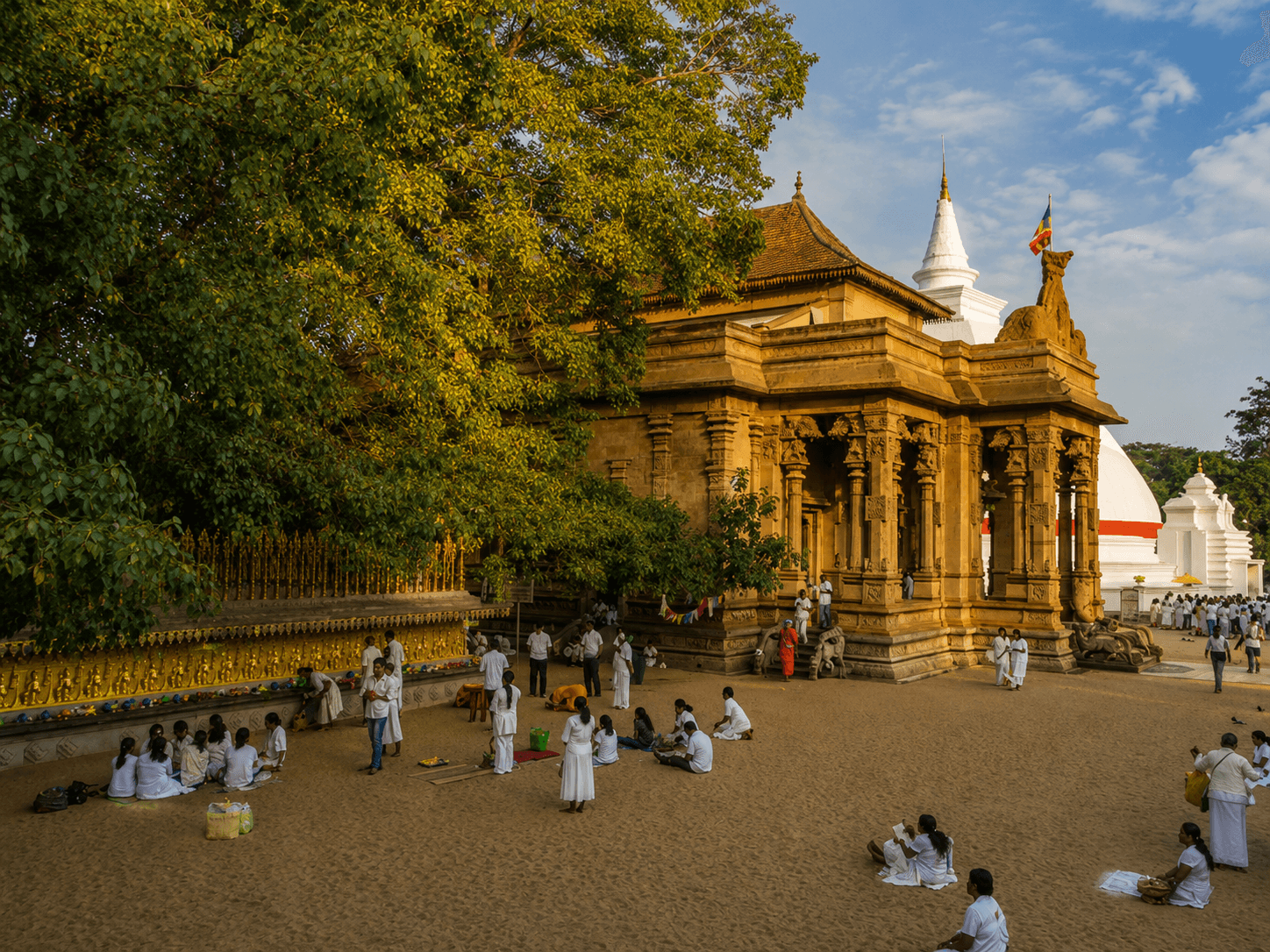
A well-established pattern near major attractions: a friendly stranger informs you a temple, market or site is closed today, for a festival, renovation or similar, then offers to take you somewhere better instead, usually a shop or workshop paying them commission on anything you buy.
Major, well-known attractions in Sri Lanka are very rarely actually closed without notice. Politely thank the person and verify independently, with your hotel, a driver-guide, or the venue's posted hours, before changing your plans based on an unsolicited claim.
- →Major attractions are very rarely closed without prior notice; verify independently before believing it.
- →A redirect to 'somewhere better' is the near-universal follow-up to this claim.
- →A private driver-guide, who knows genuine opening hours, largely eliminates this scam.
Gems and jewellery
Sri Lanka is a genuine and historic source of sapphires and other gems, which is exactly why it's also a target for a well-known scam: a friendly stranger, sometimes posing as a student or fellow traveller, strikes up conversation and eventually suggests a gem shop, timed so they'll receive a commission on your purchase, often for a stone significantly overpriced or misrepresented.
Buy gems only from established, reputable, certified dealers you've independently identified, never through a stranger's spontaneous recommendation, no matter how genuine the conversation felt.
Tipping and bargaining aren't the same thing
Americans arrive with a tipping instinct trained by US restaurant and service culture, roughly 15-20% built into most transactions, and no real bargaining instinct at all, given how fixed-price American retail is. Sri Lanka runs closer to the opposite: bargaining is genuinely expected at markets and with unmetered transport, while tipping is a smaller, more situational gesture rather than an automatic percentage.
A useful reset: treat a market stall the way you'd treat a yard sale back home, a counter-offer is welcome, and treat a tip as a thank-you for specifically good service rather than a default addition to every bill.
- →There's no automatic 15-20% tipping expectation the way there is in most US restaurants.
- →Check whether a service charge is already included before adding a tip out of habit.
- →Bargaining is the reverse: expected at markets, unfamiliar territory for most US retail habits.
Ordinary bargaining isn't a scam
It's worth separating genuine scams from ordinary bargaining, which is a completely normal, expected and often enjoyable part of shopping at markets and with unmetered transport. Vendors expect a counter-offer; starting a little below what you'd be happy to pay and meeting somewhere in the middle is the accepted rhythm, not a confrontation.
A friendly, unhurried approach gets better results than an aggressive one, and it's fine to walk away if a price genuinely doesn't work; a lower offer often follows.
- →A counter-offer is expected at markets and with unmetered tuk-tuks; it's a normal social rhythm, not rudeness.
- →Start below your target price and meet in the middle, unhurried and friendly.
- →Walking away is a legitimate negotiating tool, not an insult.
The practical upshot
None of this should overshadow the trip. The handful of recurring patterns above cover the great majority of tourist-targeted scams in Sri Lanka, and once you can spot them, they stop being a source of anxiety and become a minor, forgettable part of the trip.
A private driver-guide is the single most effective way to sidestep almost all of it, since fares, timings and genuine opening hours are handled by someone with local knowledge rather than negotiated fresh each time.
Frequently asked questions
What is the most common tourist scam in Sri Lanka?
Unmetered tuk-tuk drivers quoting inflated fares to tourists is the most frequently encountered issue, alongside the 'attraction is closed today' redirect to a commission-paying shop. Agreeing prices in advance and verifying claims independently avoids most of it.
How much should Americans tip in Sri Lanka?
There's no automatic 15-20% US-style expectation. Check whether a service charge is already included on restaurant bills, and tip drivers, guides and hotel staff a smaller amount in cash for specifically good service.
How do you avoid the gem scam in Sri Lanka?
Buy gems and jewellery only from established, reputable, certified dealers you've identified yourself, never through a friendly stranger's spontaneous recommendation, which is the standard setup for a commission-driven overcharge.
Is it rude to bargain in Sri Lanka?
No, it's a normal and expected part of shopping at markets and with unmetered transport, unlike the fixed-price retail culture most Americans are used to. A friendly counter-offer is the accepted rhythm on both sides.
How do you know if a temple is really closed in Sri Lanka?
Major, well-known attractions are very rarely closed without prior notice. If a stranger tells you a site is closed and offers an alternative, verify independently with your hotel or driver-guide before changing plans.
Should you agree a tuk-tuk fare before or after the ride?
Always before. Agreeing the fare in advance, or using a metered or app-based service such as PickMe where available, avoids nearly all tuk-tuk overcharging disputes in Sri Lanka.
Are scams in Sri Lanka dangerous for American tourists?
Overwhelmingly no. The common patterns, tuk-tuk overcharging, commission redirects, gem shop pressure, are financial nuisances rather than safety threats, and Sri Lanka has low rates of violent crime against tourists.