
Quick answer
American visitors to Sri Lanka most commonly report culture shock around tipping (expected but at lower, informal rates than US norms, with no fixed percentage), personal space (closer physical proximity in queues, markets and conversation than most Americans expect), driving style (tuk-tuks, buses and cars sharing narrow roads with constant horn use, which looks chaotic but functions on its own logic), street food caution (genuinely worth trying, but with more care than a US visitor's usual eating-out habits), and religious etiquette at temples (modest dress and shoe removal are non-negotiable, unlike the more casual approach common at religious sites in the US). Nearly all of it settles into normal within two or three days.
Key takeaways
- Tipping in Sri Lanka is expected but informal, typically small cash amounts rather than the fixed 15-20% Americans budget for at home.
- Personal space in queues, markets and casual conversation runs noticeably closer than typical American norms; it's not a boundary violation locally.
- Constant horn use in traffic is a courtesy and awareness signal in Sri Lanka, the opposite of its meaning on a US road.
- Street food is widely considered safe to eat with reasonable caution (busy stalls, cooked-to-order, high turnover); it's a genuine highlight most American visitors underestimate.
- Temple etiquette (covered shoulders and knees, shoes removed) is strictly observed at active Buddhist and Hindu sites, more consistently enforced than at most US religious sites open to visitors.
Tipping without a fixed percentage
American visitors arrive with a built-in tipping instinct, 15 to 20 percent, calculated automatically, and Sri Lanka doesn't work that way. Tipping is genuinely expected in most tourist-facing situations, drivers, guides, hotel staff, restaurant servers, but it runs on small, informal cash amounts rather than a fixed percentage of the bill.
A useful mental shift for American visitors: think in terms of a modest daily amount for a driver-guide, and small notes for individual services (a bag carried, a small favour done), rather than calculating a percentage the way you would at a US restaurant. Hotels and larger restaurants sometimes add a service charge, in which case an additional tip isn't expected.
- →Tipping is expected but informal; there's no fixed percentage the way US dining assumes.
- →Carry small notes specifically for tips; card payments rarely accommodate an add-on tip in Sri Lanka.
- →Check the bill for an included service charge before tipping again at hotels and larger restaurants.
Personal space and physical proximity
Queues, markets, buses and casual conversations in Sri Lanka involve noticeably closer physical proximity than most American visitors are used to, standing distance in a line, the closeness of a shopkeeper's sales pitch, being touched lightly on the arm during a conversation. It isn't a boundary violation locally; American-style personal space simply isn't the cultural default.
This adjustment tends to be one of the fastest to settle, usually within the first day or two, once the pattern is recognised as normal rather than intrusive.
Driving that looks chaotic but isn't
Sri Lankan roads mix tuk-tuks, buses, motorbikes, cars and the occasional stray dog or cow, with far less lane discipline than a US highway or city street, and constant horn use that reads as aggressive to American ears. It isn't: horns in Sri Lanka function as an awareness signal, announcing a pass or a turn, not a complaint.
Almost no first-time American visitors self-drive in Sri Lanka, and it's genuinely the easier choice: a private driver-guide removes the entire adjustment, leaving you to watch the road rather than navigate it, which is standard practice here rather than a premium add-on.
- →Constant horn use signals awareness and intent to pass, not aggression, unlike its meaning on a US road.
- →Self-driving is rare among American visitors; a private driver-guide is the standard approach.
- →Journeys take longer than the mileage suggests; Sri Lankan roads are slower than US interstates.
Street food: worth the caution, not the avoidance
American visitors often arrive more cautious about street food than the actual risk warrants, having grown up with a food-safety culture built around chain restaurants and standardised inspection. Sri Lankan street food, hoppers, kottu roti, short eats, is a genuine highlight, and the sensible approach is caution, not avoidance: choose stalls with visible high turnover, food cooked fresh to order, and busy local custom.
Bottled or filtered water throughout the trip, and a slightly more conservative approach in the first day or two while your system adjusts, covers most of the practical risk without missing out on what's genuinely one of the best parts of visiting.
- →Choose busy stalls with visible high turnover and food cooked fresh to order.
- →Stick to bottled or filtered water throughout the trip, including for brushing teeth in the first couple of days.
- →Ease in gradually rather than avoiding street food entirely; it's genuinely one of the trip's highlights.
Temple and religious site etiquette
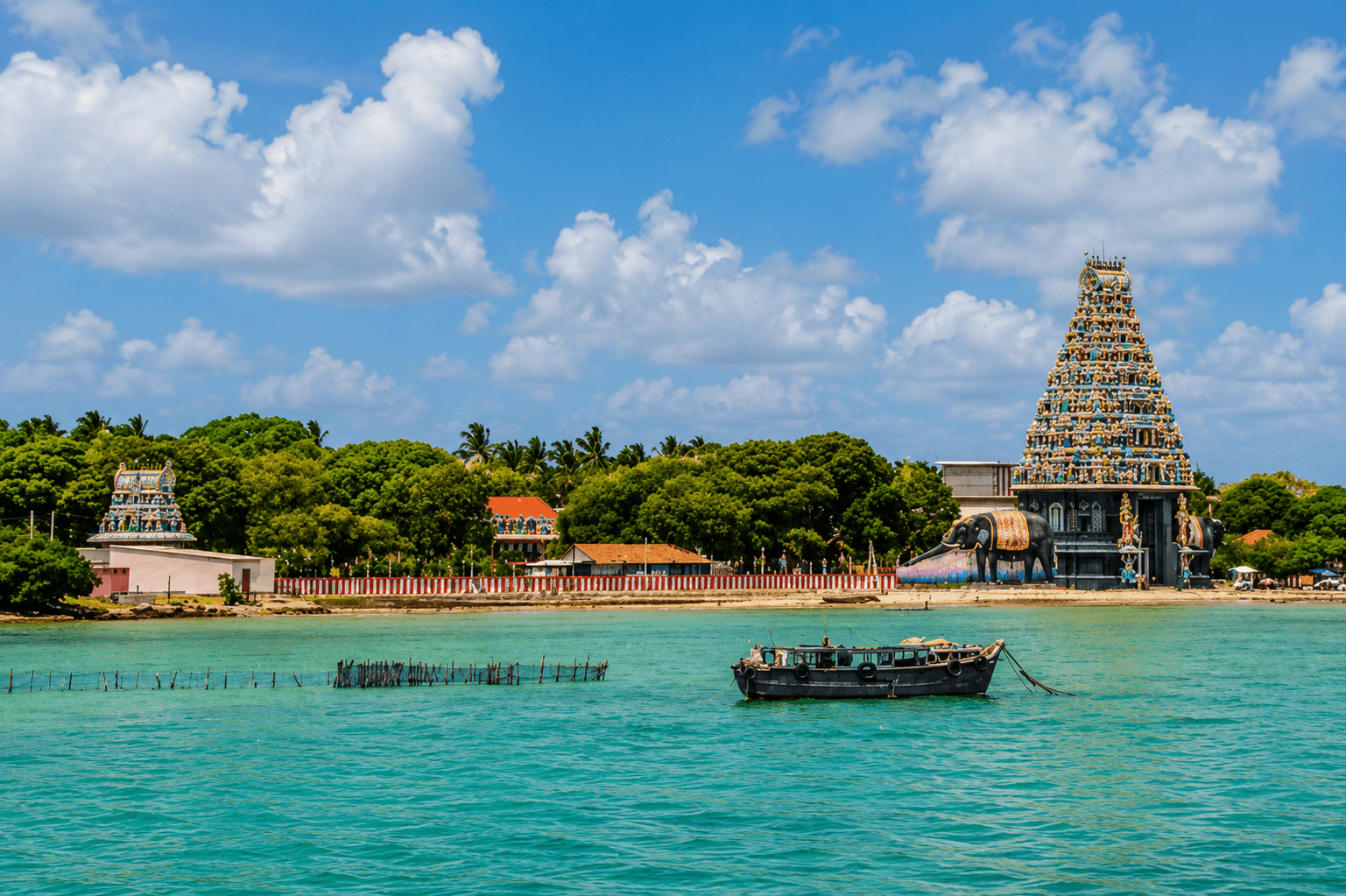
Active Buddhist and Hindu temples in Sri Lanka enforce dress and behaviour standards more consistently than most religious sites open to the public in the US: shoulders and knees covered, shoes removed before entering, and no photographs with your back to a Buddha statue for a pose. These rules are observed strictly and not negotiable, regardless of how casual the site looks on arrival.
This can feel like a bigger adjustment for American visitors used to a more casual approach to visiting religious buildings as tourist sites. Carrying a light scarf or shawl and slip-on shoes solves most of the practical friction.
- →Cover shoulders and knees, and remove shoes, before entering any active Buddhist or Hindu temple.
- →Never pose with your back to a Buddha statue; it's considered seriously disrespectful, not a minor faux pas.
- →Carry a light scarf and slip-on shoes to make temple visits easier throughout the trip.
Settling in
None of this needs advance preparation beyond simply expecting it. Most American visitors report the adjustment fading within two or three days, and the things that felt most unfamiliar, the tipping norms, the closeness, the traffic, tend to become the details they remember most fondly afterwards.
A private driver-guide helps here in ways beyond logistics: explaining the etiquette and context in real time turns culture shock into understanding far faster than working it out alone, which is how we run these trips for American travellers.
Frequently asked questions
How much should Americans tip in Sri Lanka?
There's no fixed percentage like the US 15-20% norm. Small cash tips for drivers, guides and hotel staff are expected; check whether a service charge is already included on restaurant and hotel bills before tipping again.
Is Sri Lanka a culture shock for American travellers?
For most, it's a manageable adjustment rather than a shock: tipping norms, closer personal space, chaotic-looking traffic and stricter temple etiquette are the main differences from the US, and most visitors settle into them within two or three days.
Is it safe for Americans to eat street food in Sri Lanka?
Generally yes with reasonable caution: choose busy stalls with high turnover and food cooked fresh to order, and stick to bottled or filtered water. It's widely considered a highlight rather than a risk to avoid.
Should Americans rent a car and self-drive in Sri Lanka?
It's uncommon and not generally recommended for first-time visitors. Traffic patterns and road conditions differ significantly from the US; a private driver-guide, the standard approach here, removes that adjustment entirely.
What should Americans wear when visiting a Sri Lankan temple?
Shoulders and knees covered, and shoes removed before entering. This is enforced more strictly and consistently than at most US religious sites open to tourists, so carry a light scarf and slip-on shoes for convenience.
Why does traffic in Sri Lanka use the horn so much?
Horn use signals awareness and an intent to pass or turn, functioning as a courtesy rather than the aggression it would imply on a US road. It's constant, and understanding this reframes it from chaotic to logical within a day or two.
Is personal space different in Sri Lanka compared to the USA?
Yes, noticeably closer in queues, markets and casual conversation than typical American norms. It reflects cultural comfort with proximity rather than any lack of respect, and it's one of the fastest adjustments most visitors make.