
Quick answer
The best lagoons to visit in Sri Lanka are Negombo's lagoon, with its outrigger canoes; the Madu Ganga near Bentota, with mangrove islands; Koggala and Rekawa on the south coast; Kalametiya for birds; Batticaloa's lagoon, home of the singing fish; Pottuvil lagoon near Arugam Bay; the Puttalam lagoon at Kalpitiya; the Jaffna lagoon; and Kokkilai, a bird sanctuary in the north-east.
Key takeaways
- Lagoons are found all around Sri Lanka's coast.
- Boat trips usually last one to two hours and are best at dawn or dusk.
- Mangroves protect the coast and shelter fish nurseries and birds.
- West and south coast lagoons are best roughly December to April.
- East and north coast lagoons are best roughly May to September.
Why lagoons matter
Lagoons form where rivers meet the sea and sandbars partly close their mouths. The mix of fresh and salt water supports mangroves, fish, crabs and prawns, and the birds that feed on them. For coastal villages, lagoons provide fishing, transport and protection from storms.
For travellers, lagoons offer calm water, wildlife and a glimpse of traditional life: fishermen in outrigger canoes, women gathering shellfish and small temples on islands.
The best way to see a lagoon is from a small boat, early in the morning.
- →Mangroves and fish nurseries.
- →Birds: herons, kingfishers, cormorants.
- →Village life: canoes and fishing.
West and south coast lagoons
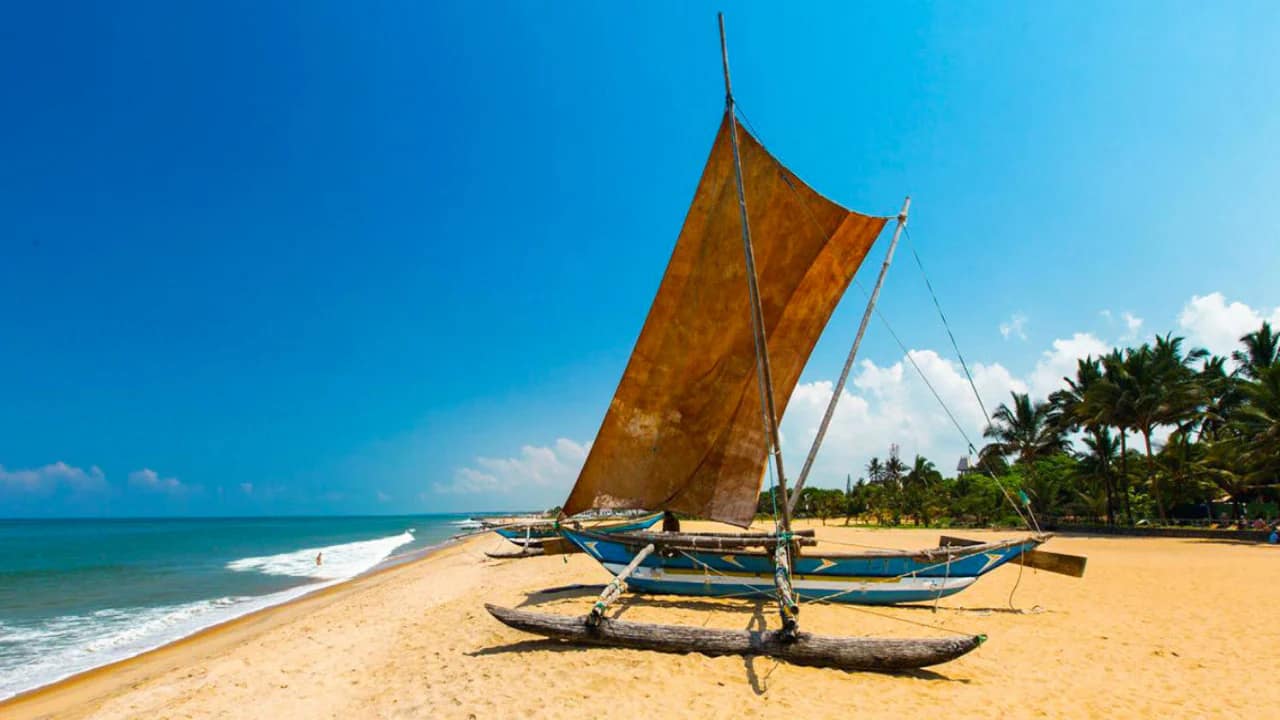
Negombo's lagoon, near the airport, is lined with outrigger canoes and fishing boats. Boat trips pass mangroves, fishing villages and the Dutch canal. The Madu Ganga, south of Bentota, is a river and lagoon system with dozens of islands, including a cinnamon island and a temple island.
On the south coast, Koggala Lake, near Galle, is technically a lagoon, with islands and boat trips. Rekawa, near Tangalle, is known for its turtle nesting beach and lagoon. Kalametiya, east of Tangalle, is a bird sanctuary with boat trips among reeds and mangroves.
These lagoons are best roughly December to April, when the south-west coast is dry.
- →Negombo: canoes and the Dutch canal.
- →Madu Ganga: mangrove islands.
- →Kalametiya: birds on the south coast.
East coast lagoons
Batticaloa's lagoon is the largest on the east coast, with fishing villages, a Dutch fort and the legend of the singing fish, heard on calm full-moon nights. Boat trips explore its channels and islands.
Pottuvil lagoon, near Arugam Bay, has mangrove safaris by small boat or canoe, with crocodiles, monitor lizards and birds. Elephants sometimes come to its edges in the evening. Further north, the lagoons around Trincomalee and Kinniya are quieter and less visited.
East coast lagoons are best roughly May to September.
Batticaloa's lagoon also supports a distinctive way of life. Fishermen use traditional methods, from cast nets to fixed traps, and the shores are dotted with Hindu temples, mosques and churches that reflect the town's mixed communities. A late-afternoon trip ends with the lighthouse at the bar mouth catching the last light.
- →Batticaloa: the singing fish lagoon.
- →Pottuvil: mangrove safaris.
- →Kinniya: quiet channels near Trincomalee.
North and north-west lagoons
The Puttalam lagoon, between Kalpitiya and the mainland, is large and shallow, used for fishing and kitesurfing. Boat trips cross it to reach dolphin-watching waters and small islands. The Jaffna lagoon, south of the peninsula, is rich in birdlife and supports fishing communities.
Kokkilai lagoon, on the north-east coast between Mullaitivu and Trincomalee, is a bird sanctuary known for flamingos and waders in the northern winter. Nanthi Kadal and Nayaru, near Mullaitivu, are quieter still.
Lankan Stays & Trails can include a lagoon trip on almost any coastal stay, choosing the lagoon by season and the traveller's interests.
In the north, lagoon life feels especially distinct. Palmyra palms line the shores, prawn traps stand in the shallows and fishermen wade out with nets at dusk. These lagoons see very few visitors, so a local guide is useful for finding launch points and arranging a boat with a fisherman.
- →Puttalam: kitesurfing and dolphins beyond.
- →Jaffna lagoon: birds and fishing life.
- →Kokkilai: flamingos in winter.
Tips for lagoon trips
Choose small boats or canoes over large motorboats, as they disturb wildlife less and reach narrower channels. Go early in the morning or late afternoon for birds and light. Bring sun protection, water and binoculars.
Check that operators respect wildlife and do not feed animals or chase birds. In the monsoon months, lagoon trips may be cancelled for weather.
- →Small boats and early starts.
- →Binoculars for birds.
- →Respectful operators only.
Frequently asked questions
What is the best lagoon in Sri Lanka?
The best lagoon in Sri Lanka depends on what you want. The Madu Ganga near Bentota is best for mangrove islands, Kalametiya for birds, Pottuvil for crocodiles and wildlife, and Negombo for traditional fishing life. Batticaloa offers the largest lagoon on the east coast.
When is the best time for lagoon trips in Sri Lanka?
The best time for lagoon trips on the west and south coasts is roughly December to April, and on the east coast roughly May to September. Early mornings are best for birds and calm water. Trips may be cancelled in heavy rain.
What can I see on a lagoon boat trip?
On a lagoon boat trip in Sri Lanka you can see mangroves, herons, kingfishers, cormorants and egrets, monitor lizards and sometimes crocodiles. You also see fishermen, small temples and village life along the shores.
Is the Madu Ganga boat trip worth it?
The Madu Ganga boat trip is worth it for its mangroves, islands and birdlife. Trips usually last one to two hours and visit a cinnamon island and a temple island. Choose an operator that limits speed and does not feed wildlife.
Are there crocodiles in Sri Lankan lagoons?
Crocodiles live in some Sri Lankan lagoons, especially Pottuvil, Kalametiya and parts of the east and south. They are usually shy and seen from a distance on boat trips. Never swim in lagoons where crocodiles are present.
What is the singing fish of Batticaloa?
The singing fish of Batticaloa is a legend about musical sounds heard from the lagoon on calm full-moon nights, especially near the Kallady bridge. The source is debated, with some suggesting shellfish or fish. It remains one of the east coast's best-known stories.
Are lagoon trips suitable for children?
Lagoon trips are well suited to children, because the water is calm and the trips are short, usually one to two hours. Choose a boat with life jackets in children's sizes, bring sun protection and snacks, and pick early or late trips to avoid the midday heat.