
Quick answer
The best walks in Sri Lanka for a first trip are Little Adam's Peak at Ella, roughly 45 to 90 minutes return, Ella Rock at roughly three to four hours, Horton Plains and World's End at roughly nine to ten kilometres over three to four hours, and Adam's Peak, a pilgrimage climb of roughly 5,500 steps usually started around two in the morning. The Knuckles range offers the most serious trekking.
Key takeaways
- Little Adam's Peak takes roughly 45 to 90 minutes return and suits almost any fitness level.
- Horton Plains is a circular trail of roughly nine to ten kilometres taking three to four hours, needing a pre-dawn start.
- Adam's Peak is roughly 5,500 steps, climbed overnight, with a pilgrimage season running roughly December to May.
- The Knuckles range offers Sri Lanka's most serious trekking and requires a guide.
- Leeches are common in the wet zone and rainforest; they are harmless but unpleasant and worth preparing for.
The short walks worth doing
Little Adam's Peak at Ella is the walk that suits almost everyone. It takes roughly 45 to 90 minutes return depending on pace and starting point, follows a mostly gentle path through tea slopes with a stepped final section, and delivers a genuinely good view over the Ella Gap for very little effort.
It is unrelated to Adam's Peak, the pilgrimage mountain much further west, despite the shared name. The confusion is common enough that it is worth being explicit about, since the two are entirely different propositions.
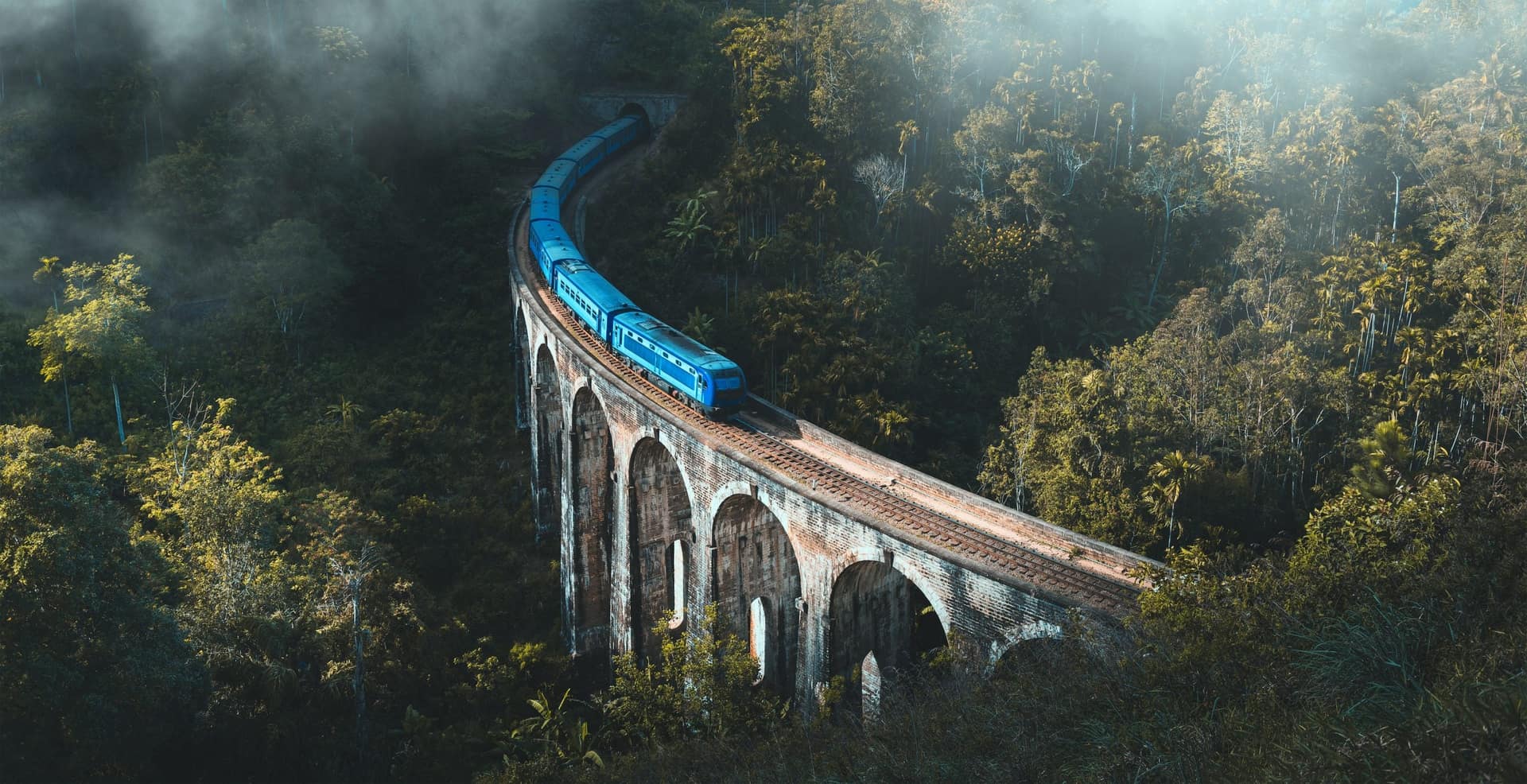
The other short options around Ella are the walk to the Nine Arch Bridge, which is more of a stroll than a hike, and Ravana Falls, which is visible from the road. Both are best done early, before both the heat and the crowds build.
- →Little Adam's Peak: roughly 45 to 90 minutes return, gentle with a stepped finish.
- →Not related to Adam's Peak, the pilgrimage mountain further west.
- →The Nine Arch Bridge walk is a stroll rather than a hike.
- →Do all of these early for cooler air and fewer people.
The half-day walks
Ella Rock is the step up from Little Adam's Peak, taking roughly three to four hours return on a steeper, rougher route that partly follows the railway line and is poorly signed. Walkers regularly get lost, and a local guide solves that entirely for a modest cost.
Horton Plains and World's End is the best known walk in Sri Lanka and the most weather-dependent. The circular trail runs roughly nine to ten kilometres over three to four hours across high grassland and cloud forest at over 2,000 metres, taking in World's End, an escarpment dropping several hundred metres, and Baker's Falls.
The critical detail at Horton Plains is timing. Cloud typically fills the valley by mid-morning and hides the view entirely, which is why the walk requires leaving Nuwara Eliya well before dawn. Single-use plastics are restricted in the park, so carry a refillable bottle.
- →Ella Rock: roughly three to four hours return, poorly signed; consider a guide.
- →Horton Plains: roughly nine to ten kilometres over three to four hours.
- →Leave Nuwara Eliya well before dawn or the World's End view will be clouded.
- →Single-use plastics are restricted at Horton Plains; carry a refillable bottle.
Adam's Peak, which is different from everything else
Adam's Peak, or Sri Pada, is a pilgrimage rather than a hike, and treating it as the latter misses the point. The climb is roughly 5,500 steps, usually started around two in the morning so as to reach the summit for sunrise, and during the season the route is lit and lined with tea stalls.
The pilgrimage season runs roughly from the December poya to the May poya, with exact dates shifting each year with the lunar calendar. Outside that window the route is unlit, facilities are closed, and the climb becomes a genuinely different and more serious undertaking.
The summit holds the sacred footprint venerated by Buddhists, Hindus, Muslims and Christians, which is part of why the climb carries the atmosphere it does. On busy poya nights the queue near the summit can add hours, and the descent on tired legs is harder than the ascent for most people.
- →Roughly 5,500 steps, usually started around two in the morning for sunrise.
- →Season runs roughly from the December poya to the May poya; lunar dates shift.
- →Outside the season the route is unlit and facilities are closed.
- →The descent is harder than the ascent for most people.
The Knuckles and Sinharaja
The Knuckles range, east of Kandy, offers Sri Lanka's most serious trekking: a mountain range of cloud forest, grassland and villages with multi-day route options and genuine navigational difficulty. A guide is required in practice and sensible in principle, since trails are unmarked and weather changes quickly.
Sinharaja is a different kind of walking. It is a lowland rainforest and UNESCO World Heritage site, and the walking is less about distance or ascent than about moving slowly with a specialist guide who can find the endemic birds, amphibians and reptiles that are the reason to be there.
Riverston and the Mini World's End area near Matale offer a middle option: hill country walking with far fewer visitors than Horton Plains, and a shorter, easier trail with comparable escarpment views on a clear day.
- →The Knuckles: unmarked trails, changeable weather, a guide is essential.
- →Sinharaja: rainforest walking focused on endemic species rather than distance.
- →Riverston and Mini World's End: hill country views with far fewer visitors.
- →All three reward slow walking with a knowledgeable local guide.
What hikers should know before arriving
Leeches are the thing most first-time walkers are unprepared for. They are common in the wet zone and especially in rainforest after rain, they are harmless, and they are genuinely unpleasant. Leech socks, closed shoes and trousers tucked in are the practical response, and salt or a fingernail removes them.
Weather changes fast at altitude. Horton Plains and the Knuckles can be cold, wet and windy even when the coast is hot, and cotton clothing is a poor choice. A light waterproof and a warm layer belong in a day pack for any hill country walk.
Start times matter more in Sri Lanka than the distances suggest. Cloud builds through the morning at altitude, heat builds through the morning at lower elevations, and crowds build through the morning everywhere. Almost every walk on this page is better at dawn.
- →Leeches are common in the wet zone; leech socks and tucked-in trousers help.
- →Weather at altitude changes quickly; carry a waterproof and a warm layer.
- →Cloud, heat and crowds all build through the morning.
- →Nearly every walk in Sri Lanka is better started at dawn.
Shaping a walking-led first trip
A walking-led trip should base in the hill country for most of its length: two nights near Kandy for the Knuckles or the hikes around the city, two or three at Nuwara Eliya or a tea estate for Horton Plains, and three at Ella for Little Adam's Peak, Ella Rock and the surrounding trails.
Adam's Peak needs its own base at Dalhousie or Hatton and a night arranged around a two in the morning start, which is why it rarely fits into a general itinerary and usually needs to be a deliberate decision. Lankan Stays and Trails arranges local guides for Ella Rock, the Knuckles and Sinharaja as standard, because on all three the navigation or the species knowledge is the difference between a walk and a good one.
Frequently asked questions
What are the best hikes in Sri Lanka for a first trip?
Little Adam's Peak at Ella for an easy 45 to 90 minute walk, Ella Rock at three to four hours, Horton Plains and World's End at roughly nine to ten kilometres, and Adam's Peak as an overnight pilgrimage climb of roughly 5,500 steps.
How hard is Little Adam's Peak?
Gentle by hiking standards. It takes roughly 45 to 90 minutes return on a mostly easy path through tea slopes with a stepped final section, and suits most fitness levels. It is unrelated to Adam's Peak, the pilgrimage mountain much further west.
How long is the Horton Plains walk?
A circular trail of roughly nine to ten kilometres taking three to four hours, across high grassland and cloud forest at over 2,000 metres. It takes in World's End and Baker's Falls, and requires a start well before dawn to beat the cloud.
When is Adam's Peak season?
Roughly from the December poya to the May poya, with exact dates shifting each year with the lunar calendar. Outside that window the route is unlit and facilities are closed, which makes the climb a considerably more serious undertaking.
Do I need a guide for hiking in Sri Lanka?
For Ella Rock, the Knuckles range and Sinharaja, yes in practice. Ella Rock is poorly signed and walkers regularly get lost, Knuckles trails are unmarked with fast-changing weather, and Sinharaja needs a specialist to find the endemic species worth seeing.
Are there leeches when hiking in Sri Lanka?
Yes, commonly in the wet zone and especially in rainforest after rain. They are harmless but unpleasant. Leech socks, closed shoes and trousers tucked in are the practical response, and salt or a fingernail removes them without difficulty.
Where is the most serious trekking in Sri Lanka?
The Knuckles range east of Kandy, a mountain area of cloud forest, grassland and villages with multi-day route options, unmarked trails and quickly changing weather. A guide is required in practice and strongly advisable in principle.