
Quick answer
For first-time wildlife lovers in Sri Lanka, the key places are Yala for leopards, Udawalawe for elephants, Wilpattu for quieter leopard country, Minneriya or Kaudulla for the elephant Gathering, Sinharaja for endemic birds, and Mirissa or Trincomalee for blue whales. A wildlife-led trip should build around three or four drives rather than one, and should treat the cultural sites as supporting material.
Key takeaways
- Yala Block 1 has among the highest leopard densities recorded anywhere, and also the heaviest jeep traffic.
- Udawalawe offers near-certain elephant sightings in open grassland with far fewer vehicles.
- The Minneriya and Kaudulla elephant Gathering is generally strongest roughly June to September.
- Sinharaja rainforest is the place for endemic birds, with many of Sri Lanka's endemic species found there.
- Blue whale watching runs off Mirissa roughly November to April and off Trincomalee roughly May to October.
Reweighting the standard route
A standard first trip gives wildlife one night and one drive. A wildlife-led trip should give it three or four drives across two parks, which usually means taking nights from the ancient capitals and one hill country stop rather than extending the trip.
The reason is that wildlife viewing does not scale with hours in a park. It scales with the number of dawn and dusk windows, because that is when animals move. Three drives across two days produces far more than one very long drive ever will.
This reweighting also changes the route shape. A wildlife trip often works better with a Cultural Triangle base long enough to include Minneriya or Kaudulla, and a southern block long enough for two drives at one park, which pushes the ancient capitals off the itinerary entirely.
- →Aim for three or four drives rather than one, across two parks.
- →Wildlife scales with dawn and dusk windows, not with hours in the park.
- →Take the nights from the ancient capitals rather than extending the trip.
- →A longer Cultural Triangle base allows Minneriya or Kaudulla to be added free.
The parks, and what each is for
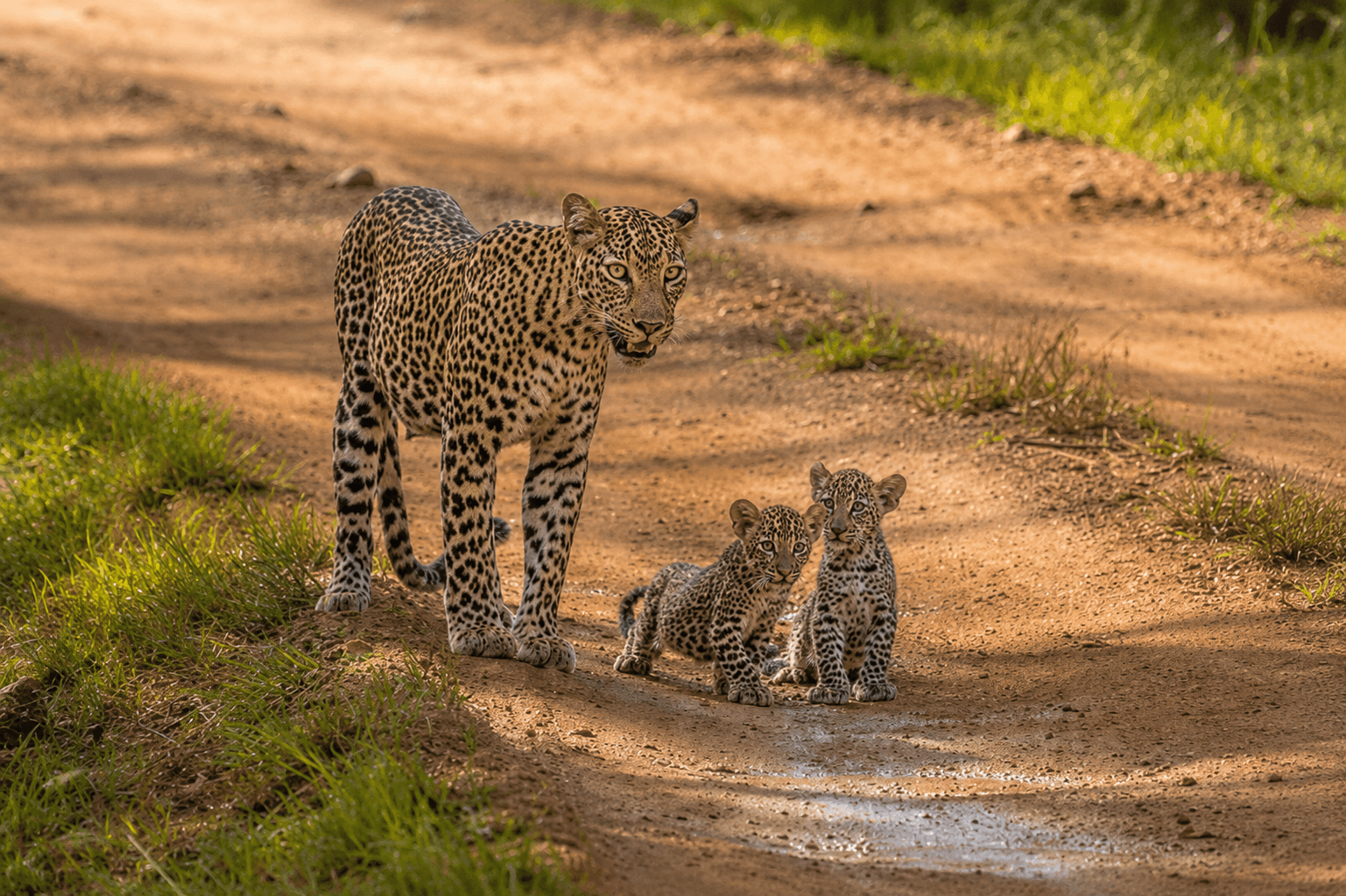
Yala is the leopard park. Block 1 holds among the highest leopard densities recorded anywhere, and the animals there are habituated to vehicles, which is why sightings happen at all. The cost is crowding, with jeeps converging on sightings within minutes, and Block 1 typically closes around September and October.
Udawalawe is the elephant park. Sightings are close to certain in any drive, the open grassland makes viewing easy, and vehicle pressure is far lower. The Elephant Transit Home nearby rehabilitates orphaned calves for release, with no riding or handling, which is the responsible model.
Wilpattu is the quiet alternative. Sri Lanka's largest national park, characterised by natural lakes called villus, with fewer vehicles and a wilder feel. Leopard sightings are less frequent than Yala but the experience around them is considerably better. It sits in the north-west, suiting itineraries through Anuradhapura.
- →Yala: highest leopard density, heaviest crowding, typically closed around September and October.
- →Udawalawe: near-certain elephants, open grassland, far fewer vehicles.
- →Wilpattu: largest park, quieter and wilder, fewer but better sightings.
- →Minneriya and Kaudulla: the Gathering, roughly an hour from a Cultural Triangle base.
The wildlife that is not in a national park
Sinharaja is the most significant omission from most first itineraries. It is a lowland rainforest and a UNESCO World Heritage site, and it holds a large share of Sri Lanka's endemic bird species along with endemic amphibians and reptiles. Walking there with a specialist guide is a genuinely different experience from a jeep drive.
Whale watching is the other major element outside the parks. Blue whales, the largest animals that have ever lived, feed off both coasts on opposite calendars: roughly November to April from Mirissa, roughly May to October from Trincomalee. Sperm whales, spinner dolphins and occasionally orcas are also seen.
Marine life extends to Pigeon Island off Nilaveli, where reef sits close to shore and reef sharks are frequently seen, and to turtle nesting beaches along the south coast. Both come with strong responsibility caveats about distance, touching and standing on coral.
- →Sinharaja: lowland rainforest, UNESCO listed, the place for endemic birds.
- →Blue whales: off Mirissa roughly November to April, off Trincomalee roughly May to October.
- →Pigeon Island: reef close to shore with reef sharks frequently seen.
- →Turtle nesting occurs along the south coast; never handle or light the animals.
Doing it responsibly, which affects what you see
Ethical wildlife practice in Sri Lanka is not only a moral question; it directly affects the quality of what a visitor sees. A driver who waits quietly at a distance produces better sightings than one who races to a radio call and joins a scrum of vehicles that pushes the animal into cover.
The clear rules are straightforward. No elephant riding, anywhere, for any reason. No paid turtle handling. No feeding wild animals to draw them closer. No off-road pursuit driving in the parks. No standing on coral. And no operator who guarantees a sighting, since that guarantee is a promise about driving behaviour rather than about wildlife.
The Elephant Transit Home near Udawalawe is the model worth supporting: orphaned calves are rehabilitated and released rather than kept for interaction. Facilities offering elephant bathing or riding are a different proposition entirely, whatever their marketing says.
- →Patient, distant observation produces better sightings than pursuit.
- →No elephant riding, no paid turtle handling, no feeding to attract animals.
- →Never stand on coral; reef damage is cumulative and permanent.
- →Treat any guaranteed sighting as a warning about driving practice.
Timing a wildlife trip
Wildlife seasons in Sri Lanka do not all align, which is why a wildlife-led trip benefits from choosing a target species before choosing dates. Roughly February to July is generally stronger at Yala for leopards, as drier conditions concentrate animals around waterholes.
The Minneriya and Kaudulla elephant Gathering runs opposite to that in emphasis, being generally strongest in the drier months from roughly June to September when receding reservoir water draws elephants to the shoreline. It depends on rainfall and is never guaranteed.
The whale calendars split by coast, roughly November to April at Mirissa and roughly May to October at Trincomalee. A trip in June or July can therefore combine the Gathering, east coast whales and reasonable Yala conditions, which makes it a stronger wildlife window than its reputation suggests.
- →Roughly February to July is generally stronger at Yala for leopards.
- →The Gathering is generally strongest roughly June to September, subject to rainfall.
- →Whales: Mirissa roughly November to April, Trincomalee roughly May to October.
- →June and July combine the Gathering, east coast whales and decent Yala conditions.
Shaping a wildlife-led first trip
A workable wildlife shape is three nights in the Cultural Triangle with an afternoon at Minneriya or Kaudulla, a night or two near Sinharaja, two nights at Udawalawe or Yala with a dawn and a dusk drive, and three nights on whichever coast is in season with a whale morning. The cultural sites become the breaks between wildlife days rather than the main event.
Lankan Stays and Trails books drivers who work patiently rather than chase reported sightings, which is the single thing a visitor cannot arrange for themselves and the thing that most determines what a drive produces. We also decline to guarantee sightings, which is worth checking with any operator before booking.
Frequently asked questions
Where is the best place to see wildlife in Sri Lanka?
It depends on the animal. Yala for leopards, Udawalawe for elephants, Wilpattu for quieter leopard country, Minneriya or Kaudulla for the elephant Gathering, Sinharaja for endemic birds, and Mirissa or Trincomalee for blue whales depending on the season.
How many safari drives should a wildlife trip include?
Three or four across two parks, rather than one. Wildlife activity concentrates around dawn and dusk, so the number of those windows matters far more than total hours in a park. Two drives at one park generally beats one drive at two parks.
Is Sinharaja worth visiting for wildlife?
Yes, and it is the most common omission from first itineraries. It is a UNESCO listed lowland rainforest holding a large share of Sri Lanka's endemic bird species, plus endemic amphibians and reptiles. Walking with a specialist guide is essential to get value from it.
When is the best time for wildlife in Sri Lanka?
Seasons vary by species. Roughly February to July is generally stronger at Yala for leopards, the Minneriya Gathering peaks roughly June to September, and whales run off Mirissa roughly November to April and off Trincomalee roughly May to October.
Is elephant riding available in Sri Lanka?
It exists and should be avoided entirely. Responsible wildlife tourism in Sri Lanka is observation-based, with no riding, no bathing experiences and no paid handling. The Elephant Transit Home near Udawalawe, which rehabilitates orphaned calves for release, is the model to support.
Which is better for a first safari, Yala or Udawalawe?
Udawalawe for most first-time visitors, with near-certain elephant sightings and far fewer vehicles. Choose Yala if a realistic chance of seeing a leopard is the main ambition, and be prepared for crowding at sightings in Block 1.
Can I see blue whales and leopards on the same trip?
Yes. Between roughly February and April both are in season on the southern route, with Yala at its stronger leopard window and Mirissa still within the whale season that runs roughly November to April. That overlap makes late February to April a strong wildlife window.