
Quick answer
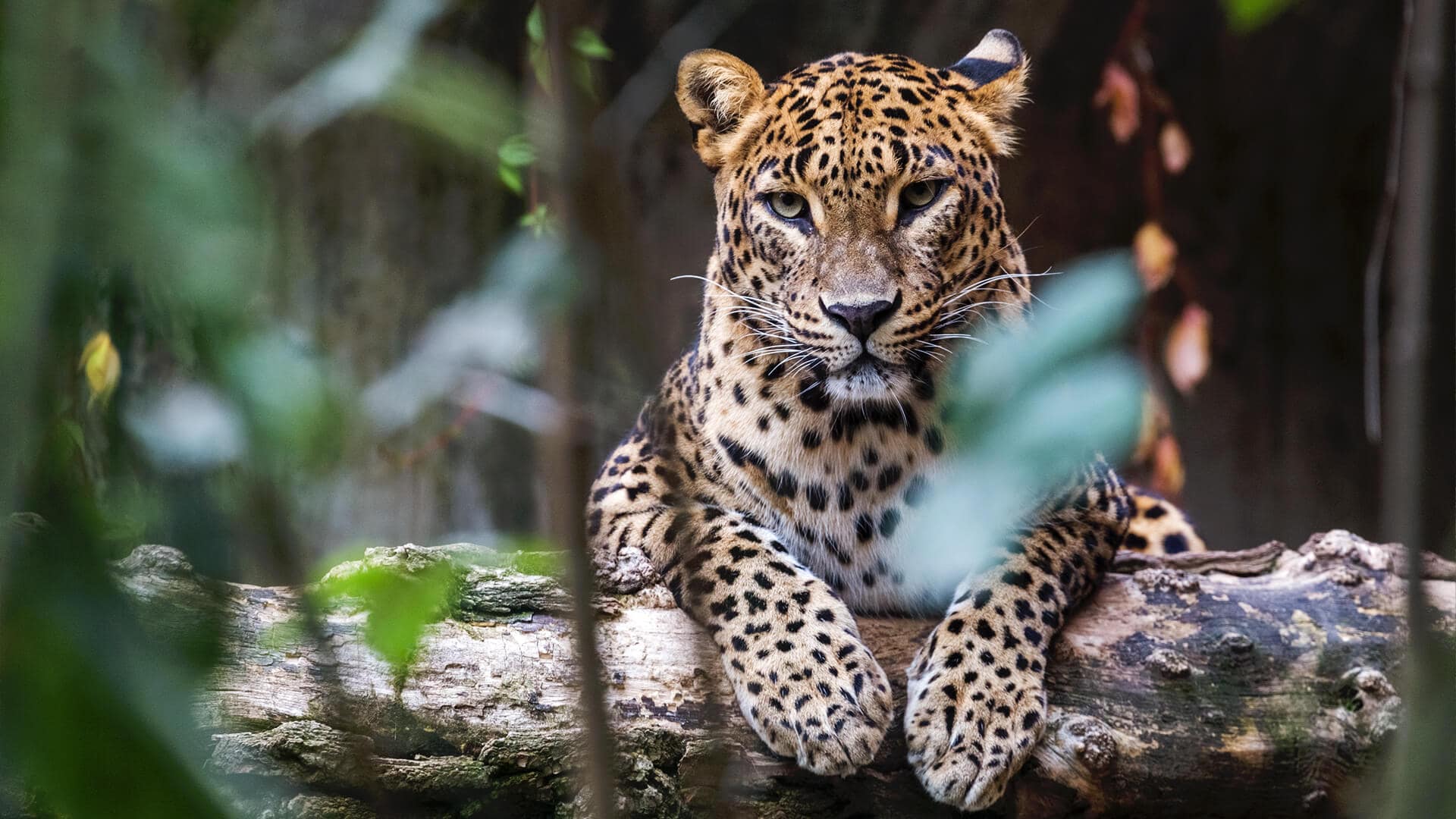
One safari park is enough on most first trips to Sri Lanka, and a second drive in the same park usually adds more than a second park does. Two parks only genuinely differ when they are chosen for contrast: Udawalawe for near-certain elephants paired with Yala for a leopard attempt, or Wilpattu for quiet leopard country. Adding a second park typically costs a night and a transfer for animals you have already seen.
Key takeaways
- One park plus two drives usually beats two parks plus one drive each, for the same number of nights.
- Udawalawe and Yala are the one pairing that genuinely differs: reliable elephants against a realistic leopard chance.
- Minneriya and Kaudulla pair with the Cultural Triangle rather than the southern parks, so they do not compete for the same night.
- Wildlife activity concentrates around dawn and dusk, which is why a second drive adds more than extra hours do.
- A second park typically costs one night plus a transfer of two to four hours.
The default answer: one park, two drives
For most first trips to Sri Lanka, the strongest safari plan is one park with two drives rather than two parks with one drive each. The reason is timing. Wildlife activity in Sri Lankan parks concentrates sharply around dawn and dusk, when animals move between cover and water, and falls away through the heat of the middle of the day.
A single park visited at dawn and again in the late afternoon therefore delivers two high-quality windows. Two parks visited once each deliver the same two windows, but with a transfer of two to four hours in between and an extra night to accommodate it.
The second drive also benefits from knowledge. A driver who tracked a leopard at dawn knows where it was, and the afternoon drive starts from information rather than from scratch. That continuity is lost entirely when moving to a different park.
- →Wildlife activity peaks around dawn and dusk and drops through the middle of the day.
- →One park at dawn and dusk gives the same two windows without a transfer.
- →A second drive in the same park builds on what the first one found.
- →Two parks cost an extra night plus two to four hours of driving.
When two parks genuinely add something
Two parks are worth it when they are chosen for contrast rather than volume. The pairing that works best on a southern route is Udawalawe and Yala: Udawalawe for near-certain elephant sightings in open grassland, Yala for a realistic chance at a leopard in denser scrub.
Those two genuinely differ in landscape, in the animals you are likely to see, and in atmosphere. Udawalawe is open, calm and reliable; Yala is busier, denser and higher-stakes. A traveller who does both has seen two different things rather than the same thing twice.
The weaker pairings are the ones that repeat. Yala and Wilpattu are both leopard parks, and while Wilpattu is quieter and wilder, doing both on a first trip is a specialist choice rather than a general one. Two parks with similar habitat and similar species is the case where a second drive would have served better.
- →Udawalawe and Yala is the strongest pairing: reliable elephants against a leopard attempt.
- →The two differ in landscape, species likelihood and atmosphere.
- →Yala and Wilpattu repeat each other for a first-time visitor.
- →Choose a second park for contrast, never for volume.
The park that does not compete for a night
Minneriya and Kaudulla sit beside the Cultural Triangle rather than on the southern route, roughly an hour from a Sigiriya or Habarana base. That makes them the one safari option that does not compete with the southern parks for the same night.
An afternoon drive at Minneriya or Kaudulla can be attached to a Polonnaruwa morning without adding a night to the itinerary at all, which makes it close to free in scheduling terms. Which of the two is operating depends on water levels, and the guidance shifts through the year.
The draw is the Gathering, when large numbers of elephants congregate at the receding reservoir edges. This is generally strongest in the drier months from roughly June to September, though it depends on rainfall and is never guaranteed. It is a genuinely different spectacle from a southern park drive.
- →Minneriya and Kaudulla sit roughly an hour from a Sigiriya or Habarana base.
- →An afternoon drive attaches to a Polonnaruwa morning without an extra night.
- →Which park is best depends on water levels and shifts through the year.
- →The Gathering is generally strongest roughly June to September; it depends on rainfall.
What a second park actually costs
Adding a southern park to an itinerary that already has one costs a night, a transfer of roughly two to four hours, and a second very early start. On a ten-day trip that is a meaningful share of the schedule, and it comes out of either the hill country or the coast.
It also costs a second set of park fees and jeep hire, which for most travellers is the smaller consideration but not a negligible one. Confirm current rates when booking rather than assuming, as park fees are revised periodically.
The comparison worth making is against the alternative uses of that night. A third night on the south coast, or a second night in the Cultural Triangle allowing Polonnaruwa to be done properly, are both strong competitors for the same slot.
- →A second southern park costs a night, a two to four hour transfer and another dawn start.
- →A second set of park fees and jeep hire applies; confirm current rates when booking.
- →The night usually comes out of the hill country or the coast.
- →Compare against a third coastal night, which is often the better use.
What we would actually recommend
On seven days, take one park and one drive, almost always Udawalawe, and accept that the safari is an introduction rather than the focus. On ten days, take one park with two drives, choosing Yala if a leopard is the ambition and Udawalawe if it is not.
On fourteen days, two parks become reasonable, and the best combination is Udawalawe with two drives plus an afternoon at Minneriya or Kaudulla attached to the Cultural Triangle, which adds a genuinely different landscape without a dedicated night.
For travellers whose main reason for visiting Sri Lanka is wildlife rather than heritage, the calculation changes entirely. That trip should be built around three or four drives across two parks from the start, with the cultural sites treated as the supporting material instead.
- →Seven days: one park, one drive, usually Udawalawe.
- →Ten days: one park, two drives; Yala for leopards, Udawalawe otherwise.
- →Fourteen days: Udawalawe with two drives plus Minneriya or Kaudulla from the Cultural Triangle.
- →Wildlife-led trips should be built around drives from the outset, not around heritage.
Planning the safari element
The scheduling detail that matters most is the night before. A dawn drive means leaving accommodation around half past four or five in the morning, so staying close to the park gate is worth more than a better hotel further away.
Lankan Stays and Trails generally books one park with two drives on ten-day first trips, and uses Minneriya or Kaudulla as the second wildlife experience when the itinerary passes the Cultural Triangle anyway. We also decline to guarantee sightings, which is worth checking with any operator: a guaranteed leopard is a promise about driver behaviour rather than about wildlife.
Frequently asked questions
Do I need to visit two national parks in Sri Lanka?
Usually not on a first trip. One park with two drives, at dawn and late afternoon, generally delivers more than two parks with one drive each, because wildlife activity peaks at those times and a second park costs a night plus a transfer of two to four hours.
Should I visit both Yala and Udawalawe?
It is the one pairing that genuinely differs, with Udawalawe offering near-certain elephants in open grassland and Yala a realistic leopard chance in denser scrub. It works well on fourteen days and is usually too costly in nights on a ten-day trip.
Is a second safari drive worth it in Sri Lanka?
Generally yes, and more so than a second park. Wildlife activity concentrates around dawn and dusk, so two drives capture both windows. A driver who tracked animals in the morning also starts the afternoon drive with information rather than from scratch.
Can I do a safari from the Cultural Triangle?
Yes. Minneriya and Kaudulla sit roughly an hour from a Sigiriya or Habarana base, so an afternoon drive attaches to a Polonnaruwa morning without an extra night. Which park is operating depends on water levels and shifts through the year.
When is the elephant Gathering at Minneriya?
Generally strongest in the drier months from roughly June to September, when elephants congregate at the receding reservoir edges. It depends on rainfall and is never guaranteed, and whether Minneriya or Kaudulla is better on a given day varies with water levels.
How many safari days do I need in Sri Lanka?
One night near a park covers a single dawn drive, which suits a seven-day trip. Two nights allows a dawn and a late afternoon drive, which is the version worth doing if a leopard sighting is the ambition rather than a bonus.
Which safari park is best for a first trip to Sri Lanka?
Udawalawe for most first-time visitors and almost all families, because elephant sightings are close to certain and vehicle numbers are far lower than at Yala. Choose Yala if a realistic chance of seeing a leopard is the main reason for the safari.