
Quick answer
The best places to see wildlife in Sri Lanka's wet zone are Sinharaja Forest Reserve and Kanneliya Forest Reserve for endemic birds, frogs, lizards and purple-faced langurs, Kitulgala for lowland forest birds along the Kelani River, the Madu Ganga near Bentota for mangrove boat trips, and Muthurajawela Marsh near the airport for crocodiles and waterbirds. The wet zone's driest windows, roughly January to April and August to September, are the best times for forest walks.
Key takeaways
- The wet zone, in Sri Lanka's south-west, holds most of the island's endemic species despite covering a small share of its land.
- Sinharaja Forest Reserve, a UNESCO World Heritage Site since 1988, is the most important lowland rainforest in Sri Lanka.
- Kanneliya Forest Reserve, inland from Galle, is the largest lowland rainforest in the south.
- The Madu Ganga and Muthurajawela offer boat trips through mangroves and marsh with crocodiles and birds.
- The driest windows for forest walks are roughly January to April and August to September.
Why the wet zone matters for wildlife
Sri Lanka's wet zone receives rain from the south-west monsoon and from inter-monsoon storms, and its forests have been wet and humid for millions of years. This long stability has produced a remarkable number of endemic species, especially among birds, frogs, lizards, fish and plants.
Much of the wet zone's forest has been cleared for tea, rubber and villages, so the remaining forest reserves are vital. Visitors who walk in them with local guides support their protection.
The best places to see wildlife in the wet zone
The best places to see wildlife in the wet zone include rainforests, rivers and wetlands, each suited to a different kind of visit.
Forest walks are the main activity in the rainforests, and boat trips in the wetlands. Neither involves jeeps.
- →Sinharaja Forest Reserve: endemic birds, mixed feeding flocks and frogs.
- →Kanneliya Forest Reserve: lowland rainforest inland from Galle, with butterflies and frogs.
- →Kottawa Rainforest, near Galle: a small, easy forest walk.
- →Kitulgala: lowland forest birds along the Kelani River.
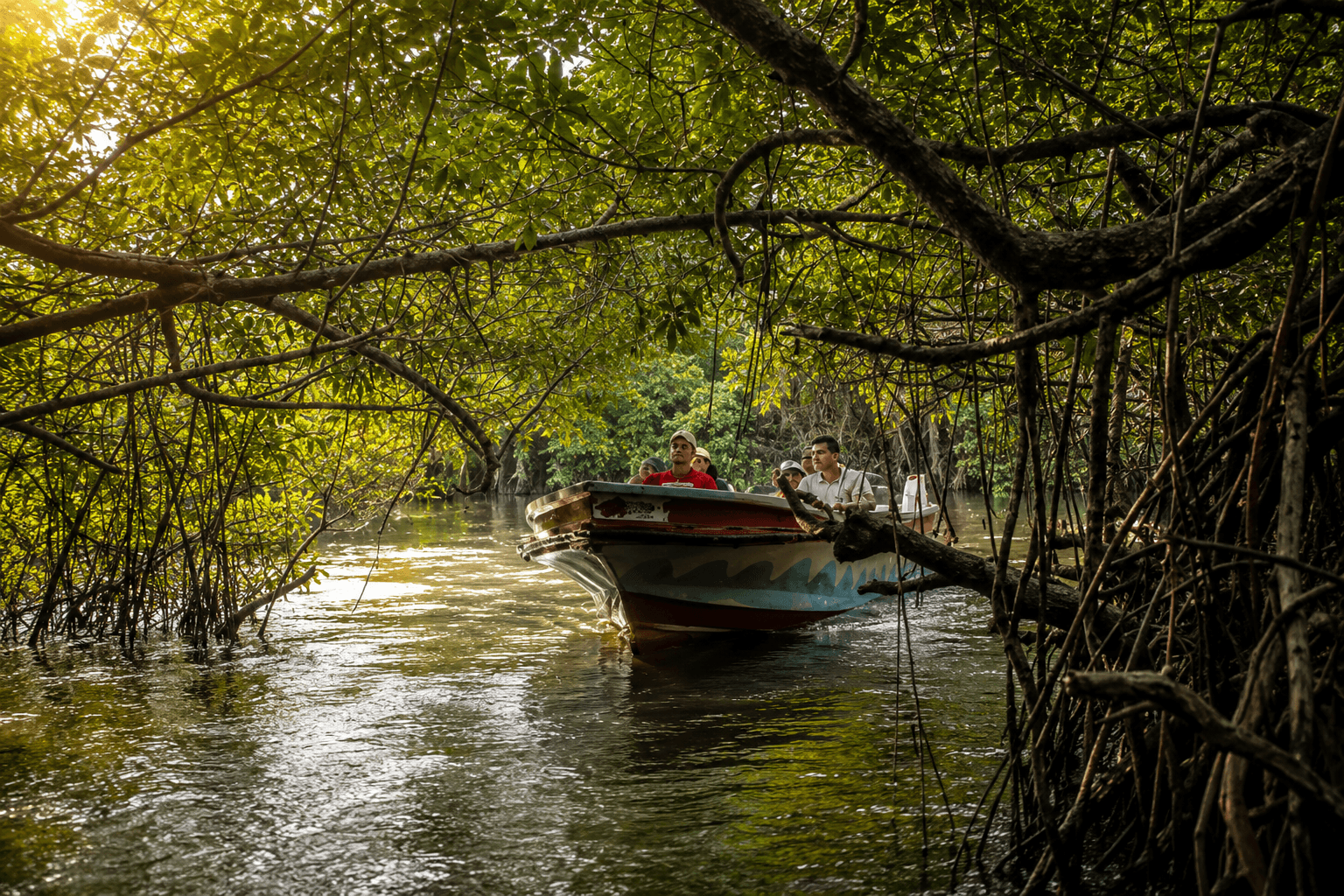
- →Madu Ganga, near Bentota: mangrove boat trips with monitors and birds.
- →Muthurajawela Marsh, near the airport: crocodiles and waterbirds by boat.
Rainforest wildlife
The wet zone's rainforests are best known for endemic birds. Sinharaja's mixed feeding flocks, in which many species move through the forest together, can include the Sri Lanka blue magpie, red-faced malkoha, Sri Lanka spurfowl, orange-billed babbler and white-faced starling. Kanneliya and Kitulgala share many of these species.
Mammals include purple-faced langurs, giant squirrels and the dusky-striped squirrel, with leopards present but rarely seen. Reptiles include the green pit viper, hump-nosed lizards and many skinks, and frogs are abundant, especially at night.
- →Birds: blue magpie, red-faced malkoha and babblers.
- →Mammals: purple-faced langurs and squirrels.
- →Reptiles: pit vipers and hump-nosed lizards.
- →Frogs: many endemic shrub frogs.
Rivers, mangroves and marshes
The wet zone's rivers and wetlands offer easier wildlife viewing. On the Madu Ganga near Bentota, boat trips pass mangroves and small islands, with water monitors, kingfishers and herons. At Muthurajawela Marsh, near the airport, boats find saltwater crocodiles, monitors and many birds.
The Bentota river and the Koggala lake have similar boat trips, and fishing cats and otters live in many wetlands, though they are rarely seen.
Wet-zone boat trips are short, usually one and a half to two hours, and run from simple jetties with local boatmen. Early morning departures give the calmest water and the most birds, while late afternoon trips trade some activity for warmer light and a sunset over the mangroves.
When to go
The wet zone's driest windows are roughly January to April and August to September, which are the best times for forest walks. During the south-west monsoon, roughly May to July, and the inter-monsoon, roughly October to November, rain is heavy and leeches are common.
Wetland boat trips can run in most months, between showers, and migrant birds are present roughly from November to March.
- →January to April: best for forest walks.
- →August to September: a second, shorter dry window.
- →May to July and October to November: wet and leechy.
Planning wet zone wildlife
Wet zone wildlife fits well with a south-coast beach stay, as Kanneliya and Kottawa are within an hour or so of Galle, and the Madu Ganga is close to Bentota. Sinharaja needs at least one night nearby, ideally two, for dawn walks.
Lankan Stays & Trails arranges rainforest walks with naturalist guides and boat trips with local operators. Leech socks, a light rain jacket and binoculars are essential.
Frequently asked questions
What wildlife lives in Sri Lanka's wet zone?
The wet zone holds most of Sri Lanka's endemic species, including birds such as the blue magpie and red-faced malkoha, purple-faced langurs, giant squirrels, many endemic frogs and lizards, and crocodiles, monitors and waterbirds in its rivers and wetlands.
What is the wet zone of Sri Lanka?
The wet zone is the south-western part of Sri Lanka, including the south-west lowlands and the western slopes of the hills, which receive heavy rain from the south-west monsoon and inter-monsoon storms. It holds the island's rainforests and most of its endemic species.
Is Sinharaja the best rainforest in Sri Lanka?
Sinharaja Forest Reserve is the most important lowland rainforest in Sri Lanka and a UNESCO World Heritage Site since 1988. It has the richest bird flocks and many endemics. Kanneliya, inland from Galle, is a good alternative closer to the south coast.
When is the best time to visit Sri Lanka's rainforests?
The driest windows, roughly January to April and August to September, are best for walking. During the monsoon months, rain is heavy, trails are slippery and leeches are common, though the forest is lush and frogs are active.
Are there leeches in Sri Lanka's rainforests?
Yes. Leeches are common in wet weather in Sinharaja, Kanneliya and other forests. They are harmless but unpleasant. Wear leech socks or long trousers tucked into socks, and check yourself after walks. Some guides provide leech socks.
Can you see wildlife near Galle?
Yes. Kanneliya and Kottawa rainforests are within about an hour of Galle, and Sinharaja is roughly two to three hours away. The Koggala lake and the coast also have birds, and the Madu Ganga near Bentota offers mangrove boat trips.
Do I need a guide in Sri Lanka's rainforests?
Yes. Guides are required in some reserves, including Sinharaja, and are strongly recommended everywhere. They know the trails, find birds and other wildlife quickly and help visitors stay safe from snakes and slippery paths.