
Quick answer
The best places to visit in Sri Lanka's Western Province are Colombo, with Gangaramaya temple, Galle Face Green and the Fort and Pettah districts; Kelaniya Raja Maha Vihara; Negombo's lagoon, fish market and Dutch canal; the Muthurajawela wetland; Kalutara's hollow stupa and Richmond Castle; Beruwala's Kechimalai mosque; and the prehistoric Fa Hien cave at Pahiyangala. It has three districts: Colombo, Gampaha and Kalutara.
Key takeaways
- The Western Province has three districts: Colombo, Gampaha and Kalutara.
- The airport and Negombo are in Gampaha district, roughly an hour north of Colombo.
- Bentota is in the Southern Province; Beruwala and Kalutara are in the Western Province.
- The coast is best roughly December to April, when the sea is calm.
- Colombo is best seen early in the day or after 4pm, when the heat eases.
More than a transit zone
Sri Lanka's Western Province runs from Negombo in the north to just beyond Beruwala in the south and inland to the edge of the hills. It is the most urban part of the island, but it is also green, with rivers, lagoons, coconut groves and rubber estates within an hour of the city.
Its value for travellers is its convenience. A first night, a last day, or a day before a late flight can all be spent well here, with no long drives. Its coast shares the south-west season, at its best roughly December to April.
- →Gampaha district: Negombo, the airport, Kelaniya, Muthurajawela, Henarathgoda gardens.
- →Colombo district: the city, Kotte, Mount Lavinia.
- →Kalutara district: Kalutara, Beruwala, Richmond Castle, Fa Hien cave.
Colombo
Colombo is a city of neighbourhoods. Fort and Pettah, the old colonial core and the bazaar district, are best walked in the morning, past the red-and-white Jami ul-Alfar mosque, Dutch-era buildings and spice and textile streets. Galle Face Green, the seafront promenade, comes alive at sunset with kites and street food.
Gangaramaya temple, part museum and part working monastery, sits near Beira Lake, with the small Seema Malaka pavilion on the water. The National Museum, in a colonial building in Cinnamon Gardens, gives the clearest overview of Sri Lankan history and is a good rainy-day choice.
Kotte, the old capital of the fifteenth and sixteenth centuries, now the administrative capital, has its own wetland parks and quieter streets.
- →Fort and Pettah on foot.
- →Gangaramaya and Beira Lake.
- →Galle Face Green at sunset.
- →The National Museum.
Negombo, Kelaniya and the north
Negombo, close to the airport, is a fishing town with a long beach, a lagoon full of outrigger canoes and a Dutch canal. Its morning fish market, where catches are dried on the sand, is one of the most photographed scenes in the province. Its many churches have earned it the name little Rome.
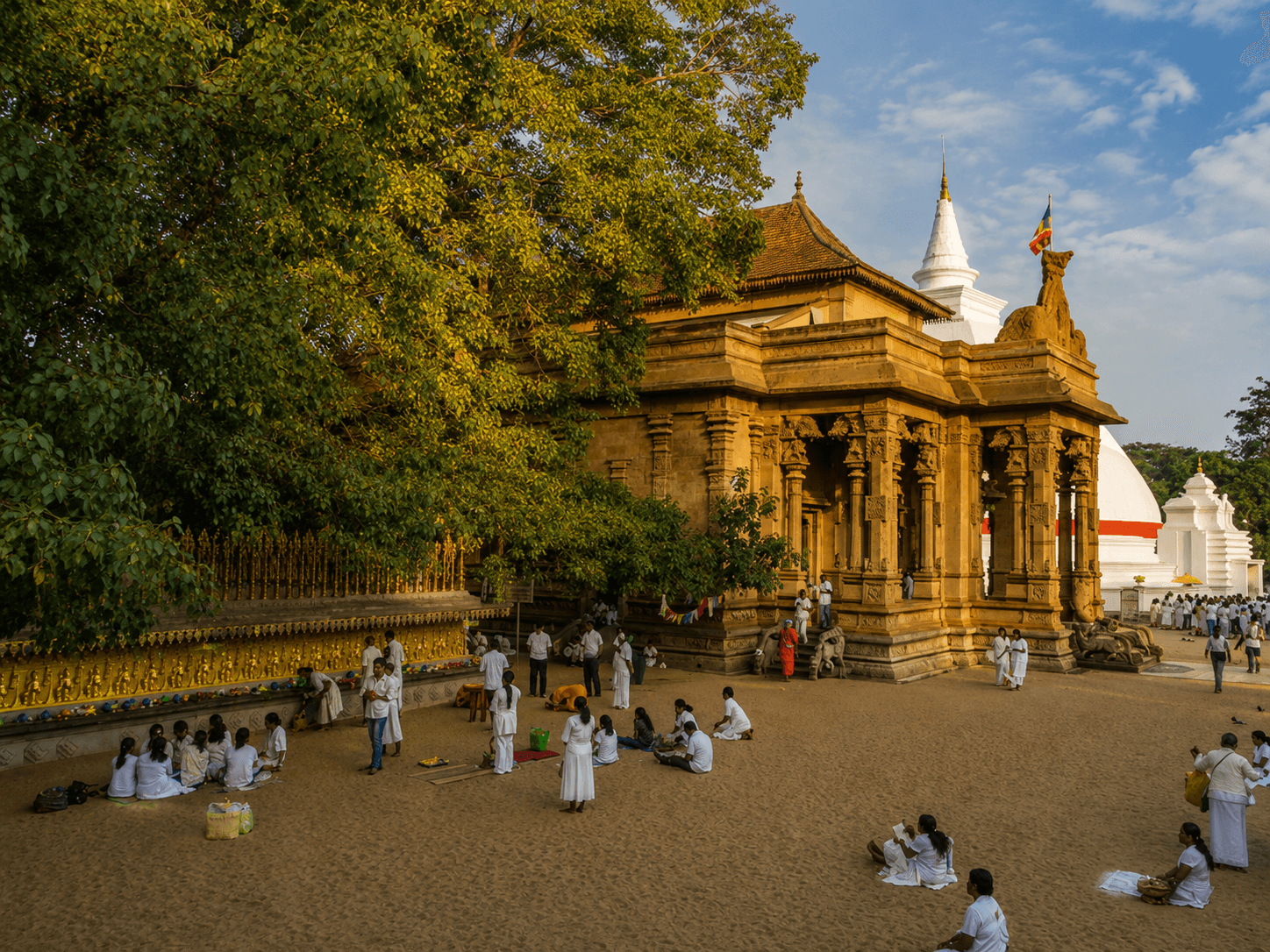
Kelaniya Raja Maha Vihara, roughly 30 minutes from Colombo, is one of the island's most sacred Buddhist temples, believed to have been visited by the Buddha. Its murals and full moon pilgrimages are memorable. The Muthurajawela wetland, between Negombo and Colombo, offers boat trips among mangroves and birds.
Henarathgoda Botanical Garden near Gampaha, where Sri Lanka's first rubber trees were planted, is a quiet green stop.
- →Negombo: lagoon, fish market and canal.
- →Kelaniya: murals and pilgrims.
- →Muthurajawela: wetland boat trip.
Kalutara and Beruwala
Kalutara, an hour south of Colombo, is known for its large white stupa by the bridge, unusual because visitors can walk inside its hollow dome. Richmond Castle, an Edwardian mansion in the countryside nearby, is a curious mix of Indian and European styles.
Beruwala is said to be the place where Arab traders first settled in Sri Lanka, and the Kechimalai mosque, on a headland above the harbour, is one of the oldest on the island. Inland, the Fa Hien cave at Pahiyangala, near Bulathsinhala, is a vast rock shelter where prehistoric human remains have been found, now with a temple inside.
The coast here has resort hotels and long beaches, best in the calm season roughly December to April.
How to use the province
The Western Province works best in small pieces. Negombo suits a first night after a late arrival or a last night before an early flight. Colombo deserves a day or two, ideally with a guide for Fort and Pettah. Kalutara and Beruwala fit on the way south to Bentota and Galle.
Traffic is the main constraint. Allow longer than the map suggests for any drive through Colombo, especially at rush hour. The expressways help, cutting the airport to Colombo run to roughly 30 to 45 minutes outside peak times.
Lankan Stays & Trails can turn a transit day into a proper one, with an early walk in Pettah, lunch, the National Museum and a sunset at Galle Face before the evening flight.
- →First or last night: Negombo.
- →City day: Colombo, early and late.
- →On the way south: Kalutara and Beruwala.
Frequently asked questions
Which province is Colombo in?
Colombo is in the Western Province, which also includes Gampaha and Kalutara districts. The international airport at Katunayake and the beach town of Negombo are in Gampaha district, roughly an hour north of central Colombo by expressway.
Is Colombo worth visiting?
Colombo is worth a day or two for its temples, colonial Fort and Pettah districts, the National Museum, good restaurants and the sunset at Galle Face Green. It is not a highlight in the way Sigiriya or Kandy are, but it gives context to the rest of the island.
What is there to do near Colombo airport?
Near Colombo airport you can visit Negombo's beach, lagoon, fish market and Dutch canal, the Muthurajawela wetland and, a little further, Kelaniya temple. Negombo is roughly 15 to 20 minutes from the airport and is the easiest base for a first or last night.
Is Kelaniya temple worth visiting?
Kelaniya Raja Maha Vihara is worth visiting for its fine murals, its sacred status and the atmosphere on full moon days, when pilgrims fill the grounds. It is roughly 30 minutes from central Colombo, depending on traffic. Dress with shoulders and knees covered.
What is the Fa Hien cave?
The Fa Hien cave at Pahiyangala, in Kalutara district, is one of the largest natural rock shelters in South Asia. Prehistoric human remains tens of thousands of years old have been found there, and a Buddhist temple now stands inside. It is roughly two hours from Colombo.
When is the best time to visit Colombo and the west coast?
The best time to visit Colombo and the west coast is roughly December to April, when the sea is calm and rain is lighter. Colombo itself can be visited year-round, though the south-west monsoon brings heavy showers roughly May to September.