
Quick answer
On a 14-day Sri Lanka itinerary, book the Cultural Triangle elephant safari the day before through your hotel or driver, so the park can be chosen on the latest information. Book the Yala jeep and hotel early in high season, deciding between half-day and full-day drives and private or shared jeeps. Book whale watching from Mirissa a day or two ahead, checking the sea forecast. For all three, choose operators that keep a respectful distance from wildlife.
Key takeaways
- The elephant safari is best booked the day before, so drivers can choose the park the herds are using.
- The Yala jeep and nearby hotel should be booked early in high season.
- Whale watching is booked a day or two ahead, with an eye on the sea forecast.
- Private jeeps offer flexibility; shared jeeps cut costs for solo travellers.
- Choose operators that keep a respectful distance and never chase or crowd animals.
The wildlife outings on the 14-day route
The 14-day Sri Lanka itinerary has three wildlife outings, each with its own booking pattern. The elephant safari on day 3 is flexible and booked late; the Yala safari on days 9 and 10 needs planning in high season; the whale-watching trip on day 11 depends on the sea.
- →Day 3: an elephant safari at Minneriya, Kaudulla or Hurulu.
- →Days 9 and 10: an afternoon Yala drive and an optional dawn drive.
- →Day 11: whale watching from Mirissa, with day 12 as a backup.
Booking the elephant safari
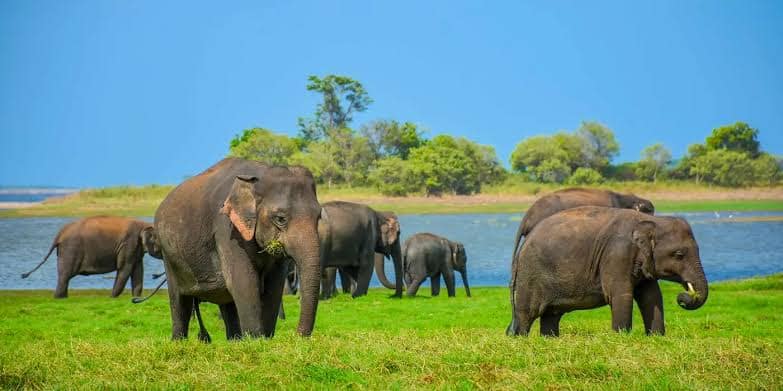
Wild elephants in the Cultural Triangle move between Minneriya, Kaudulla and Hurulu Eco Park, following water and grass. Jeep drivers in Habarana and Sigiriya track them daily, so the best approach is to book the day before through your hotel or driver and let them choose the park.
Afternoon safaris of roughly three hours are standard. Ask for a driver who keeps a respectful distance and switches off the engine near herds.
Booking the Yala safari
Yala is the busiest park on the route, and in high season jeeps and nearby hotels can fill. Book the hotel near Tissamaharama early, and arrange the jeep through the hotel, your driver or a trusted operator.
Decide between a half-day drive, which suits most travellers, and a full-day safari with a packed lunch, which reaches quieter areas. Choose a private jeep for flexibility, or a shared jeep to cut costs.
- →Half-day: an afternoon or dawn drive of roughly three to four hours.
- →Full-day: a longer drive with a packed lunch, reaching quieter areas.
- →Private: flexible pace and stops.
- →Shared: lower cost and company.
Booking whale watching
Whale watching from Mirissa runs roughly December to April. Book a day or two ahead through your hotel or a recommended operator, and check the sea forecast the evening before. With three Mirissa nights on the route, the trip can move to day 12 if the sea is rough.
Choose an operator that keeps its distance, approaches slowly and does not chase whales. Check what is included, such as breakfast, life jackets and shade.
Wildlife outings that need no booking
Not every wildlife experience on the 14-day route needs arranging. Horton Plains on day 7 is paid at the gate, and sambar deer and highland birds are often seen along the trail at dawn. Bundala National Park, roughly 30 minutes from Tissamaharama, can be added on the morning of day 10 with a jeep arranged the evening before.
Birdlife at the Sigiriya and Tissamaharama reservoirs, monkeys in Kandy's Udawattakele forest and turtles glimpsed from the shore at Mirissa need nothing more than time and binoculars.
Choosing responsible operators
The quality of a safari depends heavily on the operator. A responsible driver or boat crew keeps a respectful distance, avoids crowding sightings, switches off engines near animals and follows park rules.
It is fair to ask about an operator's approach before booking, and to tell your driver you prefer fewer, better sightings to chasing crowds. Avoid operators offering animal contact of any kind.
- →Ask how close they approach animals.
- →Avoid operators that race to sightings or crowd animals.
- →Choose boats that limit time with each whale.
- →Avoid any activity involving animal contact.
Planning your safaris
Book the Yala hotel early, then arrange jeeps and boats closer to the time. Keep flexibility for weather and conditions, and budget for park fees, jeep hire and tips. Pack binoculars, a hat and a light layer for every outing; jeeps are open and early mornings at sea are cool.
Lankan Stays & Trails arranges all three outings with trackers and crews who follow distance rules. The ticket costs guide in this series explains how park fees and jeep hire combine.
Frequently asked questions
How far ahead should I book a Yala safari?
In high season, book the hotel near Yala early, and arrange the jeep a few days to a few weeks ahead through the hotel, your driver or a trusted operator. In quieter months, a day or two ahead is often enough.
Should I book a private or shared jeep in Yala?
Private jeeps offer flexibility and let you set the pace; shared jeeps cut costs and suit solo travellers. Either way, choose a driver who keeps a respectful distance from wildlife.
Is a full-day Yala safari worth it?
For wildlife enthusiasts, yes, since it reaches quieter areas and increases chances of leopards. Most first-time visitors are happy with a half-day drive. A full day is long and hot, so bring water and sun protection.
Can I book the Minneriya safari in advance?
You can, but it is better to book the day before through your hotel or driver, so the park can be chosen based on where the herds are. Elephants move between Minneriya, Kaudulla and Hurulu Eco Park.
How do I choose a whale-watching operator in Mirissa?
Choose one that keeps its distance, approaches slowly, does not chase whales and provides safety equipment and shade. Ask about their approach before booking, check recent reviews and prefer boats that carry fewer passengers, which are calmer and easier to see from.
What if my whale-watching trip is cancelled?
Operators cancel trips in rough seas for safety. On the 14-day route, three Mirissa nights mean you can usually move the trip to the next morning. Check the operator's rebooking or refund policy.
Are Sri Lankan safaris ethical?
They can be, with responsible operators that keep their distance and follow park rules. Crowding and chasing are real problems at busy parks. Choose carefully, and avoid any activity involving contact with animals.