
Quick answer
Boutique design hotels in Sri Lanka are small, architecturally led properties shaped by the influence of Geoffrey Bawa, the island's most significant architect, known for open courtyards, reflecting pools, indoor-outdoor living spaces and buildings that frame the surrounding landscape rather than enclose it. They cluster along the south-west coast, around Bentota and Galle in particular, typically offer a limited number of individually designed rooms, and suit travellers who want architecture and setting to be as much a part of the stay as the service itself.
Key takeaways
- Geoffrey Bawa (1919 to 2003) is Sri Lanka's most significant architect and the direct influence behind the island's boutique design-hotel style, blending modernist form with traditional Sri Lankan courtyard living.
- Bawa-influenced design typically features open-sided pavilions, internal courtyards, reflecting pools and a deliberate blurring of indoor and outdoor space.
- The south-west coast, particularly around Bentota and Galle, holds the highest concentration of boutique design hotels tracing this lineage.
- Most boutique design hotels are genuinely small, often under 40 rooms, which is part of what distinguishes them from larger resort-style properties on the same coast.
- The style pairs naturally with Sri Lanka's tropical climate, since open courtyards and cross-ventilation reduce reliance on air conditioning in a way that a sealed hotel building does not.
Who Geoffrey Bawa was, and why his influence still matters
Geoffrey Bawa was a Sri Lankan architect, working mainly from the 1960s through the 1990s, widely credited as the originator of what is often called 'tropical modernism': buildings designed to work with the climate and landscape rather than against them, using courtyards, verandas and water features instead of sealed, air-conditioned boxes.
His influence on Sri Lanka's hotel industry is direct rather than incidental. Bawa designed several hotels himself, and generations of architects who trained under or alongside him carried the same principles into new properties long after his death in 2003, which is why 'Bawa-influenced' remains a meaningful description for a hotel built decades later.
For a Swiss traveller, the closest useful reference point is not a specific building but the sensibility: understated, materials-led design that prizes proportion and light over visible ornament, a sensibility that tends to resonate with Swiss taste for quiet, considered architecture.
What Bawa-influenced design actually looks like in a hotel
The recurring elements are consistent enough to recognise across different properties: open-sided pavilions instead of enclosed lobbies, internal courtyards planted with mature trees, reflecting pools that run water right up to the edge of a room or restaurant, and long sightlines that frame a specific view of sea, lake or garden rather than a generic vista.
Rooms in these hotels tend to be fewer in number than a standard resort, individually laid out rather than replicated on a floor plan, and built from local materials (timber, terracotta, local stone) rather than imported finishes. The result usually feels closer to a private house extended outward than a conventional hotel block.
- →Open courtyards and pavilions rather than fully enclosed, air-conditioned lobbies.
- →Reflecting pools and water features that blur the line between the building and its setting.
- →Individually designed rooms, often fewer than 40 across the whole property.
- →Local materials (timber, terracotta, stone) over imported, standardised finishes.
Where to find Bawa-influenced hotels
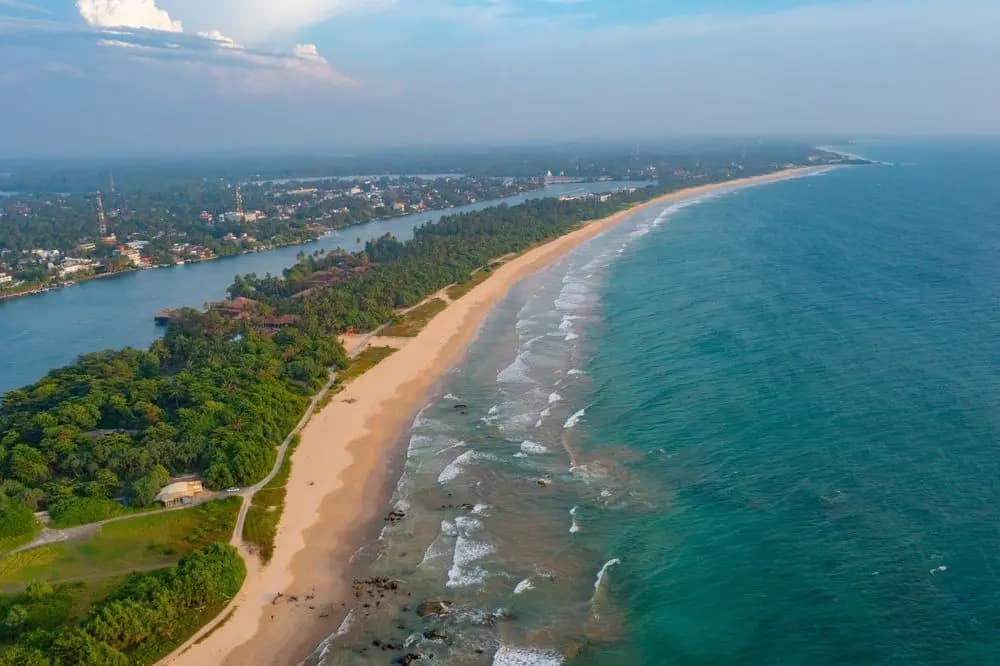
The south-west coast holds the highest concentration, particularly around Bentota, where Bawa built some of his earliest and best-known hotel work, and Galle, where the same design language appears in properties both inside and outside the old Fort walls. Colombo also has boutique design properties in this lineage, useful for a first or last night near the airport.
Further inland, the influence is less concentrated but still visible in select Cultural Triangle and hill-country properties, generally newer buildings that have deliberately borrowed the courtyard-and-water vocabulary rather than being designed by Bawa's own studio.
- →Bentota and the surrounding west coast: the highest concentration of original Bawa and Bawa-trained work.
- →Galle, inside and outside the Fort: a strong concentration, discussed in more depth in a dedicated Galle Fort article.
- →Colombo: a smaller number of design-led boutique properties, useful for arrival or departure nights.
Choosing a boutique design hotel for your own trip
Because these properties are small, they suit a two or three-night stay rather than a full week, and pair well with a longer itinerary that also includes a tea-estate bungalow in the hills or a villa further down the coast for contrast. Confirm room type and view carefully when booking, since individually designed rooms genuinely differ from one another within the same property, unlike a standardised resort floor plan.
Never expect an exact hotel brand name to be guaranteed available at a given price point; Sri Lanka's boutique scene changes ownership and naming more than international chains do, so it is worth confirming the current operator and specific property with a planner or the hotel directly rather than relying on an old listing.
Fitting a design-hotel stay into a trip from Switzerland
A design-hotel stay works well early or late in an itinerary, since Bentota, Galle and Colombo all sit within a reasonable drive of Colombo's airport, useful either as a gentle start after the roughly 12 to 17-hour journey via a connecting hub from Zurich or Geneva, or as an unhurried final stretch before flying home.
We at Lankan Stays & Trails often place a design-hotel night at the start or end of a longer luxury itinerary for exactly this reason, giving the trip a calm bookend rather than treating the arrival or departure night as a formality.
Frequently asked questions
What is a Bawa-influenced hotel in Sri Lanka?
It is a hotel designed, or clearly influenced, by the principles of architect Geoffrey Bawa: open courtyards, reflecting pools, indoor-outdoor living spaces and buildings that frame the landscape rather than enclose it. The style is often called tropical modernism.
Who was Geoffrey Bawa?
Geoffrey Bawa (1919 to 2003) was Sri Lanka's most significant architect, credited with originating tropical modernism. He designed several hotels himself and trained a generation of architects who continued the same design principles across the island's boutique-hotel scene.
Where are most boutique design hotels in Sri Lanka?
The highest concentration sits along the south-west coast, particularly around Bentota and Galle, with a smaller number of design-led properties in Colombo. Bawa's influence also appears in select Cultural Triangle and hill-country hotels further inland.
How many rooms do boutique design hotels typically have?
Most are genuinely small, often under 40 rooms, with individually laid-out rooms rather than a repeated floor plan. This is one of the main distinctions from larger resort-style hotels on the same coast.
Are boutique design hotels air conditioned?
It varies by property and room type. Bawa-influenced design often uses courtyards and cross-ventilation to reduce reliance on air conditioning, though most rooms in modern boutique hotels do offer it; confirm the specific setup when booking.
How long should I stay at a boutique design hotel?
Two or three nights suits most properties well, long enough to enjoy the architecture and setting without needing more variety than a small hotel offers. It pairs naturally with a longer itinerary covering hill country, wildlife and other coastal stops.
Can I visit Geoffrey Bawa's own former home in Sri Lanka?
Bawa's personal properties are generally open for guided visits, though hours, booking process and access can change, so confirm current details locally or with a planner before including one in an itinerary rather than assuming walk-up access.