
Quick answer
Cloudy sunrises at Sigiriya are most common in the wetter months, roughly October to December, and less common from January to April and June to September. Even then, mornings are usually drier than afternoons. A grey dawn often brings mist around Sigiriya rock, cool air and quiet paths, which many travellers enjoy. Plan two or three nights in Sigiriya so that a cloudy sunrise is a first attempt, not your only chance.
Key takeaways
- Cloudy sunrises are most likely roughly from October to December in the Sigiriya area.
- January to April and June to September usually bring clearer mornings, with haze rather than cloud mid-year.
- Broken cloud often produces the most colourful sunrises.
- Mist in the forest around Sigiriya rock is a highlight of damp, cool mornings.
- A stay of two or three nights gives at least one more chance at a clear dawn.
When cloudy sunrises are likely
Cloudy sunrises at Sigiriya are most likely in the wetter months, roughly October to December, when inter-monsoon storms and the north-east monsoon bring cloud and rain to the dry zone. Dawn cloud is also possible in March and April, as thunderstorms build in the heat, and occasionally in other months.
Roughly January to April and June to September are generally drier around Sigiriya. January and February often bring the clearest mornings of the year. From June to September, the south-west monsoon falls mostly on the other side of the island, leaving Sigiriya dry but sometimes hazy.
- →Most cloud: roughly October to December.
- →Some risk: March and April thunderstorms.
- →Clearest mornings: often January and February.
- →Mid-year: dry, with haze.
The kinds of cloudy dawn
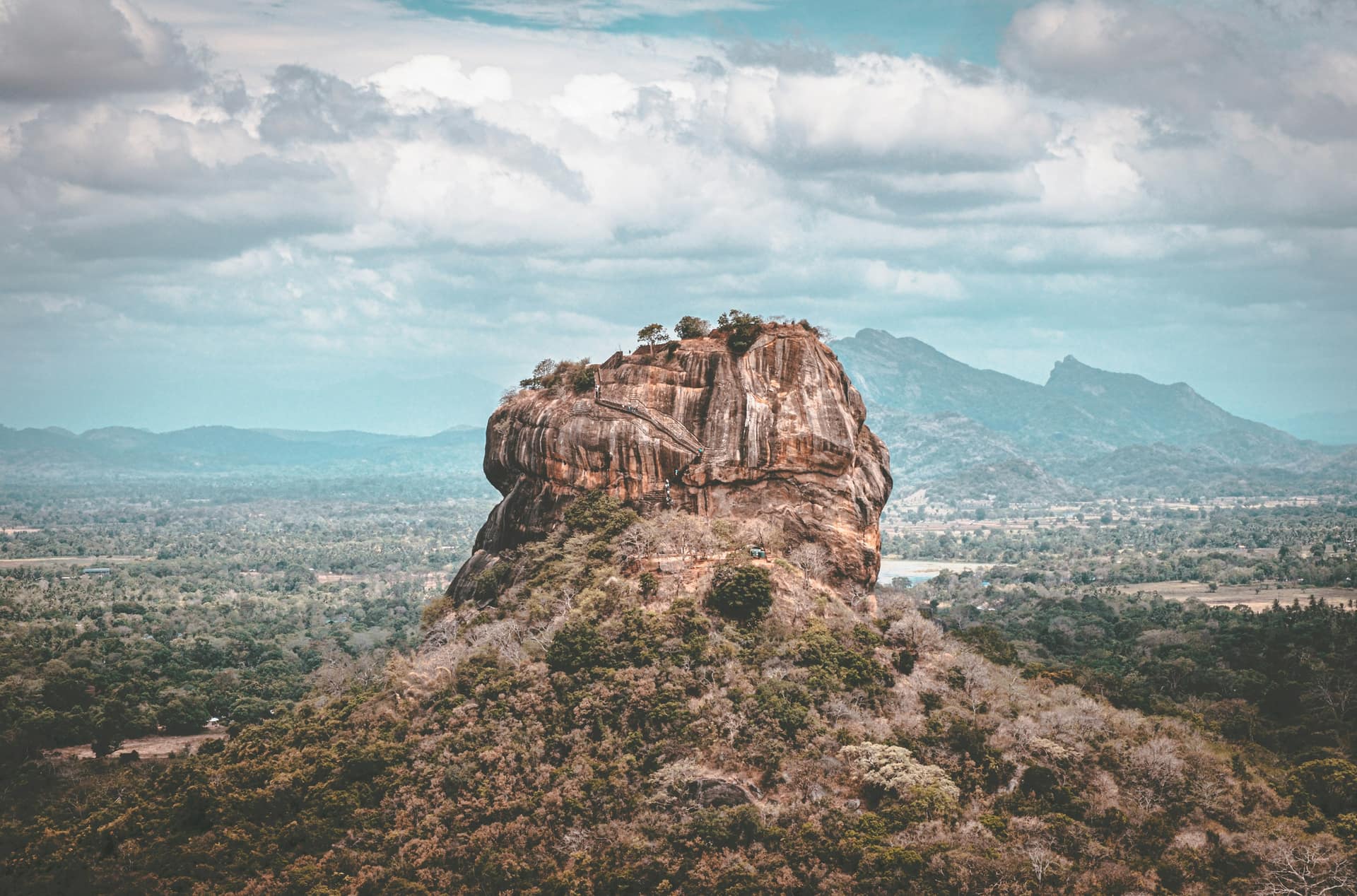
The kinds of cloudy dawn at Sigiriya vary enormously. Broken cloud is the best case: the sun lights the undersides of the clouds from below, and the sky can turn orange and pink for 10 to 15 minutes. Many of the most dramatic sunrise photographs of the rock come from mornings like this.
A uniform grey layer is the most common disappointment. The sky brightens without colour, and the sun appears late, if at all. Even then, the view of Sigiriya rock is clear, often with mist lying in the forest below.
Low cloud or fog occasionally hides the rock itself. These mornings are rare but atmospheric, with the summit appearing and disappearing as the fog lifts.
- →Broken cloud: often the most colourful sunrise.
- →Uniform grey: no colour, but clear views.
- →Low cloud or mist: atmospheric, the rock comes and goes.
- →Rain: rarely at dawn, more often later.
Reading the sky before you go
Reading the sky before you go helps you decide whether to climb. The evening before, look at the forecast and the sunset: a clear western sky at dusk often means a reasonable morning. On the morning itself, step outside before your tuk-tuk arrives and look east.
Stars visible in the east are a good sign. A completely blank, dark sky with drizzle suggests a grey dawn. Distant lightning to the north or east is a reason to postpone Pidurangala, as the summit is exposed.
Do not rely on a single forecast app. Local conditions around Sigiriya can differ from those in Dambulla or Habarana, and forecasts often overstate the risk of rain at dawn.
Is a grey dawn worth it?
A grey dawn at Sigiriya is often worth it, for reasons that have little to do with the sun. The air is cool, the forest is loud with birds, and the paths are quieter, as many people check the sky and go back to bed. Mist drifts around Sigiriya rock in a way that clear mornings never show.
For a Pidurangala climb, the effort is the same whatever the sky. For an easy sunrise from the tank bund or a hotel terrace, there is almost nothing to lose. The rule of thumb is to go unless it is raining heavily or there is lightning.
Lower your expectations, but not your attention. Several of the most memorable mornings at Sigiriya are grey ones.
- →Go: broken cloud, light grey, mist.
- →Consider: steady drizzle, for easy viewpoints only.
- →Postpone: heavy rain or any lightning.
Planning a second chance
Planning a second chance is the best defence against a cloudy sunrise. With two or three nights in Sigiriya, treat the first sunrise as a first attempt. If it is grey, try Pidurangala at sunset that evening or sunrise the next morning.
In the wetter months, keep one morning flexible. Arrange your Sigiriya climb, safari or day trip so that they can swap with a sunrise morning if the forecast changes. Your tuk-tuk driver and hotel will usually adapt plans at short notice.
Pairing sunrise with other morning activities also helps. If dawn is grey, you are still up early for Sigiriya at opening or an early bird walk.
- →Two or three nights: at least two sunrise chances.
- →Flexible morning: swap plans with the weather.
- →Back-up: sunset the same day.
Photographing a cloudy dawn
Photographing a cloudy dawn at Sigiriya calls for a different approach. Look for mist rather than sky: a short telephoto from Pidurangala picks out the rock above a layer of white in the forest. Use the softer light for detail on the granite and the trees.
Black and white often suits grey mornings. At Lankan Stays & Trails, we encourage photographers to stay on the summit longer on cloudy days, as breaks in the cloud often come 20 to 30 minutes after sunrise.
Frequently asked questions
Is it worth going for sunrise at Sigiriya if it is cloudy?
Usually yes, unless it is raining heavily or there is lightning. Broken cloud often gives the most colourful sunrises, and even grey mornings bring mist around the rock, cool air, birdsong and quieter paths. Many travellers remember cloudy mornings as highlights.
When is the rainy season at Sigiriya?
The wettest months around Sigiriya are roughly October to December. Thunderstorms can also occur in March and April. Roughly January to April and June to September are generally drier. Even in wet months, mornings are often drier than afternoons.
How do I know if sunrise will be clear at Sigiriya?
You cannot know for sure. Check the forecast and the western sky at sunset the evening before, then look east before you leave in the morning. Visible stars are a good sign. Forecasts often overstate dawn rain, so make the final decision on the morning.
Does mist form around Sigiriya rock at sunrise?
Often, especially on cool, damp mornings after rain and in the wetter months. Mist lies in the forest around the base of the rock and lifts as the sun rises. From Pidurangala it makes one of the most atmospheric views of Sigiriya.
What if my only sunrise at Sigiriya is cloudy?
Enjoy the cool air, the birdsong and the mist, then use the early start for Sigiriya at opening. If you have another night, try Pidurangala at sunset or the next sunrise. Staying two or three nights gives the best chance of at least one clear morning.
Are sunrises clearer in January at Sigiriya?
January and February often bring some of the clearest mornings of the year around Sigiriya, after the wetter months of October to December. Cloud is still possible, but the odds of a clear or partly cloudy sunrise are generally good.
Should I climb Pidurangala in the rain at sunrise?
In light drizzle, many people do, with care on wet steps and the scramble. In heavy rain or with any lightning, postpone. The summit is exposed and the boulders become slippery, so a later attempt is safer and usually more rewarding.