
Quick answer
Community-based tourism in Sri Lanka means experiences owned and run by the residents themselves, rather than sold by an outside operator who visits a village and keeps the margin. In practice it looks like family homestays, village kitchens, farm and lake tours led by the people who work that land, and craft co-operatives buying directly from makers. The test is simple: ask who sets the price, who receives the payment, and who decides when to say no.
Key takeaways
- Community-based tourism means locals own and price the experience, not just perform in it.
- Homestays, family kitchens, and craft co-operatives keep the largest share of your spend in the village.
- Ask who sets the price and who receives the money. The answer separates real from staged.
- Rural areas away from the main tourist corridor benefit most from this kind of spending.
- One or two unhurried village nights beat a string of thirty-minute photo stops.
What community-based tourism actually means
Most tourism spending leaks. A booking made abroad, at a foreign-owned resort, on an imported buffet, can leave surprisingly little behind in the place you travelled to see. Community-based tourism is the deliberate correction: the household or co-operative hosting you is also the one setting the price and banking the payment.
That ownership is the whole point. A village walk sold by an outside operator, where residents are paid a small fee to appear, is a performance. A village walk designed, priced, and guided by the family whose paddy you are standing in is an enterprise. They look almost identical from the minibus window, which is exactly why the distinction is worth knowing.
Where your money actually goes
You do not need a spreadsheet to travel well, but a rough sense of the flow helps you choose. Every link in the chain between your card and the person cooking your rice takes a cut, so the shorter the chain, the more that stays local.
Paying the host directly, in cash or by their own channel, is usually the highest-retention choice available to you. Where a booking platform is involved, a commission goes elsewhere by design.
- →Direct to a homestay host: the largest share stays in the household
- →A village co-operative: pooled income, often funding shared costs like transport or schooling
- →A local guide hired directly: a full day's fair wage rather than a per-head sliver
- →An overseas booking of a foreign-owned resort: the least reaches the village
Village homestays and what to expect
A Sri Lankan homestay is not a boutique hotel with a family attached. Expect a simple room, a shared bathroom in many cases, an early start, and a household that carries on with its actual life around you. That is the appeal, not a compromise.
You will usually eat what the family eats: rice and curry assembled from several small dishes, often with vegetables grown a short walk away. Say yes to the food, ask before photographing anyone, and let the evening be slow. The households that do this well tend to be near the Cultural Triangle, the tea districts, and the lagoons of the north and east, where farming and fishing still set the daily rhythm.
Community experiences worth seeking out
The best of these are simply someone's ordinary competence, shared. They rarely advertise well, which is part of why they stay good.
- →A cooking session in a family kitchen, starting with the spice garden and the coconut scraper
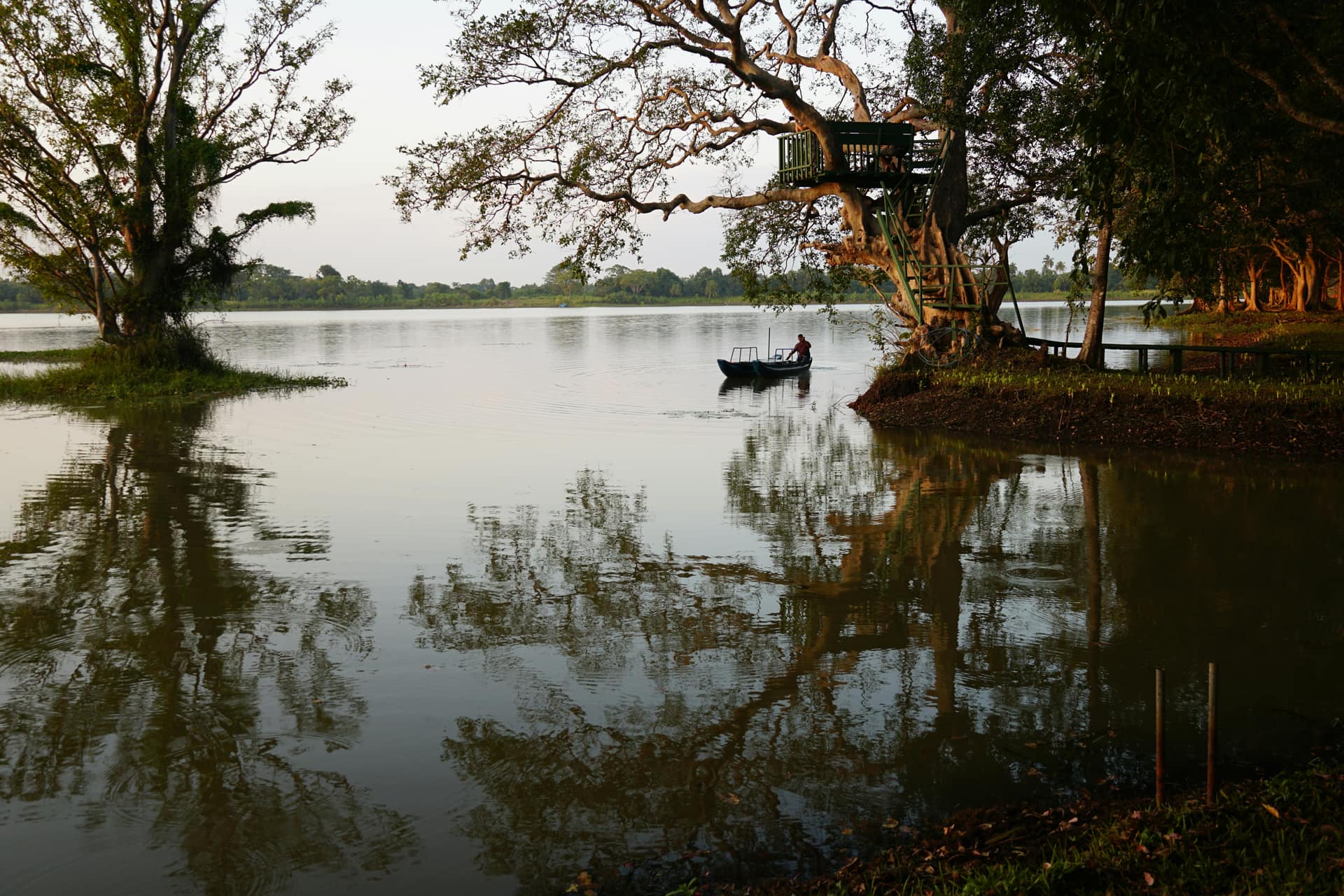
- →A lake or paddy walk guided by the farmer who works it, reading birds and water levels as he goes
- →A catamaran or lagoon outing with fishermen, timed to their working hours rather than yours
- →A craft co-operative where you buy from the maker and watch the work happen
- →A tea-country walk led by someone from a plucking family rather than a marketing team
How to tell the real thing from a photo stop
The staged version has tells. It runs to a fixed thirty-minute slot because a coach is waiting, the 'villagers' are costumed, nobody is doing anything they would be doing if you had not come, and the exit is through a shop that the community does not own. Payment happens back at the office, not here.
The real thing is looser and slightly less convenient. It starts when the household is ready, it has an off day, the price is quoted by the person doing the work, and there is a plausible answer to the question of what happens to the money. Ask that question politely and directly. Genuine operators answer it without flinching, because they are proud of the answer.
How to build it into your trip
You do not need to convert an entire itinerary. One or two community nights, placed where they make geographic sense, will do more than a chain of brief stops. Slot a homestay between the Cultural Triangle and the hills, or a lagoon morning into an east coast leg, and let it breathe.
Pacing is the constraint that quietly decides this. A trip built around covering ground has no room for a village that runs on its own clock; a trip with a spare afternoon does. Lankan Stays & Trails works with hosts and guides we know by name, pays them directly, and builds the pacing that makes these days possible. Share your dates and we will place them where they fit.
Frequently asked questions
What is community-based tourism in Sri Lanka?
It is tourism where local residents own, run, and price the experience rather than being paid a small fee by an outside operator. In Sri Lanka it usually takes the form of family homestays, village kitchens, farmer- or fisherman-led outings, and craft co-operatives that sell direct.
Are homestays in Sri Lanka safe and comfortable?
Homestays are generally safe and welcoming, and hospitality is a genuine point of pride. Comfort is simpler than a hotel: expect a basic room, often a shared bathroom, early mornings, and home cooking. Confirm the specifics with your host or operator before you book if you have particular needs.
How do I know a village experience is genuine?
Ask who set the price and who receives the payment. Genuine community operators answer clearly. Warning signs include rigid thirty-minute slots built around a waiting coach, costumed 'villagers' doing nothing they would otherwise be doing, and payment taken elsewhere by an outside company.
Is a homestay cheaper than a hotel in Sri Lanka?
Often it is less expensive than a comparable hotel, and a larger share of what you pay stays in the household. Treat the low price as a side effect rather than the reason. Pay a fair rate and do not bargain a host down over a small sum.
Where in Sri Lanka is community-based tourism strongest?
It tends to be strongest away from the main resort corridor: around the Cultural Triangle and its villages and lakes, in the tea districts, and along the lagoons and farmland of the north and east, where farming and fishing still shape the daily routine.
Should I tip or bring gifts to a homestay?
A fair price paid directly matters more than gifts. Tipping is appreciated and not rigidly fixed. Avoid handing sweets or money to children, which encourages begging; if you want to give more, ask the host what the household or community actually needs.
Can I combine village stays with a normal Sri Lanka itinerary?
Yes, and one or two well-placed nights work better than many brief stops. Slot a homestay between the Cultural Triangle and the hills, or a lagoon morning into an east coast leg, and keep the pacing loose enough that the day is not rushed.
Does Lankan Stays & Trails use community-run hosts?
Yes. We work with homestay hosts, guides, and co-operatives we know directly, pay them without a middle layer, and pace itineraries so these days are unhurried rather than squeezed in. Share your dates for a tailored plan.