
Quick answer
Days 12 and 13 of the 14-day culture, wildlife and beach route are spent at Mirissa. Day 12: drive roughly an hour to an hour and a quarter from Tangalle, stopping at the Hummanaya blowhole, then spend the afternoon on the beach and watch sunset from Coconut Tree Hill. Day 13: whale watching from Mirissa harbour, typically four to six hours at sea in roughly December to April, followed by a swim and a slow afternoon.
Key takeaways
- Tangalle to Mirissa takes roughly an hour to an hour and a quarter along the coast.
- The Hummanaya blowhole, near Kudawella, is a short stop on the way.
- Whale-watching boats leave Mirissa early in the morning and spend roughly four to six hours at sea.
- Blue whales, sperm whales and spinner dolphins are seen off Mirissa in roughly December to April.
- Choose a responsible operator that keeps its distance and does not chase whales.
Day 12: Tangalle to Mirissa
Day 12 is a short, pleasant move. The coast road from Tangalle to Mirissa takes roughly an hour to an hour and a quarter, passing Dickwella, fishing harbours and small beaches. The Hummanaya blowhole, near Kudawella, is worth a short stop: when the swell is right, water is forced up through a rock fissure in a tall plume.
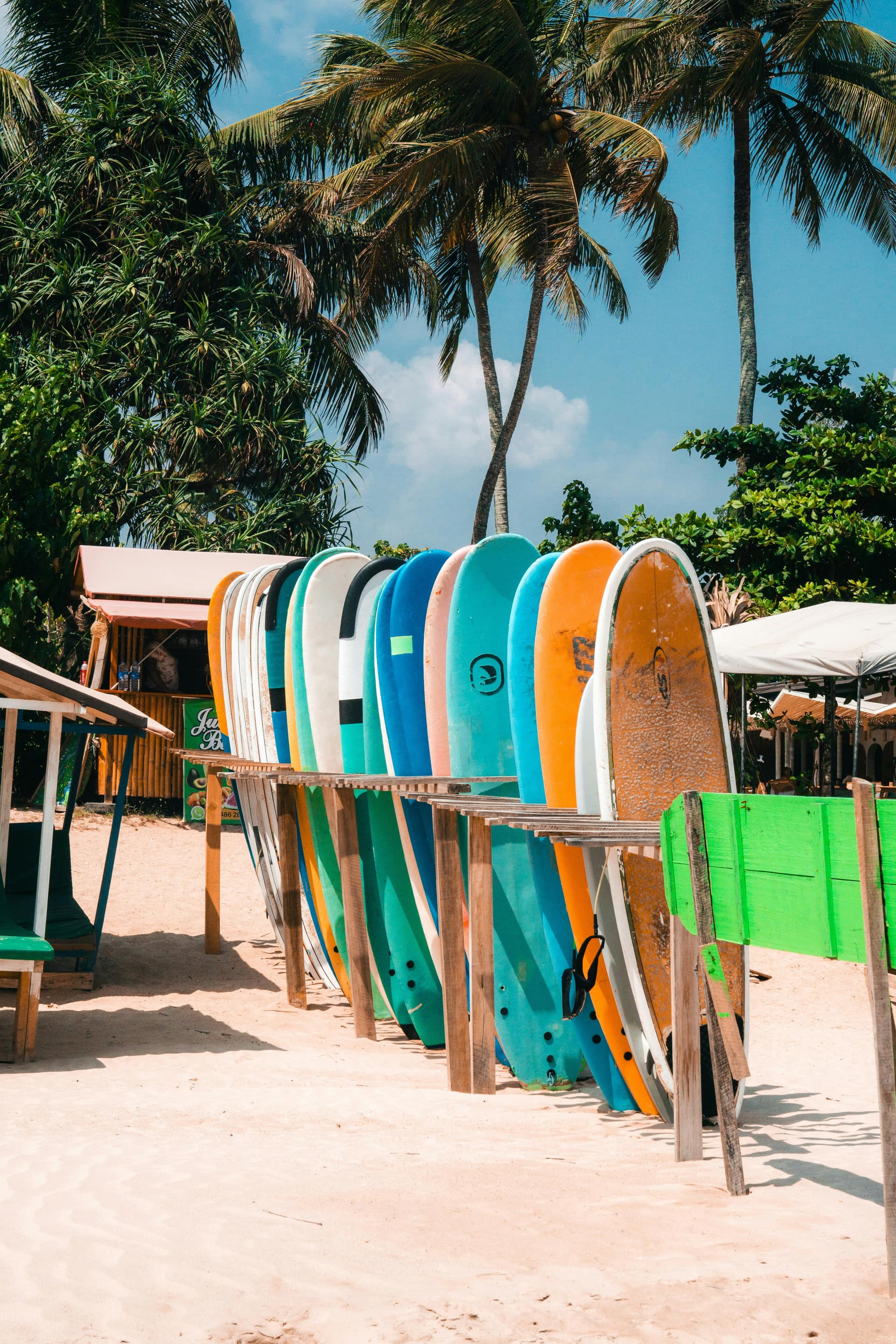
Check in at Mirissa by lunchtime and spend the afternoon on the beach. The bay is sheltered at its western end and usually good for swimming in season. In the late afternoon walk to Coconut Tree Hill, the palm-covered headland at the eastern end, for sunset over the sea.
Mirissa's beach restaurants set out tables on the sand in the evening, with fresh seafood displayed on ice.
- →Roughly an hour to an hour and a quarter by road.
- →The Hummanaya blowhole on the way.
- →An afternoon on the beach.
- →Sunset at Coconut Tree Hill.
Day 13: whale watching
Mirissa is one of the best places in the world to see blue whales, the largest animals that have ever lived. The continental shelf drops away close to the south coast, bringing whales near to shore along a shipping route. In roughly December to April, boats leave Mirissa harbour at around 6.30am to 7am and spend roughly four to six hours at sea.
Blue whales are seen on many mornings in season, and sperm whales, Bryde's whales and pods of spinner dolphins are common too. Sightings are never guaranteed and the sea can be rough, so take a seasickness remedy before you board if you are prone. Breakfast is usually served on board.
Choose your operator carefully. Responsible boats keep their distance, approach slowly from the side and never chase or surround whales. Larger boats are more stable for anyone prone to seasickness.
- →Departure around 6.30am to 7am.
- →Roughly four to six hours at sea.
- →Blue whales, sperm whales and dolphins.
- →Take a seasickness remedy if needed.
Day 13 afternoon: the last beach afternoon
After returning from the boat around midday, a late lunch and a rest are welcome. The afternoon is the last free time of the trip, so spend it on the things you enjoyed most: swimming, snorkelling in calm conditions near Parrot Rock, a massage or simply a book under the palms.
Weligama, a short drive west, has gentle waves for beginner surfers, and the stilt fishermen of Koggala are also nearby, though they are often posed for photographs. Lankan Stays & Trails can arrange a surf lesson or a short snorkelling trip if you want something active.
- →Swimming in the sheltered western end of the bay.
- →Snorkelling near Parrot Rock in calm water.
- →A beginner surf lesson at Weligama.
Mirissa compared with Tangalle
Mirissa feels different from Tangalle. The beach is smaller and busier, with cafés, bars and guesthouses close together, and the evenings are more social. After two quiet nights in Tangalle, many travellers enjoy the change, and the town makes it easy to eat out and meet other visitors.
Travellers who prefer peace can stay at the quieter ends of the bay or in nearby Weligama or Talalla, which is close enough for the whale boats. The route keeps Mirissa because of the harbour and the whales.
The last evening
The evening of day 13 is the last of the trip. Many travellers choose a seafood dinner on the beach or a meal at a restaurant overlooking the bay. Pack in the evening, because day 14 starts with the drive to Galle Fort and ends at the airport.
Confirm the time of your departure with your driver, allowing for a morning in Galle Fort and roughly two and a half to three hours by expressway to the airport.
- →Seafood dinner on the beach.
- →Pack and confirm timings for day 14.
- →An early night after the morning at sea.
Frequently asked questions
How long is the drive from Tangalle to Mirissa?
Roughly an hour to an hour and a quarter along the coast road. The short move leaves time for a stop at the Hummanaya blowhole and still gets you to Mirissa by lunchtime, with the afternoon free for the beach and sunset at Coconut Tree Hill.
When is whale-watching season in Mirissa?
Roughly December to April, when the sea on the south coast is calm and blue whales pass close to shore. The edges of the season can be rougher. From roughly May to September the season moves to Trincomalee on the east coast, which the May to September version of this route uses.
Am I guaranteed to see whales?
No. Blue whales are seen on many mornings in season, and some operators offer a free second trip if you see none, but sightings are never guaranteed. Dolphins are very common. Sea conditions can also cut a trip short.
How do I choose a responsible whale-watching operator?
Look for operators who follow guidelines: approaching slowly from the side, keeping their distance, limiting time with each whale and never chasing or surrounding animals. Ask about the boat's size and safety equipment. Larger boats are more stable for anyone prone to seasickness.
Is Mirissa crowded?
It is busier than Tangalle, especially from December to March, with cafés and guesthouses close together. The quieter ends of the bay and nearby Weligama and Talalla offer more peace while remaining close to the whale-watching harbour. Most travellers enjoy the livelier atmosphere for two nights.
Is there snorkelling at Mirissa?
Yes, in calm conditions. Parrot Rock and the reef areas near the western end of the bay have fish and sometimes turtles. Visibility varies, and conditions are best from roughly December to April. Avoid touching coral or standing on the reef.