
Quick answer
The culture, wildlife and beach route works well for families with a few changes. Keep the same thirteen nights, but shorten Anuradhapura to the evening and an hour's cycling, make Polonnaruwa a half day, break the day 7 drive with stops, and keep the Yala day to one drive plus the pool. Choose beaches with safe swimming, such as Goyambokka near Tangalle and the western end of Mirissa bay. Children usually love the safaris, whales and turtles most.
Key takeaways
- Children usually love the safaris, whale watching and the Rekawa turtle watch most.
- Shorten the ruins: Anuradhapura's evening and a short cycle, and Polonnaruwa as a half day.
- Break the day 7 drive with stops, and consider a travel-sickness remedy.
- Choose beach hotels close to safe, sheltered swimming.
- Sigiriya suits children who can manage 1,200 steps; Pidurangala is rougher.
Why the route suits families
The route has fewer one-night stops than many two-week plans, which matters a great deal with children. Three nights at Sigiriya, two in Kandy, two near Yala and two at each beach give stable bases. It also skips the winding hill-country roads, which can make children carsick for days.
Wildlife is the big draw. Elephants are almost guaranteed, and the variety of animals keeps children engaged. The beach days at the end give time to rest and play, and the whale-watching trip is often the highlight for older children.
The culture can be adapted to shorter attention spans, with the most dramatic sites kept and the more academic ones shortened.
- →Fewer one-night stops.
- →No winding hill roads.
- →Elephants almost guaranteed.
- →A long beach finish.
Adapting the culture days
Anuradhapura's evening visit to the Bo tree, with its lamps and pilgrims, fascinates many children, but the full morning circuit can be long. Cycle for an hour or two, focusing on the biggest stupas and the twin ponds, and skip Mihintale. Polonnaruwa works well as a half day by bicycle, with Gal Vihara last.
Sigiriya is a highlight for children who can manage roughly 1,200 steps, with the lion's paws and the summit view. Go at opening and carry water. Younger children may prefer the water gardens and museum. Kandy's dance show, with drums and fire, is usually a hit.
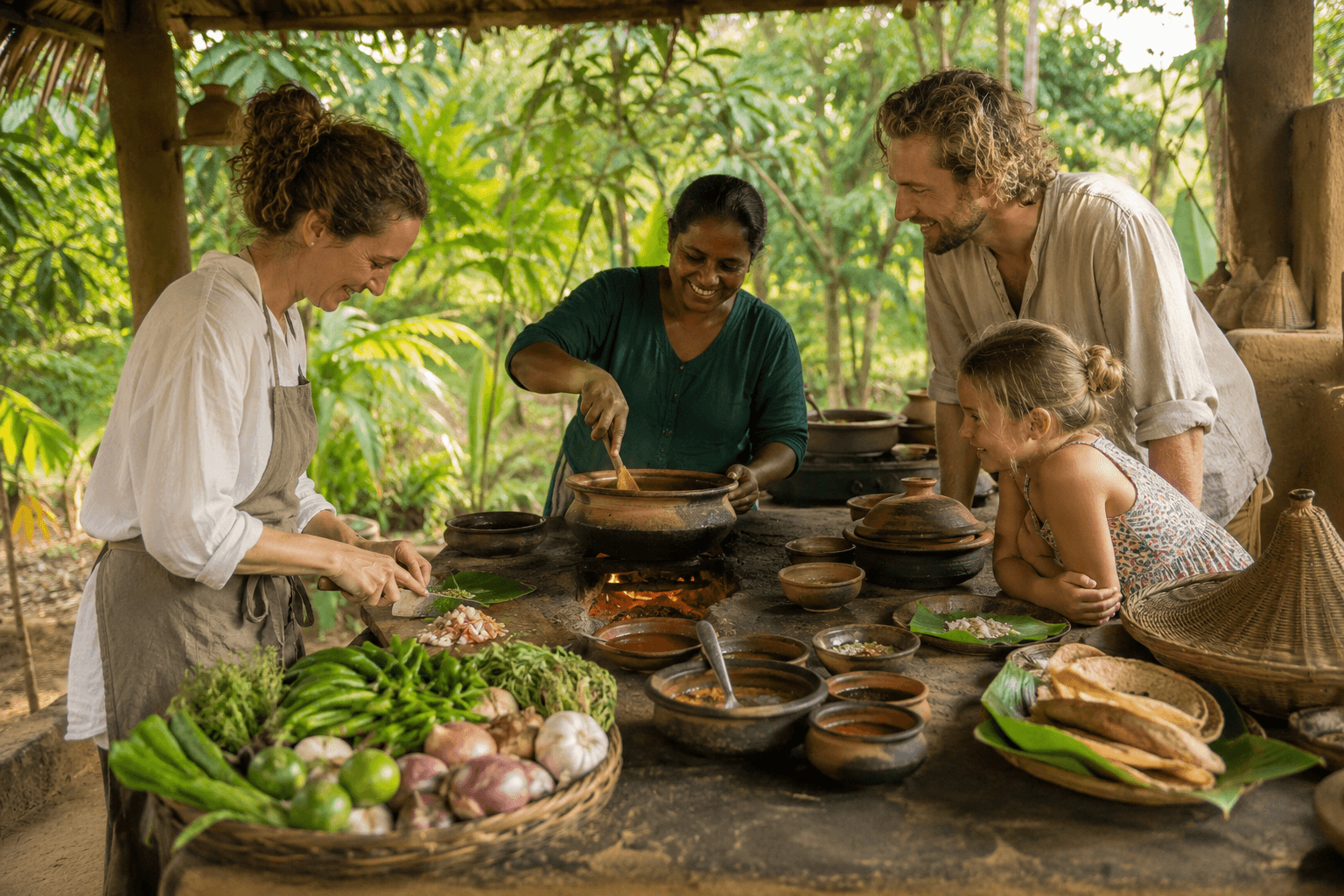
A village visit with a bullock-cart ride and a lunch in a family home is a good change of pace on day 4.
- →Anuradhapura: evening visit and a short cycle.
- →Polonnaruwa: half day.
- →Sigiriya: for children who can manage the steps.
- →Kandy: the dance show.
Safaris and whales with children
Safaris are usually the highlight for children. The day 3 elephant safari is in the afternoon and lasts around three hours, which suits most ages. Udawalawe at dawn is short and full of elephants, and the Elephant Transit Home, where orphaned calves are fed, is a favourite with younger children.
In Yala, one dawn drive is usually enough for younger children; spend the afternoon at the pool rather than in a second jeep. Check age rules with operators, and bring snacks, water, hats and binoculars for each child.
Whale watching suits older children who cope with seasickness; trips last four to six hours on open sea. Younger children may prefer a shorter dolphin trip or staying ashore.
- →Elephant safari: afternoon, around three hours.
- →Elephant Transit Home: a favourite.
- →Yala: one drive for younger children.
- →Whales: older children only.
Drives and pacing
The day 7 drive from Kandy to Udawalawe is the longest, roughly five to six hours. Break it with stops every hour or two, bring snacks, games and downloads, and give children prone to travel sickness a remedy before the Ratnapura section. A comfortable vehicle with air conditioning makes a big difference.
Keep afternoons free for the pool on most days, and avoid stacking early mornings. Lankan Stays & Trails can supply child seats on request and choose family rooms or connecting rooms at each stop.
- →Stops every hour or two.
- →Snacks, games and downloads.
- →Child seats on request.
Beaches for families
Choose beach hotels close to safe swimming. Near Tangalle, Goyambokka and Silent Beach are sheltered; the open bays are not safe for children. At Mirissa, the western end of the bay is usually calm in season. Weligama, with its gentle waves, is excellent for children learning to surf or play in the shallows.
The Rekawa turtle watch can mean a late night and a long wait, which suits older children best. On the May to September version, Pasikudah's shallow bay is one of the safest beaches on the island for families.
- →Tangalle: sheltered coves only.
- →Mirissa: western end of the bay.
- →Weligama: gentle waves.
- →Pasikudah in summer: very shallow.
Frequently asked questions
Is the culture, wildlife and beach route good for families?
Yes. It has fewer one-night stops, skips the winding hill roads and includes plenty of wildlife, which children usually love. Shorten the ruins, break the long drive and choose beaches with safe swimming, and it works for most ages.
What age is best for this route?
Children from about six upwards usually get the most from the safaris, Sigiriya and whale watching. Younger children can enjoy it with more rest, shorter ruins and the pool. Teenagers often love the wildlife and the surf at Weligama.
Can young children climb Sigiriya?
Children who can manage roughly 1,200 steps, some steep and exposed, can climb at opening time with breaks. Younger children may prefer the water gardens and museum. Carry water, and avoid the midday heat.
Are safaris safe for children?
Yes, with a responsible operator. Children stay seated in the jeep, and drivers keep their distance from animals. Some operators have age guidelines, so check in advance. Bring hats, water, snacks and binoculars.
How do I manage the long drive with children?
Break the day 7 drive into short stages with stops every hour or two, bring snacks, games and downloads, and give a travel-sickness remedy if needed. Leaving early means arriving by mid-afternoon, with time for a swim.
Which beach is safest for children?
On the south coast, the sheltered coves near Tangalle, the western end of Mirissa bay, Weligama and Unawatuna are usually calm in season. On the east coast in summer, Pasikudah's shallow bay is one of the safest on the island.
Is whale watching suitable for children?
For older children who cope with seasickness, yes. Trips last four to six hours on open sea. Younger children may find it long and uncomfortable; a shorter dolphin trip or staying ashore may be better.