
Quick answer
The classic 14-day itinerary runs Sigiriya 3, Kandy 2, Nuwara Eliya 1, Ella 2, Tissamaharama 1, Mirissa 3 and Galle Fort 1, with the scenic train and Horton Plains. The culture, wildlife and beach route runs Anuradhapura 1, Sigiriya 3, Kandy 2, Udawalawe 1, Tissamaharama 2, Tangalle 2 and Mirissa 2, adding Anuradhapura, a third safari park and a full Yala day. Choose the classic route for landscapes and the train; this route for deeper culture and wildlife.
Key takeaways
- Both routes have thirteen nights and seven check-ins, with similar costs.
- The classic route includes the hill country, Horton Plains and the scenic train.
- The culture, wildlife and beach route adds Anuradhapura, Udawalawe and a full day at Yala.
- The classic route has more winding roads; this route has one long, flatter day.
- Choose by interests: landscapes and the train, or deeper culture and wildlife.
Night by night
The two routes share their core: Sigiriya for three nights, Kandy for two, a night or two near Yala and the south coast. They differ in the middle. The classic route climbs from Kandy to Nuwara Eliya for one night and Ella for two, taking the train between them. This route drives south from Kandy to Udawalawe, adds a second Yala night and starts with Anuradhapura.
On the coast, the classic route has three nights at Mirissa and one inside Galle Fort. This route has two at Tangalle and two at Mirissa, with Galle Fort visited on the last morning.
Both total thirteen nights and seven check-ins.
- →Classic: Sigiriya 3, Kandy 2, Nuwara Eliya 1, Ella 2, Tissamaharama 1, Mirissa 3, Galle Fort 1.
- →This route: Anuradhapura 1, Sigiriya 3, Kandy 2, Udawalawe 1, Tissamaharama 2, Tangalle 2, Mirissa 2.
- →Both: thirteen nights, seven check-ins and broadly similar costs.
Highlights compared
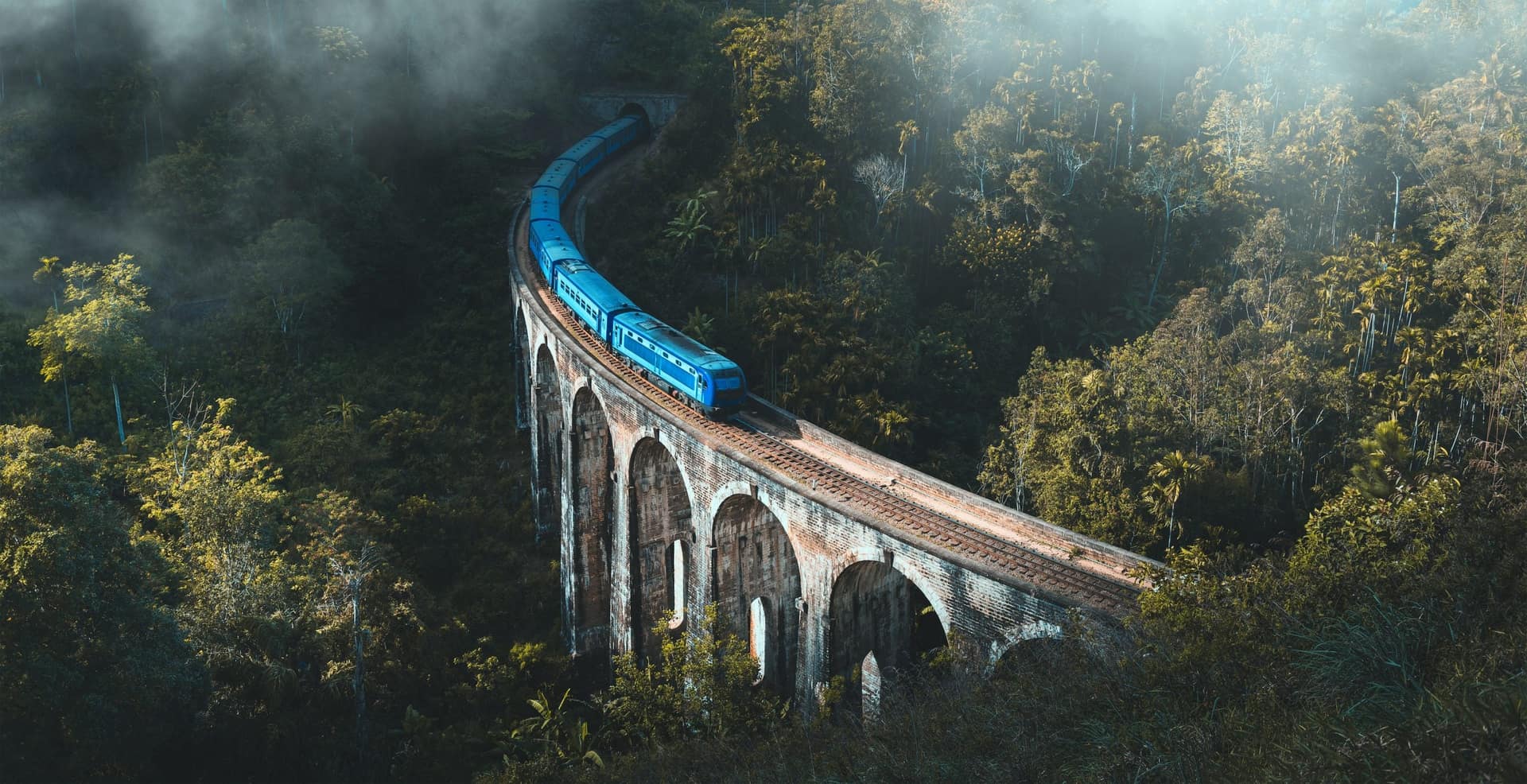
The classic route's unique highlights are the scenic train through the tea estates, Horton Plains and World's End at dawn, Ella's walks and the Nine Arch Bridge, a tea factory, and a night inside Galle Fort. Its culture includes Sigiriya, Polonnaruwa, Dambulla and Kandy, and its wildlife the Cultural Triangle elephants, an afternoon in Yala and the whales.
The culture, wildlife and beach route's unique highlights are Anuradhapura's sacred city and Bo tree, Udawalawe's elephants, a full day at Yala with Bundala, Tangalle's quiet bays and the Rekawa turtle watch. It shares Sigiriya, Polonnaruwa, Dambulla, Kandy, the whales and Galle.
In short, the classic route is broader; this route is deeper in two of the three themes.
- →Classic only: train, Horton Plains, Ella, tea.
- →This route only: Anuradhapura, Udawalawe, full Yala day, Tangalle.
- →Both: Sigiriya, Polonnaruwa, Dambulla, Kandy, whales, Galle.
Drives and comfort
Total driving is similar on both routes. The classic route's drives are shorter but more winding, especially from Kandy to Nuwara Eliya and down from Ella to the south, and the hill country's nights can be cold. This route has one long day, Kandy to Udawalawe, but on flatter roads, and stays in the warm lowlands.
Travellers prone to car sickness, or who dislike cold and cloud, often prefer this route. Those who love scenery and cooler air prefer the classic one.
- →Classic: shorter, more winding drives.
- →This route: one long, flatter day.
- →Classic: cool nights in the hills.
Costs compared
Costs are similar. This route spends slightly more on entry tickets and safaris, because it adds Anuradhapura, Udawalawe and a second Yala drive. The classic route spends slightly more on train tickets and hill-country hotels. Overall, both fall within the same daily ranges.
Lankan Stays & Trails builds both routes and can quote them side by side, so travellers can compare exactly.
The bigger cost difference comes from hotel choices rather than the route itself: a luxury tented camp near Yala on this route, or a colonial hotel in Nuwara Eliya on the classic one, can each change the total more than the differences in tickets and trains.
How to choose
Choose the classic route if you want the broadest introduction to Sri Lanka, if the train through the tea estates is on your wish list, if you love walking and landscapes, or if you want cooler air. Choose the culture, wildlife and beach route if temples and wildlife are your main interests, if you dislike winding roads or cold, or if you want more time at Yala and on quiet beaches.
If you cannot decide, add Ella to this route: swap Udawalawe and one Tangalle night for two nights in Ella and take the train from Kandy. That combines the best of both.
- →Classic: landscapes, train, walking.
- →This route: temples, wildlife, quiet beaches.
- →Undecided: add Ella to this route.
Season
Both routes are written for roughly December to April. From May to September, both switch to the east coast: the classic route via Trincomalee and the hill country, this route via Wilpattu, Trincomalee and Pasikudah.
The classic route's hill country is drier in its eastern parts from May to September, while this route's dry-zone parks shine in summer.
Frequently asked questions
Which is better, the classic route or the culture, wildlife and beach route?
Neither is objectively better. The classic route is broader, with the hill country and train. The culture, wildlife and beach route is deeper in culture and wildlife, with fewer winding roads. Choose by your interests.
What does the culture, wildlife and beach route miss?
The hill country: Nuwara Eliya, Horton Plains, Ella, the scenic train and the tea estates, plus a night inside Galle Fort. In return, it adds Anuradhapura, Udawalawe, a full day at Yala and two nights at Tangalle.
Are the costs different?
Not significantly. This route spends slightly more on entry tickets and safaris; the classic route on trains and hill-country hotels. Both fall within the same daily ranges of roughly US$30 to US$50, US$80 to US$180 and US$250 or more per person.
Which route has less driving?
Total driving is similar. The classic route has shorter but more winding drives; this route has one long day on flatter roads. Travellers prone to car sickness usually prefer this route.
Can I combine the two routes?
Partly. Adding Ella to the culture, wildlife and beach route, by swapping Udawalawe and one Tangalle night, combines the train and Ella with most of this route's culture and wildlife. Three weeks allows both in full.
Which route is better for first-timers?
The classic route gives the broadest first introduction. The culture, wildlife and beach route suits first-timers who know their main interests are temples, wildlife and beaches. Both work well for a first trip.