
Quick answer
On the classic 7-day Sri Lanka itinerary, the main drives are the airport to Sigiriya, roughly four to five hours; Sigiriya to Kandy, roughly two and a half to three; Ella to Mirissa, roughly four to five; and Galle to the airport, roughly two and a half to three via the Southern Expressway. With the six- to seven-hour Kandy to Ella train, the week involves roughly 20 to 24 hours of travel in total, most of it on three days.
Key takeaways
- Sri Lankan roads average roughly 30 to 45 kilometres an hour outside the expressways.
- The airport to Sigiriya and Ella to Mirissa are the two longest drives, each roughly four to five hours.
- The Southern Expressway makes Galle to the airport the most predictable drive of the week.
- Including the Kandy to Ella train, the week involves roughly 20 to 24 hours of travel.
- Allow longer than any online map estimate, especially around Colombo, Kandy and in the hill country.
Why driving in Sri Lanka takes longer than the map suggests
Driving times on a 7-day Sri Lanka itinerary are longer than distances suggest because most of the route uses two-lane roads that pass through towns and villages, with buses, tuk-tuks, bicycles, dogs and pedestrians sharing the space. Outside the expressways, an average of roughly 30 to 45 kilometres an hour is realistic.
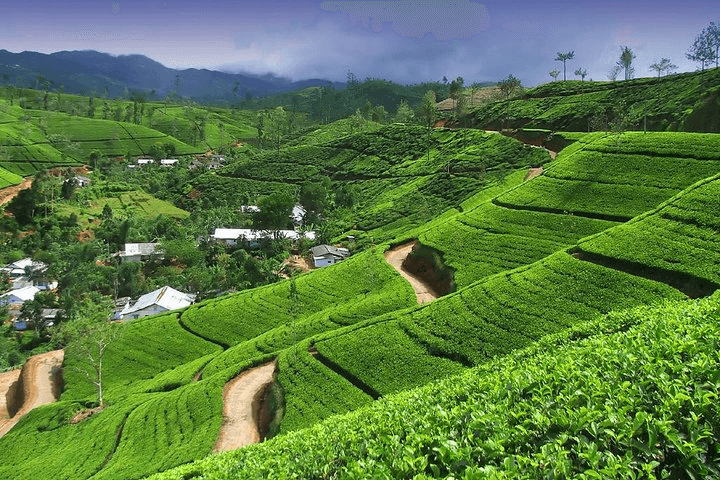
In the hill country, the roads also wind steeply through tea estates, and speeds drop further. Around Kandy and Colombo, traffic congestion can add an hour at busy times. Online maps often underestimate all of this, sometimes by a wide margin.
The expressways are the exception. The Southern Expressway from Colombo towards Galle and Matara, and the airport expressway, allow much faster, more predictable travel, which is why the classic route finishes on the south coast.
- →Typical average outside expressways: roughly 30 to 45 kilometres an hour.
- →Hill-country roads: slower still, with steep, winding sections.
- →Expressways: much faster and more predictable.
The classic 7-day route, leg by leg
The times below are for a private car without long stops, and assume normal traffic. Add time for lunch, sightseeing stops and anything unexpected, and treat the upper end of each range as the planning figure.
Three days carry most of the travel: day 1, day 4 and day 5. Days 2 and 6 involve only short local drives, which is part of what makes the week manageable.
- →Day 1, airport to Sigiriya: roughly four to five hours, around 150 to 170 kilometres.
- →Day 2, Sigiriya to the Dambulla Cave Temple and back: around 30 minutes each way.
- →Day 3, Sigiriya to Kandy: roughly two and a half to three hours, around 90 kilometres.
- →Day 4, Kandy to Ella by train: roughly six to seven hours; by road, roughly five to six.
- →Day 5, Ella to Mirissa: roughly four to five hours.
- →Day 6, local trips around Mirissa: under an hour.
- →Day 7, Mirissa to Galle, roughly one hour; Galle to the airport, roughly two and a half to three.
Total time on the road across the week
Adding the legs together, the classic 7-day Sri Lanka itinerary involves roughly 14 to 17 hours of driving and a six- to seven-hour train journey, for a total of roughly 20 to 24 hours of travel across the week. That is a significant share of the waking hours, but it is spread unevenly.
Most of the travel falls on four days, with two days of very little. That uneven rhythm is deliberate: long travel days followed by full days at the destination are much easier to enjoy than a moderate transfer every day.
It helps to think of the road days as part of the trip rather than time lost. The drives pass paddy fields, roadside fruit stalls, village temples and tea estates, and a good driver will stop wherever something catches your eye. Some of the week's best impressions come from the car window.
The hardest drives and how to handle them
The airport to Sigiriya drive on day 1 is hard mainly because it follows a long flight. A lunch stop at Kurunegala or Dambulla breaks it, and staying awake in the car helps with jet lag. For late arrivals, a Negombo night is better than a night drive.
The Ella to Mirissa drive on day 5 is hard because it follows a pre-dawn start. It begins on winding roads down the Ella Gap, which can cause car sickness, then crosses hot, flat plains. Sitting in front, taking a tablet if needed, and stopping for lunch make it much easier.
The day 4 train is long but not tiring in the same way, since you can move around, look out of the window and doze. Boarding at Nanu Oya instead of Kandy is the way to shorten it.
- →Day 1: break the drive with lunch, and stay in Negombo if landing late.
- →Day 5: sit in front, take a car-sickness tablet, and stop for lunch.
- →Day 4: board at Nanu Oya to cut the train to two and a half to three hours.
How the variations compare on driving
Each variation of the 7-day route changes the total time on the road. The three-base version replaces the Ella to Mirissa drive with Kandy to the coast via the expressways, similar in time but on better roads, and removes the train. The east coast version from May to September has the shortest beach transfer, roughly two and a half to three hours from Sigiriya to Trincomalee.
The beach-heavy version has one very long drive, Sigiriya to the south coast at roughly five to six hours, and then almost none. The safari version adds short legs but splits the long Ella to coast drive in two.
Why a private driver changes these numbers
These times assume a private car. By public bus, the same legs take roughly one and a half to two times as long, and involve changes, waits and carrying luggage. That is the main reason most one-week visitors use a driver for the road days.
A good driver also knows where the traffic is on a given day, which roadside restaurants are clean, and when to leave to avoid the worst congestion around Kandy and Colombo. On a week with 14 to 17 hours of driving, that local knowledge adds up.
Planning around driving times
The best way to use these figures is to plan each day from its drive outward: fix the departure time from the length of the drive and the time you want to arrive, then fit sights around it. Arriving before dark is a good rule on every road day.
Lankan Stays & Trails drivers plan departure times around the day's traffic and weather rather than a fixed timetable, which is often the difference between a four-hour drive and a six-hour one. The day-by-day guides in this series give the timings for each day in more detail.
Frequently asked questions
How long does it take to drive around Sri Lanka?
On the classic 7-day route, roughly 14 to 17 hours of driving across the week, plus a six- to seven-hour train. Outside the expressways, roads average roughly 30 to 45 kilometres an hour, so even short distances take longer than they appear.
Why are drives so slow in Sri Lanka?
Most roads are two-lane and pass through towns and villages, shared with buses, tuk-tuks, bicycles and pedestrians. The hill country adds steep, winding sections. Only the expressways, mainly around Colombo and down the south coast, allow fast travel.
How long is the drive from Ella to Mirissa?
Roughly four to five hours, descending the winding Ella Gap road and crossing the southern plains. With a lunch stop, allow around five hours. Leave by around 11am to arrive before sunset.
How long does it take from Galle to Colombo airport?
Roughly two and a half to three hours via the Southern Expressway and the airport expressway. It is the most predictable long drive of the week, though traffic around Colombo in the late afternoon can add time, so keep a buffer.
Is it safe to drive at night in Sri Lanka?
It is generally safe with an experienced driver, but not ideal. Rural roads are poorly lit, and animals, including wild elephants in parts of the Cultural Triangle, can be on the road after dark. Plan road days to arrive before dark where possible.
How much time will I spend travelling on a week in Sri Lanka?
Roughly 20 to 24 hours on the classic 7-day route, including the train. Most of it falls on four days, leaving two days with very little travel. Variations such as the three-base or east coast versions reduce the total somewhat.