
Quick answer
On a 7-day Sri Lanka itinerary, expect alarms around 5:30 to 6am on four days, for Sigiriya Rock, the Kandy train, the dawn walks in Ella and whale watching, with gentler starts around 8am on the transfer and departure days. Most days follow the same pattern: sightseeing from early morning until roughly 11am, a rest through the midday heat, a late-afternoon outing, and dinner and bed by around 9 to 10pm.
Key takeaways
- Four days of the classic route start around 5:30 to 6am.
- Sightseeing is best from early morning until roughly 11am, before the heat and crowds build.
- From roughly 11am to 3pm, rest or travel rather than visiting outdoor sites.
- Late afternoon, from roughly 3:30pm, is the second window for sights such as the Dambulla Cave Temple.
- Sri Lanka sits near the equator, so sunrise is around 6am and sunset around 6pm most of the year.
Why a 7-day Sri Lanka itinerary starts early
Sri Lanka lies close to the equator, so the sun rises around 6am and sets around 6pm throughout the year, with little variation. By 10 or 11am in the Cultural Triangle, the heat is intense and the main sites are busy with tour groups.
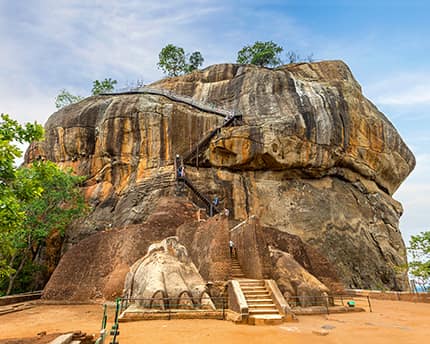
Starting early solves both problems. Sigiriya Rock at opening is cooler and quieter than at 10am; the Nine Arch Bridge at dawn is almost empty; whale-watching boats leave around 6 to 7am because the sea is calmest early. On a 7-day Sri Lanka itinerary, the early starts are where most of the best moments happen.
The trade is that the week asks for early nights. Dinner by around 7:30pm and bed by 9:30 or 10pm makes a 5:30am alarm feel normal rather than punishing.
- →Sunrise around 6am and sunset around 6pm all year.
- →Early starts mean cooler temperatures and fewer people.
- →Early nights make early alarms manageable.
Wake-up times, day by day
The classic 7-day route alternates hard and gentle mornings rather than asking for a dawn start every day. Days 1, 3 and 7 are more relaxed; days 2, 4, 5 and 6 are early.
The times below are typical and depend on the current opening hours at Sigiriya, the train timetable and your flight. Confirm each locally the evening before.
- →Day 1: depends on the flight; aim for bed by 9pm at Sigiriya.
- →Day 2: around 5:30 to 6am for Sigiriya Rock at opening.
- →Day 3: around 7:30 to 8am, a gentle start before the drive to Kandy.
- →Day 4: around 6 to 6:30am for the morning train or the drive to Nanu Oya.
- →Day 5: around 5:30am for the Nine Arch Bridge and Little Adam's Peak.
- →Day 6: around 5:30am for whale watching, or a lie-in for a beach day.
- →Day 7: around 7:30am, with the day planned backwards from the flight.
The midday rest
The midday rest is not a luxury on a 7-day Sri Lanka itinerary; it is how the pace becomes sustainable. From roughly 11am to 3pm, temperatures in the Cultural Triangle frequently reach the low to mid thirties Celsius, and walking around exposed rock fortresses or ruins becomes unpleasant and tiring.
Use those hours for lunch, a swim, a nap or a transfer. The classic route schedules its drives into the middle of the day wherever possible, so that the car's air-conditioning absorbs the worst of the heat.
In the hill country and on the coast, the midday heat is less extreme, but the principle still holds: the best light and the most comfortable conditions are at the ends of the day.
- →Roughly 11am to 3pm: lunch, pool, rest or travel.
- →Schedule transfers into the midday window where possible.
- →Hydrate heavily; the dry zone dehydrates quickly.
Late-afternoon outings
From roughly 3:30pm, the heat eases and the light softens, opening a second window for sightseeing. On the classic route, this is when the Dambulla Cave Temple, the walk around Kandy Lake, Coconut Tree Hill in Mirissa and a jeep safari at Minneriya all fit best.
Late afternoon is also when temple visits become more atmospheric, since many devotees come to make offerings at the end of the day. The evening puja at the Temple of the Sacred Tooth Relic in Kandy, around dusk, is the clearest example.
Evenings and early nights
Evenings on a 7-day Sri Lanka itinerary are short by design. Darkness falls quickly around 6 to 6:30pm, and most rural hotels are quiet by 10pm. Dinner early, a short walk, and bed make the next dawn start much easier.
Nightlife is limited outside Colombo and a few beach towns such as Mirissa and Unawatuna, and that suits the rhythm of the week. The beach evenings on days 5 and 6 are the natural time for a later dinner, since day 7 does not start before dawn.
- →Darkness around 6 to 6:30pm throughout the year.
- →Dinner by around 7:30pm, bed by around 9:30 to 10pm on early nights.
- →Save later evenings for the coast on days 5 and 6.
Adjusting the pace for your group
Not every group can manage four dawn starts in a week. Families with young children, older travellers and anyone with jet lag should choose which early mornings matter most. Sigiriya Rock at opening and the Nine Arch Bridge at dawn make the biggest difference; whale watching and the early train are easier to swap.
Travellers who are not morning people can still enjoy the week by choosing the three-base version, which has fewer transfer mornings, or by replacing Sigiriya with Pidurangala at sunrise, a shorter climb that can be combined with a longer rest afterwards.
The one thing to avoid is shifting everything later. A late start at Sigiriya or in Ella means heat, crowds and a much weaker experience, and it rarely gives back as much rest as it seems to.
- →Protect the dawn at Sigiriya and in Ella above other early starts.
- →Swap whale watching or the early train if the group is tired.
- →Avoid moving the key sights later into the heat and crowds.
Planning the week's rhythm
Before travelling, it helps to mark the four early days on the calendar and plan early dinners the night before each. On the trip, agreeing the next morning's departure time with your driver every evening keeps the rhythm steady.
Lankan Stays & Trails builds each day around these windows, early sights, a midday rest and late-afternoon outings, because the same sights feel entirely different at different hours. The day-by-day guides in this series give the detailed timings for each day.
Frequently asked questions
How early should I start the day in Sri Lanka?
Around 5:30 to 6am on sightseeing days, since the sun rises around 6am all year and the main sites are coolest and quietest early. Sigiriya Rock, the Nine Arch Bridge and whale-watching boats all reward an early start.
Is a 7-day Sri Lanka itinerary tiring?
It can be, mainly because of four early starts and two long road days. A midday rest each day, early nights, and choosing which dawn starts matter most make it comfortable for most travellers. The three-base version is less tiring.
What time does it get dark in Sri Lanka?
Around 6 to 6:30pm throughout the year, because Sri Lanka lies close to the equator. There is little seasonal variation, and dusk is short, so plan road days to arrive before dark.
What is the best time of day to visit Sigiriya?
At opening, early in the morning, before the heat and the tour groups. By roughly 10am the upper staircases can be crowded and temperatures high. Late afternoon is a second option, though the heat lingers and the climb must finish before closing.
Should I rest in the middle of the day in Sri Lanka?
Yes, especially in the Cultural Triangle, where midday temperatures often reach the low to mid thirties Celsius. Use roughly 11am to 3pm for lunch, a swim, a rest or a transfer, and return to sightseeing in the late afternoon.
Can I have a lie-in on a Sri Lanka trip?
Yes, on the transfer days and the coast. On the classic 7-day route, days 3 and 7 start around 7:30 to 8am, and day 6 on the coast can be a lie-in if you skip whale watching. The key sightseeing days are best started early.