
Quick answer
Choose Ella for warm weather, short scenic hikes, waterfalls, the Nine Arch Bridge and a lively cafe scene at around 1,040 metres. Choose Nuwara Eliya for cool colonial-era hill station atmosphere, tea estates, Horton Plains access and log fires at around 1,890 metres. Ella is warmer, cheaper and more social; Nuwara Eliya is colder, more formal and closer to the working tea industry. They are about 60 kilometres apart on the same railway line, and most itineraries should include both.
Key takeaways
- Nuwara Eliya sits at roughly 1,890 metres and Ella at around 1,040 metres, which is why they feel so different.
- Nuwara Eliya can drop close to single figures Celsius at night; Ella stays comfortably mild.
- Ella has Little Adam's Peak, Ella Rock, Ravana Falls and the Nine Arch Bridge within a short radius.
- Nuwara Eliya is the base for Horton Plains and World's End, and sits among working tea estates.
- They are roughly 60 kilometres apart on the Kandy to Badulla railway line.
The short answer
Choose Ella if you want to walk, eat well, meet people and be warm. Choose Nuwara Eliya if you want tea estates, cold mornings, Horton Plains and a stranger, more colonial atmosphere.
But the honest recommendation is to do both. They are an hour and a half apart on the most beautiful railway journey in Sri Lanka, and two nights in each is a far better hill country week than four nights in either.
- →Warm, walkable, social, good cafes: Ella.
- →Cold, colonial, tea estates, Horton Plains: Nuwara Eliya.
- →Best answer for most trips: two nights in each, linked by train.
- →Only one? Ella for most travellers; Nuwara Eliya if tea is the point.
Altitude and climate, the difference that explains everything
Nuwara Eliya sits at roughly 1,890 metres, making it the highest town in Sri Lanka. Ella is at around 1,040 metres. That 850-metre difference is the whole story: Nuwara Eliya can drop close to single figures Celsius at night and often needs a fire, while Ella is mild enough for an open shirt on the veranda.
Rainfall differs too. Nuwara Eliya sits on the wetter western side of the highlands and gets substantial rain during the south-west monsoon from May to September. Ella sits closer to the drier eastern flank and often stays clear when Nuwara Eliya is under cloud, which is a real practical advantage in those months.
- →Nuwara Eliya: roughly 1,890 m, cold nights, frequent mist, fires in hotels.
- →Ella: roughly 1,040 m, mild days and evenings, no heating needed.
- →Nuwara Eliya is wetter during the May to September south-west monsoon.
- →Ella, on the drier eastern flank, often stays clearer in those months.
What Ella offers
Ella's appeal is a compact cluster of good things within a very short radius. Little Adam's Peak is a 45 to 90 minute return walk with an excellent view. Ella Rock is a three to four hour hike for those who want more. The Nine Arch Bridge, a colonial-era viaduct in the forest, is fifteen minutes away and is one of the most photographed structures in the country. Ravana Falls is on the road out of town.
It is also, straightforwardly, a travellers' town. There are more cafes, bars, yoga classes, cooking classes and zipline operators per square metre than anywhere else in the hill country. That is a virtue or a fault depending on what you came for, and it has grown considerably busier and more expensive over the last decade.
- →Little Adam's Peak, Ella Rock, Nine Arch Bridge and Ravana Falls, all close by.
- →The best cafe, bar and independent restaurant scene in the hill country.
- →Cooking classes, yoga, ziplining and tuk-tuk tours widely available.
- →Busy and increasingly expensive; the town centre can feel crowded.
What Nuwara Eliya offers
Nuwara Eliya was built by the British as a hot-weather retreat and it still looks the part: a racecourse, a golf course, a boating lake, a post office in mock Tudor, hedges, and hotels with fireplaces and billiard rooms. It is unlike anywhere else in South Asia and slightly surreal.
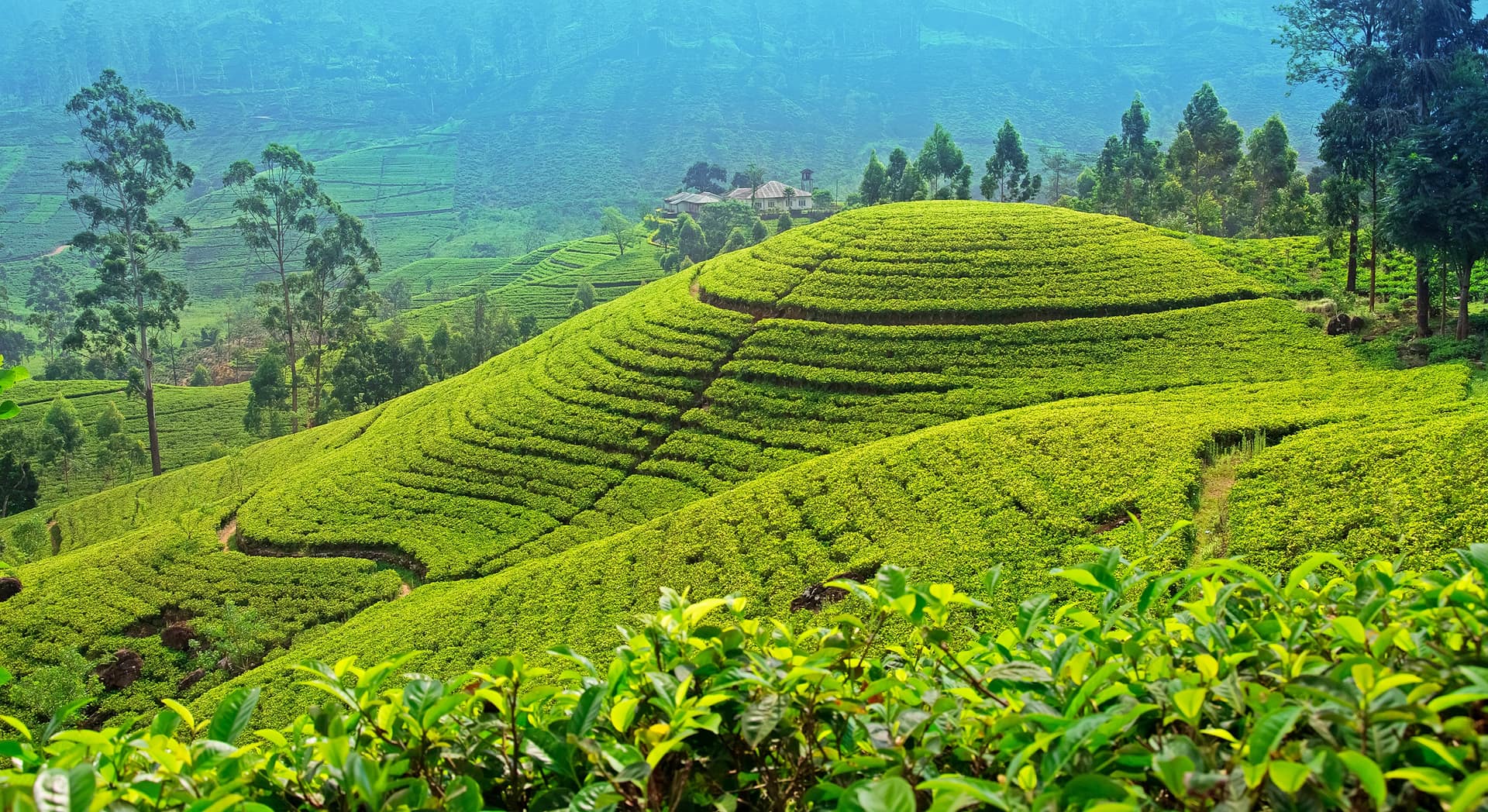
More substantially, it sits at the heart of the working tea industry. Estates and factories surround the town, and a factory tour here is a genuine industrial visit rather than a demonstration. It is also the practical base for Horton Plains National Park and World's End, roughly an hour away, and for the highest stretch of the railway at Pattipola.
- →Colonial hill station architecture: racecourse, golf course, lake, mock Tudor post office.
- →Surrounded by working tea estates and factories; the best tea visits in the country.
- →Base for Horton Plains National Park and World's End, roughly an hour away.
- →Gregory Lake, Victoria Park and the strawberry farms fill an afternoon.
Atmosphere and who each suits
Ella suits independent travellers, walkers, couples wanting somewhere lively, and anyone who values a good breakfast and an easy evening. It is friendly, warm and easy to be in without a plan.
Nuwara Eliya suits travellers interested in tea, in colonial history, or in cold clear mornings and log fires. It suits older visitors and families wanting comfortable hotels, and it suits anyone doing Horton Plains. It is markedly less sociable: people eat in their hotels and the town centre is functional rather than charming.
- →Ella: independent travellers, walkers, couples, sociable evenings.
- →Nuwara Eliya: tea interest, colonial history, comfort, Horton Plains.
- →Ella's town is charming; Nuwara Eliya's town centre is functional.
- →Nuwara Eliya's April Season brings racing, flower shows and full hotels.
Getting between them, and the train
The Kandy to Badulla railway connects them, with Nanu Oya the station for Nuwara Eliya, about 20 minutes from the town by road, and Ella station in the centre of Ella. The Nanu Oya to Ella stretch takes roughly three to four hours and is widely considered one of the most scenic rail journeys in the world.
Reserved seats sell out, particularly in high season, so book ahead. Second class unreserved is standing room in peak periods, though the open doorways are much of the appeal for many travellers. By road the journey takes around two hours on winding mountain roads.
- →Nanu Oya station serves Nuwara Eliya, about 20 minutes from town.
- →Nanu Oya to Ella by train: roughly three to four hours, extremely scenic.
- →Book reserved seats well ahead; they sell out in high season.
- →By road: around two hours on winding mountain roads.
Cost and season
Ella is generally cheaper for food and mid-range accommodation, though the gap has narrowed as it has become more popular. Nuwara Eliya has both the cheapest guesthouses and the most expensive heritage hotels in the hill country, with less in between.
Both are best from roughly January to March, when mornings are clearest. Nuwara Eliya's April Season, around the Sinhala and Tamil New Year, brings horse racing, flower shows and enormous domestic crowds, and every hotel in town is full and expensive. Book many months ahead or avoid April entirely.
- →Ella: cheaper mid-range food and accommodation, though rising.
- →Nuwara Eliya: both budget guesthouses and grand heritage hotels.
- →Best months for both: roughly January to March.
- →Avoid Nuwara Eliya in April unless you have booked far ahead.
How to do both
The standard hill country sequence is Kandy, train to Nanu Oya, two nights in Nuwara Eliya with a Horton Plains dawn and a tea factory, then the train on to Ella for two nights of walking and the Nine Arch Bridge, then down to the south coast or across to Arugam Bay. That order works because it takes the altitude in one direction and puts the train journeys where they belong.
Lankan Stays & Trails books the reserved seats, sets the Horton Plains departure early enough to beat the cloud, and keeps a spare morning in Ella, because the hill country is a weather lottery and one spare morning fixes most of it.
Frequently asked questions
Ella or Nuwara Eliya, which is better?
They suit different travellers. Ella is warmer, cheaper and more social, with short hikes, waterfalls and the Nine Arch Bridge. Nuwara Eliya is colder and more colonial, with working tea estates and access to Horton Plains. Most itineraries should include both.
How far apart are Ella and Nuwara Eliya?
About 60 kilometres, which takes roughly two hours by road on winding mountain roads, or three to four hours by train from Nanu Oya to Ella, one of the most scenic rail journeys in the world. Nanu Oya station is about 20 minutes from Nuwara Eliya town.
Is Nuwara Eliya cold?
Yes, by Sri Lankan standards. At roughly 1,890 metres it is the highest town in the country and can drop close to single figures Celsius at night, with many hotels offering fires or heaters. Ella, at around 1,040 metres, stays mild and needs no heating.
Which is better for hiking, Ella or Nuwara Eliya?
Ella for short scenic walks: Little Adam's Peak takes 45 to 90 minutes and Ella Rock three to four hours, with waterfalls and the Nine Arch Bridge nearby. Nuwara Eliya is the base for Horton Plains and World's End, a 9 kilometre loop about an hour from town.
How long should I spend in Sri Lanka's hill country?
Four nights is a good allocation: two in Nuwara Eliya for Horton Plains and the tea estates, and two in Ella for the walks and the Nine Arch Bridge. Adding a fifth night gives you a spare morning, which is valuable because hill country weather is unpredictable.
Do I need to book the Kandy to Ella train in advance?
Yes, if you want a reserved seat. Reserved carriages sell out well ahead, particularly in high season. Second class unreserved is available on the day but often means standing, though many travellers prefer it for the open doorways and the airflow.
When is the best time to visit Sri Lanka's hill country?
Roughly January to March, when mornings are clearest and Horton Plains gives the best odds of a visible World's End. Avoid Nuwara Eliya during the April Season around the Sinhala and Tamil New Year unless booked far ahead, as the town fills completely.