
Quick answer
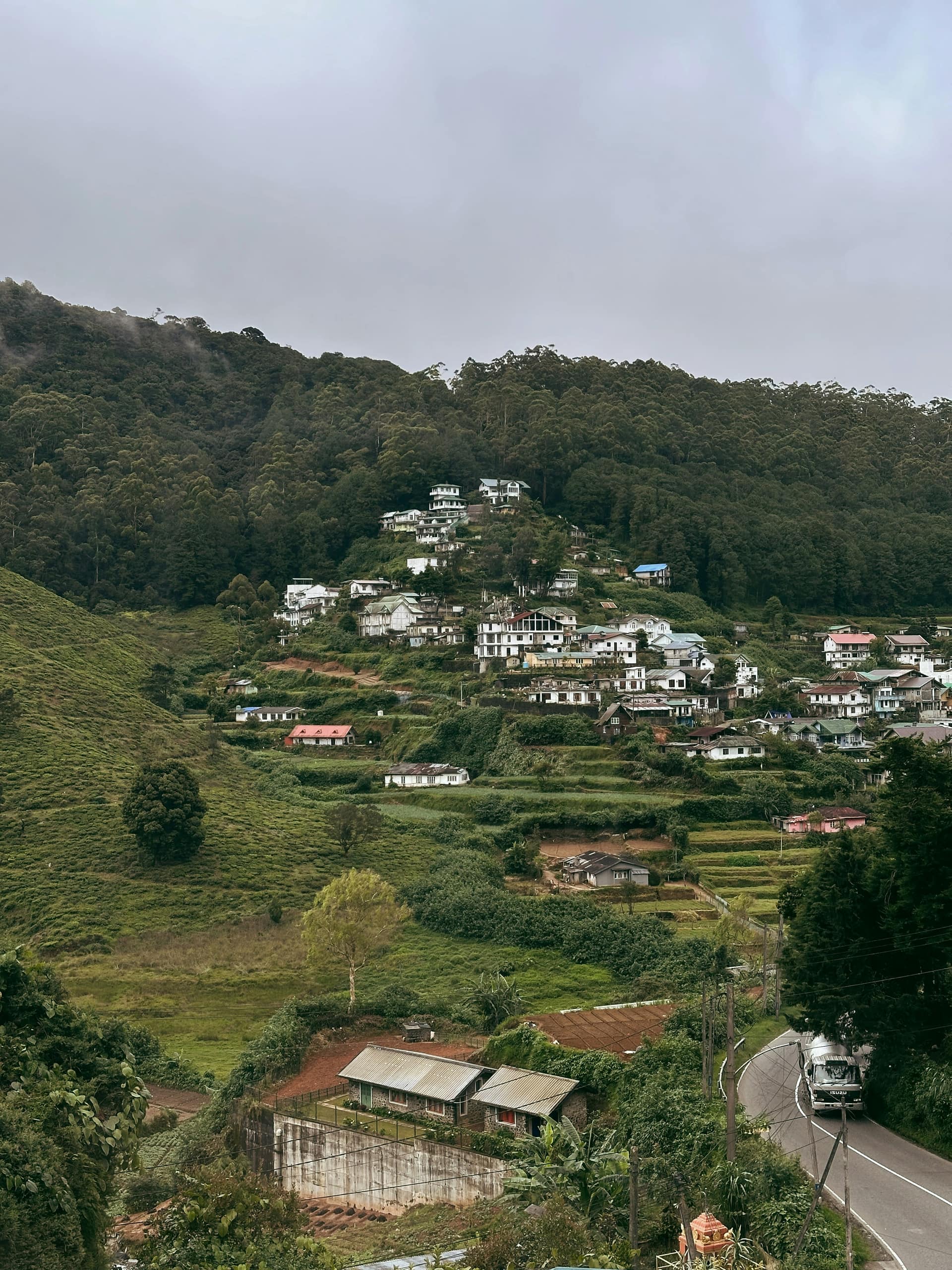
Haputale is a hill country town on a narrow ridge at around 1,430 metres, roughly an hour west of Ella. Its main draw is Lipton's Seat, a viewpoint at around 1,970 metres above the Dambatenne tea estate, reached by a walk of roughly 7 kilometres uphill from the Dambatenne tea factory taking about two hours, or by tuk-tuk. Go at dawn: the view clouds over by mid-morning most days. Haputale is quieter, cheaper and less developed than Ella or Nuwara Eliya.
Key takeaways
- Haputale sits at around 1,430 metres on a narrow ridge with views off both sides.
- Lipton's Seat is at roughly 1,970 metres, reached by a 7 kilometre walk from Dambatenne tea factory.
- The walk takes about two hours uphill through working tea; a tuk-tuk can drive most of it.
- Cloud usually fills the view by mid-morning, so a dawn start is essential.
- Haputale is markedly quieter and cheaper than Ella or Nuwara Eliya.
Haputale itself
Haputale is built along the crest of a ridge at around 1,430 metres, and the geography is the point. The southern escarpment falls away sharply below the town towards the plains, and on a clear day you can see a very long way south, occasionally as far as the coast. On a clear night, the lights of Hambantota are visible.
It is a working town rather than a tourist one: a busy market, a railway station on the Kandy to Badulla line, tea estate offices and a Tamil plantation community whose ancestors were brought here in the nineteenth century. There is not a great deal to do in the town, and that is broadly the appeal.
- →Around 1,430 m altitude; cold at night, mild by day.
- →On the Kandy to Badulla railway line, roughly an hour west of Ella.
- →Views south over the escarpment; the coast is visible on the clearest days.
- →A working plantation town rather than a resort; limited nightlife or dining.
Lipton's Seat: the walk
Lipton's Seat sits at around 1,970 metres at the top of the Dambatenne estate, which Thomas Lipton bought in the 1890s. The classic approach is to start at the Dambatenne tea factory, roughly 20 to 30 minutes by road from Haputale, and walk up the estate road for about 7 kilometres, gaining several hundred metres.
The walk takes most people around two hours, and it is the best part of the experience. The road climbs through working tea with pickers on the slopes from early morning, past estate cottages and a small temple, with the view opening progressively behind you. It is uphill throughout but never steep, and it is on a made surface, so trainers are fine.
- →Roughly 7 km and about two hours uphill from Dambatenne tea factory.
- →Made estate road throughout; no scrambling and no navigation problems.
- →Tuk-tuks can drive most of the way if you would rather not walk up.
- →A common approach is tuk-tuk up for sunrise and walk back down.
Timing: why dawn is non-negotiable
Lipton's Seat looks out over a huge sweep of the southern hill country, and on a clear early morning you can see across several provinces towards the plains and, on exceptional days, to the sea. By eight or nine in the morning the cloud has usually risen out of the valleys and the whole view is white.
That means starting at about 4.30 or 5am if you are walking, or a little later by tuk-tuk. A common and sensible compromise is to take a tuk-tuk up in the dark for sunrise and walk the 7 kilometres back down through the tea in the morning light, which is when the pickers are working and the estate is at its most photogenic.
- →Aim to be at the top before 7am; the view usually goes by 8 or 9am.
- →Walking up: start around 4.30 to 5am from Dambatenne.
- →Best compromise: tuk-tuk up for sunrise, walk down through the tea.
- →Bring a warm layer. It is genuinely cold at 1,970 m before the sun rises.
Dambatenne tea factory
The Dambatenne factory at the foot of the walk was built by Lipton in 1890 and still operates. Tours run during working hours and take you through withering lofts, rolling, oxidation and grading, which is a genuinely interesting hour if you have any curiosity about how the tea in your cup is made.
Factories close on Sundays and poya days and do not process during the very wettest periods, so check before relying on a tour. Buying tea at the factory or at estate outlets is usually better value and better quality than the tourist shops, and it puts money closer to the people who grew it.
- →Dambatenne factory dates from 1890 and still processes tea.
- →Tours cover withering, rolling, oxidation and grading; roughly an hour.
- →Closed on Sundays and poya days; confirm before planning around it.
- →Buy tea at the factory rather than in tourist shops for value and quality.
Adisham Bungalow and the walks around town
Adisham Bungalow, a Tudor-style country house built in the 1930s by a British planter, sits in gardens above Haputale and is now a Benedictine monastery. Parts of the house and the gardens are open to visitors at limited times, and the monks sell jams and cordials made from the orchard. It is an odd, quiet, faintly surreal place.
Beyond it, the Tangamalai bird sanctuary offers forest walking, and the ridge paths west of town give views over both sides of the escarpment. Haputale is also the closest sensible base for Diyaluma Falls and Bambarakanda, Sri Lanka's tallest waterfall, both under two hours away.
- →Adisham Bungalow: 1930s planter's house, now a monastery, limited opening.
- →Tangamalai sanctuary: forest walking and birdlife above the town.
- →Diyaluma Falls and Bambarakanda are both within about two hours.
- →Horton Plains is reachable but is closer from Nuwara Eliya or Ohiya.
Haputale or Ella?
Ella has the cafes, the bars, the yoga classes, the zipline and the crowds. Haputale has none of those and a better view. If you want somewhere to spend evenings and meet other travellers, Ella is the right choice. If you want to be up at five in a cold room looking at tea estates, Haputale is.
Practically, they are an hour apart on the same railway line, so there is no reason not to do both. Two nights in Ella for the walks and the bridge, two in Haputale for Lipton's Seat and the waterfalls, is a very good four nights.
- →Ella: more dining, nightlife, activities and travellers. Busier and pricier.
- →Haputale: quieter, cheaper, better views, minimal infrastructure.
- →One hour apart on the Kandy to Badulla railway; do both.
- →Haputale is the better base for Diyaluma and Bambarakanda waterfalls.
Planning a Haputale stay
Two nights is right: one full day for Lipton's Seat at dawn, Dambatenne factory and Adisham in the afternoon, and a second for the waterfalls or simply for the ridge. Arriving by train from Kandy or Nanu Oya is the most enjoyable approach, and Haputale station sits in the middle of town.
Lankan Stays & Trails arranges the pre-dawn tuk-tuk to Lipton's Seat and books factory tours around the closing days, which is the detail that most independently planned tea days get wrong.
Frequently asked questions
How do you get to Lipton's Seat?
From Haputale, travel 20 to 30 minutes by road to Dambatenne tea factory, then either walk about 7 kilometres uphill on the estate road, taking around two hours, or take a tuk-tuk most of the way. A common approach is a tuk-tuk up for sunrise and a walk back down.
What time should you go to Lipton's Seat?
Be at the top before 7am. Cloud usually rises out of the valleys and closes the view by around 8 or 9am on most days. If walking up, start from Dambatenne around 4.30 to 5am. Bring a warm layer, as it is cold at nearly 2,000 metres before sunrise.
How long is the Lipton's Seat walk?
Roughly 7 kilometres from Dambatenne tea factory to the viewpoint, taking about two hours uphill for most walkers. It follows a made estate road throughout, climbing steadily but never steeply, so trainers are adequate and no navigation skill is required.
Is Haputale worth visiting?
Yes, if you want tea country without the crowds. Haputale sits on a narrow ridge at around 1,430 metres with views off both sides, offers the Lipton's Seat walk, Dambatenne factory and Adisham Bungalow, and is the best base for Diyaluma and Bambarakanda waterfalls.
Haputale or Ella, which should I choose?
Ella has far more cafes, bars, activities and travellers, and is busier and more expensive. Haputale is quieter and cheaper with better long views and a stronger tea-estate feel. They are an hour apart on the same railway line, so two nights in each works well.
Can you visit Dambatenne tea factory?
Yes, during working hours. The factory was built by Thomas Lipton in 1890 and still operates, with tours of roughly an hour covering withering, rolling, oxidation and grading. It closes on Sundays and poya days, so confirm before building a day around it.
What is Adisham Bungalow?
A Tudor-style country house built in the 1930s by a British planter above Haputale, now a Benedictine monastery. Parts of the house and the gardens open to visitors at limited times, and the monks sell jams and cordials made from the orchard.