
Quick answer
On a 7-day Sri Lanka itinerary, the main ticketed stops are Sigiriya Rock, usually the most expensive single entry, the Dambulla Cave Temple, the Temple of the Sacred Tooth Relic in Kandy, and optional activities such as a national park jeep safari and a whale-watching trip from Mirissa. Foreign visitors pay considerably more than local rates, typically quoted in US dollars, and prices change, so confirm current fees locally. Many highlights, including the Nine Arch Bridge and Galle Fort's ramparts, are free.
Key takeaways
- Sigiriya Rock is usually the most expensive single site ticket on the classic route.
- Safari costs combine separate park entry, jeep hire and tracker fees.
- Whale-watching trips from Mirissa are priced per person and usually include breakfast on board.
- The Nine Arch Bridge, Little Adam's Peak, Kandy Lake and the Galle Fort ramparts are free.
- Foreign-visitor fees are typically quoted in US dollars and change periodically, so always confirm current prices.
How entry fees work in Sri Lanka
Sri Lanka uses a two-tier pricing system at many heritage sites and national parks, with foreign visitors paying considerably more than Sri Lankan citizens. Fees for foreigners are typically quoted in US dollars, though often payable in rupees or by card at the counter. Visitors from some South Asian countries sometimes pay a reduced rate at certain sites.
The fees fund the upkeep of sites that are among the most important in South Asia, and most visitors find them fair for places such as Sigiriya. They do, however, add up across a week, and they change periodically, sometimes with little notice.
For that reason, this guide describes relative costs rather than precise figures. Confirm current fees locally, with your hotel or with your operator, before budgeting.
- →Two-tier pricing: foreign visitors pay more than local rates.
- →Usually quoted in US dollars; often payable in rupees or by card.
- →Fees change periodically; always confirm current prices.
Tickets in the Cultural Triangle
Sigiriya Rock is the most expensive single site ticket on the classic 7-day route. It covers the water gardens, the frescoes, the lion's paws and the summit, and the museum near the entrance. Licensed guides at the gate charge separately; agree the fee before starting.
Pidurangala Rock, the alternative climb nearby, charges a much smaller fee at the temple at its base. The Dambulla Cave Temple is considerably cheaper than Sigiriya and is an active temple, so modest dress is required. Polonnaruwa and Anuradhapura, if added, each charge their own substantial fees.
- →Sigiriya: usually the most expensive single site on the route.
- →Pidurangala: a much smaller fee at the base temple.
- →Dambulla Cave Temple: considerably cheaper than Sigiriya.
- →Polonnaruwa and Anuradhapura: separate, substantial fees if added.
Tickets in Kandy
The Temple of the Sacred Tooth Relic charges foreign visitors an entry fee, which includes access to the main shrine and the museums within the complex. Shoes are left at a counter outside, and a small tip for the attendant is customary.
The Royal Botanic Gardens at Peradeniya charge a separate fee, and Kandyan dance performances near the lake are ticketed individually. The lake walk and the Arthur's Seat viewpoint are free.
During the Kandy Esala Perahera, usually in July or August, reserved seats along the procession route are sold separately and priced by location and night. They are among the most expensive tickets of any week in Sri Lanka, and worth booking early if your dates coincide.
- →Temple of the Sacred Tooth Relic: entry fee, plus a small tip at the shoe counter.
- →Peradeniya gardens and Kandyan dance shows: ticketed separately.
- →Esala Perahera seats: priced by location and night, and booked early.
Safaris and whale watching
A national park jeep safari is usually priced in several parts: park entry for each visitor, a service charge, jeep hire, and a tracker fee in some parks. Jeep hire is shared by everyone in the vehicle, so costs per person fall for groups. Yala, Udawalawe, Minneriya and Kaudulla all use a similar structure.
Whale-watching trips from Mirissa, roughly December to April, are priced per person and usually include a light breakfast on board. Prices vary between operators, and the cheapest boats are not always the most responsible; choose one that keeps a respectful distance from the whales.
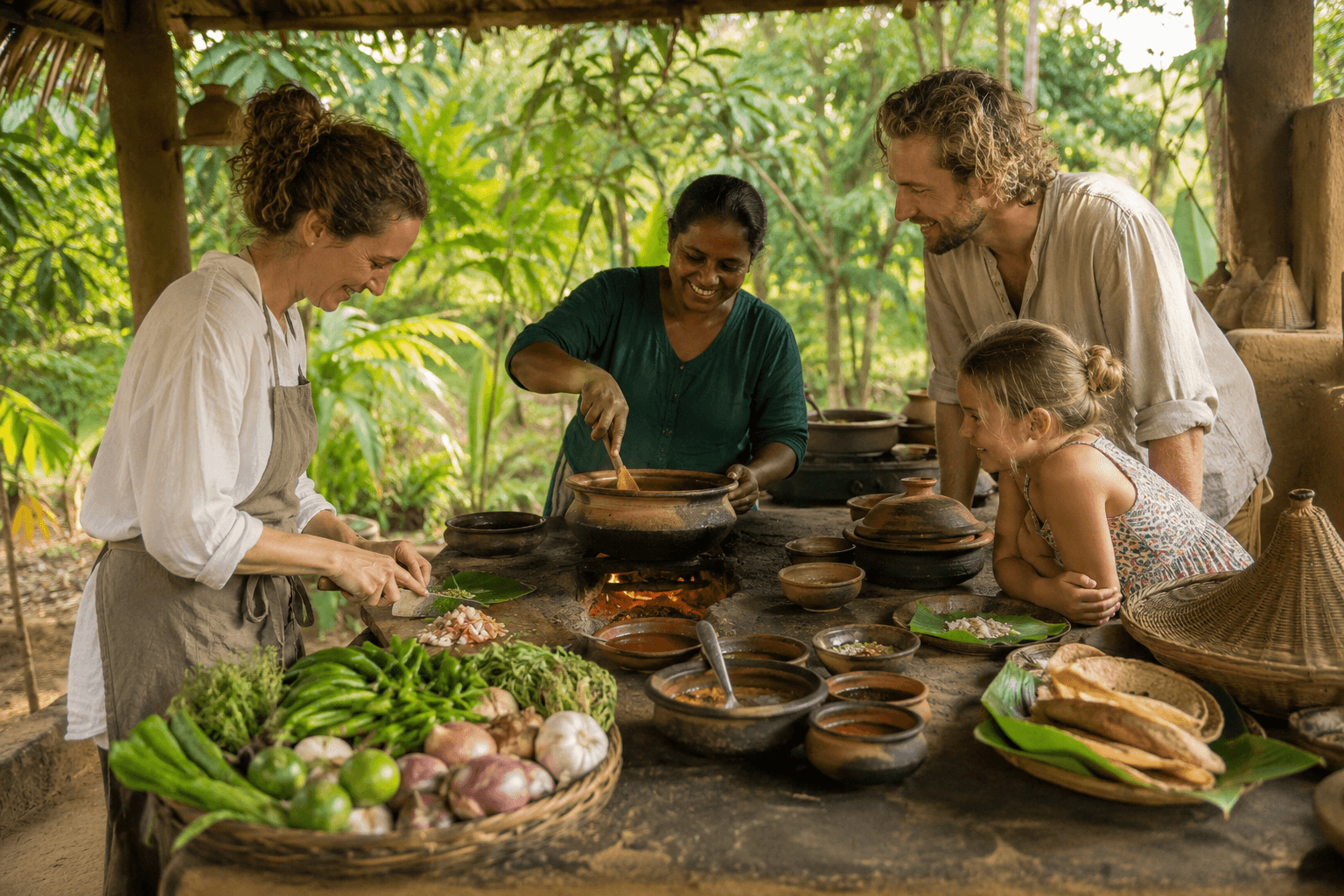
Other activities on the classic route, such as surf lessons at Weligama, cooking classes, spa treatments and village experiences, are priced individually and vary widely.
- →Safaris: park entry, service charge, jeep hire and sometimes a tracker fee.
- →Whale watching: per person, usually with breakfast.
- →Surf lessons, cooking classes and spas: priced individually.
The free highlights of the week
Several of the most memorable moments on a 7-day Sri Lanka itinerary cost nothing. In Ella, the Nine Arch Bridge and Little Adam's Peak are free. In Kandy, the lake walk is free. In Galle, the ramparts walk and the fort's streets are free, and on the coast, the beaches and Coconut Tree Hill are free.
Village temples along the route usually welcome visitors for a small donation rather than a fixed fee. Watching a sunset from a beach, a tea estate road or a hotel terrace is, of course, free everywhere.
- →Ella: the Nine Arch Bridge and Little Adam's Peak.
- →Kandy: the lake walk and Arthur's Seat viewpoint.
- →Galle: the ramparts and the fort's streets.
- →Coast: the beaches and Coconut Tree Hill.
Deciding which tickets are worth it
For most first-time visitors, Sigiriya, the Dambulla Cave Temple and the Temple of the Sacred Tooth Relic are worth their fees; they are among the defining experiences of the island. The more optional choices are the safaris, whale watching and extra heritage sites.
Travellers on a budget can swap Sigiriya for Pidurangala and still see the famous view, choose one paid wildlife experience rather than two, and lean on the free highlights. Those with more to spend should prioritise a private guide at Sigiriya, which adds far more than its cost.
The hill-country train is worth mentioning here too. It is one of the cheapest experiences of the week, even in a reserved seat, and one of the most memorable. It is a good example of how little the best moments in Sri Lanka depend on the size of the budget.
Budgeting for tickets
When budgeting for a 7-day Sri Lanka itinerary, list the ticketed sites and activities you actually plan to do, confirm current fees for each, and treat the total as a separate line from accommodation and transport. It is often larger than people expect.
Lankan Stays & Trails itemises entry fees and activities in every quote, so guests know in advance which are included and which are paid locally. Our guide to hidden costs on the route covers the smaller extras.
Frequently asked questions
How much does it cost to enter Sigiriya?
Sigiriya is usually the most expensive single site ticket on the classic route, and foreign visitors pay considerably more than local rates. The fee is typically quoted in US dollars and changes periodically, so confirm the current price locally or with your operator before travelling.
Why do foreigners pay more in Sri Lanka?
Sri Lanka uses two-tier pricing at many heritage sites and national parks, with lower rates for citizens. The higher foreign-visitor fees help fund the conservation and upkeep of sites such as Sigiriya and the national parks. Some South Asian visitors pay reduced rates at certain sites.
How much does a safari cost in Sri Lanka?
Safari costs combine park entry per visitor, a service charge, jeep hire and sometimes a tracker fee. Jeep hire is shared by everyone in the vehicle, so costs per person fall for groups. Confirm current prices, since fees change periodically.
Is the Temple of the Tooth free?
No, foreign visitors pay an entry fee that covers the main shrine and the museums in the complex. Shoes are left at a counter outside, and a small tip for the attendant is customary. Confirm the current fee locally.
What can I see for free in Sri Lanka?
On the classic route, the Nine Arch Bridge and Little Adam's Peak in Ella, Kandy Lake, the Galle Fort ramparts, Coconut Tree Hill in Mirissa and the beaches are all free. Village temples usually welcome visitors for a small donation.
Can I pay entry fees by card in Sri Lanka?
At the larger sites, such as Sigiriya and the Temple of the Sacred Tooth Relic, card payment is often accepted, but not always reliably. Carry enough rupees to cover the day's entry fees in case the card machine is not working.