
Quick answer
Sri Lanka's major heritage sites charge separate entry fees, with foreign visitor rates set substantially higher than local ones, which is standard practice across South Asia. Sigiriya is the most expensive single site most first-time visitors will pay for. Active religious sites such as the Sri Maha Bodhi generally charge little or nothing but enforce dress codes strictly. Confirm current prices and hours locally, as both are revised periodically.
Key takeaways
- Foreign visitor rates are set substantially higher than local rates at heritage sites, which is normal across the region.
- Sigiriya is the most expensive single entry ticket most first-time visitors will buy in Sri Lanka.
- Active religious sites generally charge little or nothing but enforce dress codes strictly.
- Site prices and opening hours are revised periodically, so confirm them close to the date rather than relying on older guidance.
- Guides offering services at the gate vary enormously in quality; agree scope and price before starting.
Dual pricing, and why it exists
Sri Lanka, like most countries in South Asia, charges foreign visitors substantially more than residents at its major heritage sites. This occasionally surprises first-time visitors and it should not: the sites are maintained partly through visitor revenue, local incomes differ by an order of magnitude, and the practice is standard across the region.
The practical consequence is that entry fees form a real line in a Sri Lanka budget rather than a rounding error. A first trip covering Sigiriya, Dambulla, Polonnaruwa and Anuradhapura will spend a meaningful amount on entry alone.
We deliberately do not publish specific figures here, because they are revised periodically and out-of-date prices are worse than none. Confirm current rates when booking or shortly before travelling, and budget generously rather than precisely.
- →Foreign visitor rates are substantially higher than local rates.
- →This is standard practice across South Asia and funds site maintenance.
- →Entry fees are a real budget line on a heritage-heavy itinerary.
- →Confirm current rates close to the date; they are revised periodically.
What one ticket actually covers
The most common source of confusion is that places which look like a single site are sometimes ticketed separately. At Anuradhapura, for instance, a central archaeological zone ticket does not necessarily cover every individual temple within the wider sacred city, and arrangements here have changed more than once in recent years.
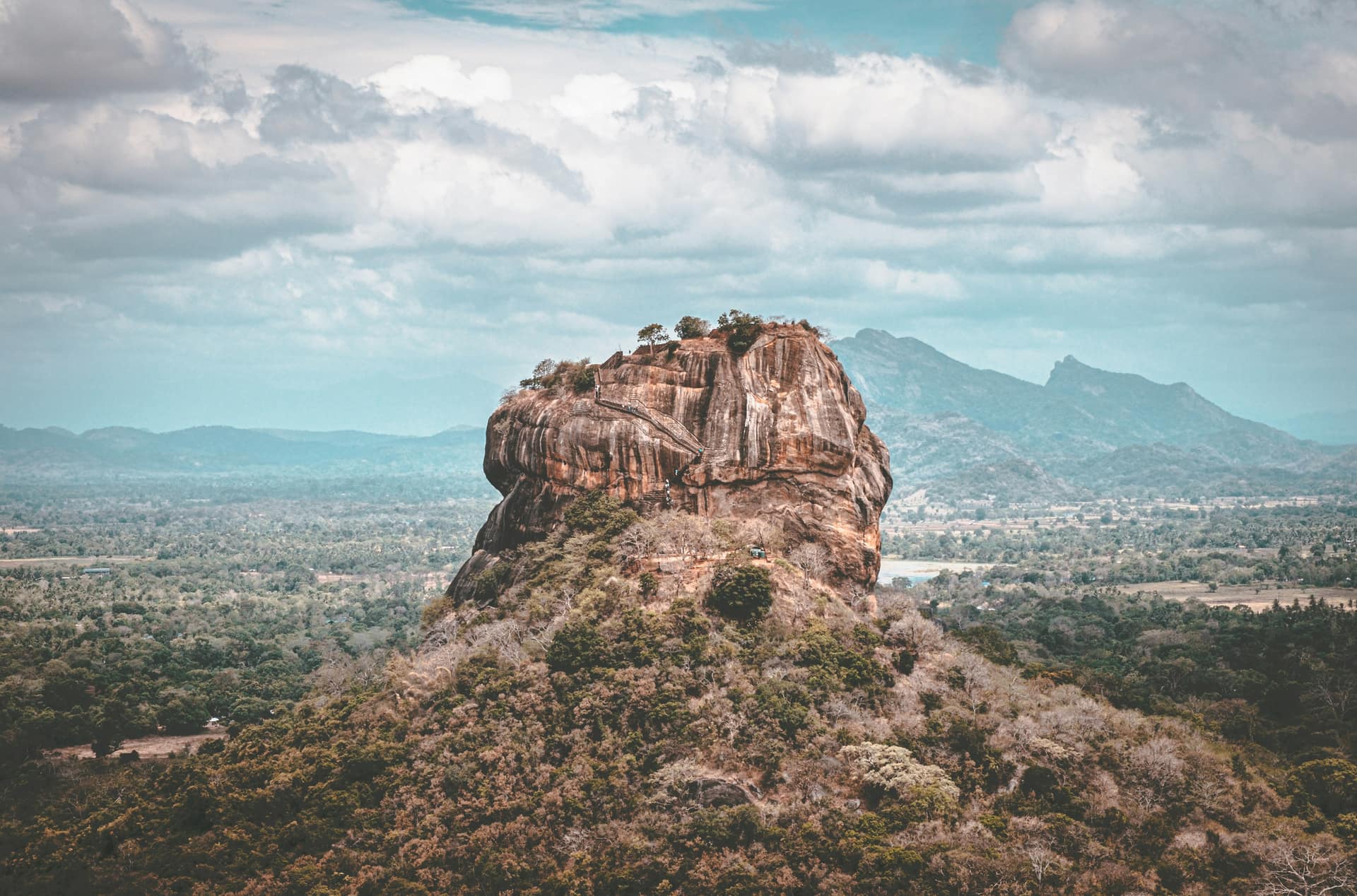
Sigiriya is generally a single ticket covering the water gardens, the fresco gallery, the summit and the on-site museum. Pidurangala, the neighbouring rock, is entirely separate and charges its own much smaller fee, since it is managed by the temple rather than the archaeological authority.
Combined tickets covering multiple Cultural Triangle sites have existed at various points and their availability and value have changed over time. If one is offered, work out whether you will actually visit enough of the included sites to benefit, rather than assuming a combined ticket is automatically cheaper.
- →Some apparently single sites are ticketed in parts, notably at Anuradhapura.
- →Sigiriya is generally one ticket covering gardens, frescoes, summit and museum.
- →Pidurangala is separate and much cheaper, managed by the temple.
- →Combined tickets come and go; check whether you will use enough of it.
Active religious sites work differently
Active places of worship generally operate on a different basis from archaeological sites. The Sri Maha Bodhi at Anuradhapura, the Temple of the Sacred Tooth Relic at Kandy and Hindu kovils either charge nothing or charge modestly, and donations are the more usual expectation.
What they enforce strictly is the dress code. Shoulders and knees covered for everyone, shoes removed before entry, and hats off at Buddhist sites. This is not negotiable and visitors are turned away for it. A light sarong or scarf in a day bag solves it.
The serious rule concerns Buddha images: never pose with your back to one, never touch one, and never climb on one. This is treated as a genuine offence in Sri Lanka rather than a minor discourtesy. Visible Buddha tattoos also carry real legal risk and are best kept covered.
- →Active religious sites charge little or nothing; donations are more usual.
- →Dress codes are enforced and visitors are turned away for breaching them.
- →Never pose with your back to, touch, or climb on a Buddha image.
- →Visible Buddha tattoos carry genuine legal risk and should be covered.
Guides who appear at the gate
At most major sites, people will offer guiding services at or near the entrance. Quality ranges from genuinely knowledgeable licensed guides to men who will walk you to the obvious viewpoint and ask for a substantial fee.
The straightforward protection is to agree scope and price before starting rather than afterwards, and to be clear about how long the tour will last. Disputes at Sri Lankan sites almost always arise from an unstated price rather than an unreasonable one.
At sites where a guide genuinely adds a great deal, principally Anuradhapura and Polonnaruwa where the symbolism is invisible without explanation, arranging a licensed guide in advance through accommodation or an operator gives a substantially better result than hiring at the gate.
- →Quality varies enormously among guides offering services at entrances.
- →Agree scope, duration and price before starting, never afterwards.
- →Disputes arise from unstated prices rather than unreasonable ones.
- →For Anuradhapura and Polonnaruwa, arrange a licensed guide in advance.
Opening hours, photography and what to carry
Opening hours vary by site and are occasionally adjusted, so confirm them rather than relying on published guidance. As a general pattern, major archaeological sites open early, typically around seven in the morning, which is also when they are coolest and quietest.
Photography is generally permitted at archaeological sites and often at religious ones, with exceptions. Some cave interiors and shrine rooms restrict it, and the rule about Buddha images applies regardless of whether photography itself is allowed. A quiet look for signage costs nothing.
Practically, carry small denomination cash, since some sites and most parking and shoe-minding arrangements are cash only. Carry socks for barefoot religious sites, water in a refillable bottle, and note that single-use plastics are restricted in some national parks including Horton Plains.
- →Major archaeological sites generally open early, typically around seven.
- →Confirm opening hours locally; they are adjusted from time to time.
- →Carry small denomination cash for entry, parking and shoe-minding.
- →Single-use plastics are restricted in some parks, including Horton Plains.
Planning around the ticketing
The practical advice is to budget generously for entry fees on a heritage-heavy itinerary, confirm current prices close to the date rather than relying on older figures, and arrange licensed guides in advance for the two ancient capitals where they genuinely transform the visit.
Lankan Stays and Trails includes site entry in itinerary pricing where clients prefer that, and we confirm current rates at the time of booking rather than quoting from published figures. The ticketing in Sri Lanka is not difficult, but it rewards checking rather than assuming, which is true of very little else on a first trip here.
Frequently asked questions
Why do foreigners pay more at Sri Lankan sites?
Dual pricing is standard across South Asia. Sites are maintained partly through visitor revenue, and local incomes differ substantially from those of most international visitors. It applies at major heritage sites rather than at active places of worship.
How much does it cost to enter Sigiriya?
Sigiriya is the most expensive single site most first-time visitors will pay for in Sri Lanka. Specific figures are revised periodically, so confirm the current rate when booking rather than relying on published guidance, which dates quickly.
Is there a combined ticket for the Cultural Triangle?
Combined tickets covering multiple sites have existed at various points, and their availability and value have changed over time. If one is offered, work out whether you will visit enough of the included sites to benefit rather than assuming it is cheaper.
Do you pay to enter temples in Sri Lanka?
Active places of worship generally charge little or nothing, with donations the more usual expectation. What they enforce strictly is the dress code: shoulders and knees covered, shoes removed and hats off at Buddhist sites. Visitors are turned away for breaches.
Should I hire a guide at Sri Lankan heritage sites?
At Anuradhapura and Polonnaruwa a good guide transforms the visit, since much of the symbolism is invisible without explanation. Arrange a licensed guide in advance through accommodation or an operator rather than hiring at the gate, where quality varies enormously.
What time do Sri Lankan heritage sites open?
Major archaeological sites generally open early, typically around seven in the morning, which is also when they are coolest and least crowded. Hours are adjusted from time to time, so confirm locally rather than relying on older published guidance.
Can you take photographs at Sri Lankan sites?
Generally yes at archaeological sites and often at religious ones, with exceptions in some cave interiors and shrine rooms. The rule about never posing with your back to a Buddha image applies regardless of whether photography itself is permitted.