
Quick answer
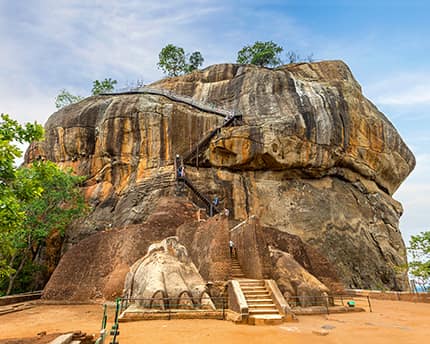
Sigiriya is worth it on a first trip to Sri Lanka for almost every visitor. The fifth-century citadel sits on a 200-metre granite monolith in the Cultural Triangle, and the climb of roughly 1,200 steps passes the fresco gallery, the mirror wall and the lion paws terrace before reaching the summit palace ruins. Budget a half-day and two nights nearby. The main reasons to skip it are a genuine fear of heights, limited mobility, or a trip of under five days.
Key takeaways
- Sigiriya is the single highest-value stop on a first Sri Lanka trip, and the one we would cut last from a ten-place shortlist.
- The climb is roughly 1,200 steps and takes most visitors two to three hours including the descent and the museum.
- It is the most expensive single entry ticket a first-time visitor is likely to buy in Sri Lanka, which is the source of most of the doubt about it.
- Pidurangala, the neighbouring rock, is cheaper and gives the classic view of Sigiriya itself, but it is a rougher scramble and is not a substitute for the site.
- Sigiriya costs a half-day of sightseeing and justifies two nights based at Sigiriya or Habarana.
The verdict on Sigiriya for a first-time visitor
Sigiriya is worth it, and among the ten places most first trips consider, it is the one with the least serious counter-argument. It is a fifth-century royal citadel built on top of a 200-metre granite monolith, surrounded by water gardens that are themselves a significant piece of ancient engineering. Nothing else on the island does the same job.
The doubt almost always comes from the ticket price rather than the experience. Sigiriya is the most expensive single site a first-time visitor is likely to pay for in Sri Lanka, and the figure is high enough that travellers reasonably stop to ask whether it is justified. Prices change, so confirm the current rate when booking, but the general shape of the answer does not change with it.
What justifies it is density. In a single half-day a visitor gets the water gardens, the boulder gardens, the fresco gallery, the mirror wall, the lion paws terrace and the summit ruins, plus one of the best views in the country. Very few sites anywhere compress that much into one climb.
- →The site combines ancient hydraulic engineering, fifth-century painting and a royal palace in one visit.
- →Ticket price is the usual source of hesitation, not the site itself.
- →Confirm current entry rates when booking; they are revised periodically.
What Sigiriya costs in trip days
Sigiriya costs a first-time visitor a half-day of sightseeing, not a full day. Most people climb in the early morning, are back down by mid-morning, and have the afternoon free for Dambulla or a rest. The site itself is not the expensive part of the itinerary; the drive to reach the Cultural Triangle is.
Bandaranaike International Airport to Sigiriya takes roughly four to five hours. That is the real cost, and it is a cost shared with Dambulla, Polonnaruwa and Anuradhapura, which is the argument for treating the Cultural Triangle as one two-night or three-night block rather than a single stop.
Two nights at Sigiriya or Habarana is the sensible minimum. One night means arriving tired, climbing at dawn and leaving immediately, which wastes the drive that got you there.
- →The climb and site visit: roughly two to three hours in total.
- →Airport to Sigiriya: roughly four to five hours by road.
- →Recommended stay: two nights at Sigiriya or Habarana, covering Dambulla as well.
How hard the climb actually is
The Sigiriya climb is roughly 1,200 steps, and the honest description is steep but not technical. The lower half is stone staircases through the boulder gardens; the upper half includes exposed metal stairways bolted to the rock face, including a spiral staircase up to the fresco gallery. Most reasonably mobile visitors manage it with rests.
Two groups genuinely struggle. Visitors with a strong fear of heights find the open metal stairways difficult, because the drop is visible through the treads and there is no easy way to turn back once a section is busy. Visitors with knee or hip problems find the descent harder than the ascent, which surprises people.
Heat is the other factor. The rock has almost no shade, and by mid-morning the stone radiates heat. Starting at opening, typically around seven in the morning, makes a material difference to how difficult the climb feels, and confirm current opening times when planning.
- →Roughly 1,200 steps, steep in places, with exposed metal stairways on the upper section.
- →Vertigo is the most common reason visitors turn back, more than fitness.
- →The descent is harder than the ascent for anyone with knee trouble.
- →Start at opening, typically around seven, to avoid both heat and queues on the narrow stairs.
When Pidurangala is the better choice
Pidurangala is the rock immediately north of Sigiriya, and it is where the famous photograph of Sigiriya is taken from. It costs a small fraction of the Sigiriya entry fee, takes roughly forty-five minutes to climb, and ends with a scramble over boulders rather than a staircase.
Pidurangala is the better choice for a traveller whose priority is the view and the photograph rather than the archaeology, or whose budget for a single site is limited. It is a poor substitute for anyone who wants to see the frescoes, the mirror wall or the summit palace, because none of those are on Pidurangala.
The genuinely good answer, for travellers with two mornings in the Cultural Triangle, is both: Sigiriya at opening on one day, Pidurangala at sunrise or late afternoon on the other. They are complementary rather than competing.
- →Choose Pidurangala if the view of Sigiriya matters more than standing on Sigiriya.
- →Choose Sigiriya if the frescoes, the water gardens and the palace ruins matter.
- →Pidurangala involves a boulder scramble near the top and is not easier in every sense, despite being shorter.
- →With two mornings available, do both rather than choosing.
Who should genuinely skip Sigiriya
Sigiriya is not worth it for three groups of first-time visitors, and it is worth saying so plainly rather than pretending every site suits everyone. Travellers on a trip of under five days should skip the Cultural Triangle altogether rather than add an eight-hour round drive to a short holiday.
Travellers with limited mobility should skip the climb, though not necessarily the site: the water gardens and the lower terraces are reachable without the staircases, and the on-site museum is worth an hour. Dambulla, roughly twenty to thirty minutes away, is a far more accessible alternative for the same cultural weight.
Travellers with severe vertigo should be honest with themselves before buying a ticket. The upper stairways are the issue, and turning back halfway is both common and awkward on a narrow one-way staircase.
- →Trips under five days: skip the Cultural Triangle entirely rather than rushing it.
- →Limited mobility: visit the gardens and museum, or choose Dambulla instead.
- →Severe vertigo: Pidurangala has its own exposure, so consider Dambulla as the alternative.
Fitting Sigiriya into a first trip
Sigiriya works best as the first major stop of a first trip, reached directly from the airport on day one or two, with Dambulla attached to the same base. That places the hardest climb early, while enthusiasm is high and before the accumulated tiredness of a full itinerary sets in.
For the full detail on tickets, the fresco gallery and the history of King Kashyapa, our dedicated Sigiriya Rock Fortress guide covers the site itself. This article is only about whether it earns its place on a first trip, and the answer is that it does. Lankan Stays and Trails routes almost every first-timer itinerary through Sigiriya in the first two days for exactly that reason.
Frequently asked questions
Is Sigiriya worth the entrance fee?
For most first-time visitors, yes. It is the most expensive single site in Sri Lanka, but one ticket covers the water gardens, the fresco gallery, the mirror wall, the lion paws terrace and the summit palace ruins. Confirm current rates when booking, as they are revised periodically.
How long does it take to climb Sigiriya?
Roughly two to three hours in total for most visitors, including the ascent of around 1,200 steps, time at the fresco gallery and summit, and the descent. Allow longer in the middle of the day, when heat slows everyone down considerably on the unshaded upper sections.
Is Sigiriya or Pidurangala better?
Sigiriya for the archaeology, Pidurangala for the view of Sigiriya itself. Pidurangala is cheaper and shorter at roughly forty-five minutes, but it ends in a boulder scramble and has no frescoes or palace ruins. With two mornings available, climbing both is the better answer.
Is climbing Sigiriya scary?
It can be for anyone with a fear of heights. The upper half uses open metal stairways fixed to the rock face, with the drop visible through the treads. Fitness is rarely the limiting factor; vertigo is the most common reason visitors turn back partway up.
Can you visit Sigiriya without climbing it?
Yes. The water gardens, boulder gardens and lower terraces are reachable without the staircases, and the on-site museum is worth around an hour. Visitors with limited mobility often pair this with Dambulla cave temple, which offers comparable cultural depth with a much shorter climb.
What time should I climb Sigiriya?
At opening, typically around seven in the morning. Early starts avoid both the heat on the unshaded rock and the queues that build on the narrow one-way stairways later in the morning. Late afternoon is the second-best option. Confirm current opening hours before you go.
How many days do you need in Sigiriya?
Two nights based at Sigiriya or Habarana. The climb itself takes only a half-day, but two nights lets you add Dambulla, Pidurangala or Polonnaruwa without rushing, and justifies the four to five hour drive from the airport that reaching the Cultural Triangle requires.