
Quick answer
Staying inside or immediately adjacent to a park like Yala or Wilpattu, in a tented camp or lodge on the boundary, lets you enter at the roughly 6am gate opening when animals are most active, and typically costs roughly $200-500 per night per couple all-in. Day-tripping in from a nearby town such as Tissamaharama for Yala means waking around 4.30am to reach the gate on time, but a comfortable guesthouse there runs roughly $40-100 a night. Both approaches see wildlife; the park stay mainly buys back sleep and dawn light rather than guaranteeing more animals.
Key takeaways
- Yala and Wilpattu National Parks generally open to safari vehicles around 6am, and animals are typically most active in the first two hours after sunrise and the last two before sunset.
- A tented camp or lodge on a park boundary allows a same-day transfer straight to the gate, while a day trip from a town like Tissamaharama (for Yala) can mean a 4.30am wake-up to arrive on time.
- Exclusive-use park-adjacent stays typically run roughly $200-500 per couple per night all-in, against roughly $40-100 per night for a comfortable guesthouse in a nearby town.
- Wilpattu National Park, Sri Lanka's largest, is generally quieter and less visited than Yala, which can mean fewer vehicles at a sighting regardless of where you sleep.
- A two-night stay with both a dawn and a dusk safari from inside the park generally gives more sighting opportunities than a single rushed day trip, without requiring a full week's commitment.
Why where you sleep affects a Sri Lankan safari
National parks like Yala and Wilpattu generally open their gates to safari vehicles around 6am, and wildlife, leopards, elephants and sloth bears among them, is typically most active in the cooler hours just after dawn and again before dusk. A vehicle already queued at the gate at opening time has a real head start over one still on the access road.
This is the entire logic behind an exclusive-use park stay: a tented camp or lodge inside the park or right on its boundary puts you a short drive from the gate rather than an hour or more away, so the dawn safari starts with fresh light and quieter roads rather than a convoy of vehicles arriving after the best window has passed.
Day-tripping in from a nearby town
Day-tripping into Yala typically means basing yourself in Tissamaharama or Kataragama, both a reasonable drive from the park entrance, and it is by far the more budget-friendly route: comfortable guesthouses in these towns generally run roughly $40-100 a night. Wilpattu day-trippers usually base near Anuradhapura or along the Puttalam road, with similar pricing.
The catch is the wake-up call. Reaching the gate for the roughly 6am opening from an hour away means leaving well before dawn, often around 4.30am, which is a genuinely early start on a trip where you're also trying to enjoy evenings out. Many day-trippers instead opt for a mid-morning or afternoon safari slot, trading some of the best wildlife activity for a more humane schedule.
- →Day-trip towns for Yala: Tissamaharama and Kataragama, both within a manageable drive of the main entrance.
- →Day-trip towns for Wilpattu: Anuradhapura and towns along the Puttalam road.
- →Typical guesthouse cost nearby: roughly $40-100 a night, well below an in-park stay.
- →Trade-off: an earlier wake-up (often around 4.30am) to hit the dawn gate opening, or a later, less optimal safari slot.
Staying inside or on the boundary
Exclusive-use tented camps and boundary lodges around Yala and Wilpattu range from comfortable safari tents to genuinely luxurious camps with private plunge pools and full board, typically running roughly $200-500 per couple per night, confirm current rates before booking, as pricing varies significantly by season and property tier. What you're paying for is proximity and time, not a different park or better animals.
A two-night stay built around one dawn and one dusk safari from inside the park generally offers more chances at a sighting than a single rushed day trip, simply because you're covering two of the most active wildlife windows rather than one compressed midday or late-morning drive.
Yala vs Wilpattu: does the park itself change the calculation
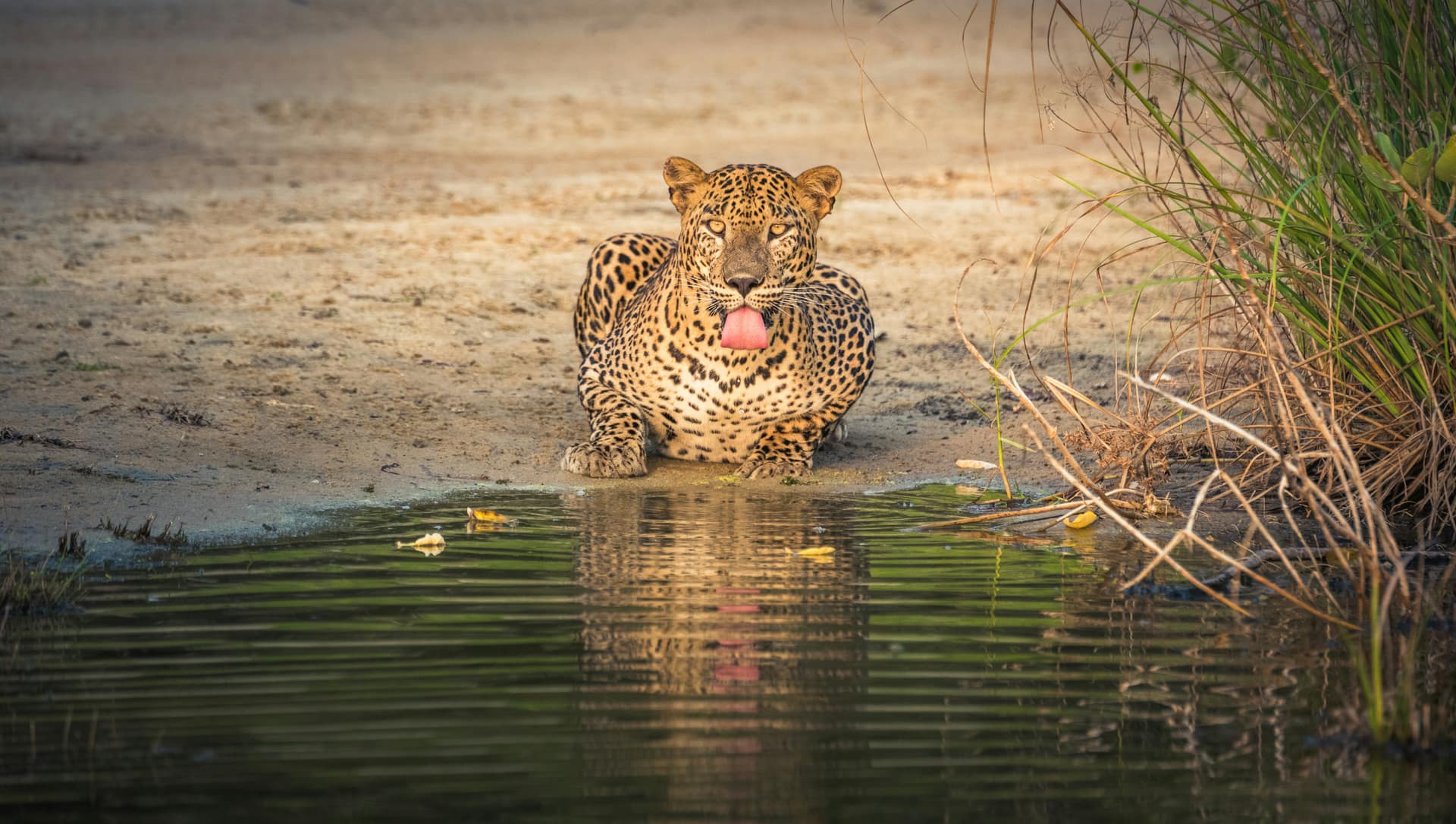
Yala National Park is Sri Lanka's most visited and holds one of the world's highest recorded leopard densities, which also means more vehicles at a good sighting, particularly in its more accessible blocks during peak season. Wilpattu, the island's largest national park, is generally quieter and less developed, with a distinctive landscape of natural sandy-rimmed lakes called villus.
For a traveller weighing park stay against day trip, Wilpattu's relative remoteness makes an in-park or boundary stay more compelling, since the day-trip drive from Anuradhapura is longer than the equivalent drive into Yala from Tissamaharama. Yala's day-trip option is genuinely more workable given the shorter access road from town.
Budgeting the choice into a wider itinerary
Neither option is inherently the better one for every traveller; a park stay makes the most sense as a deliberate one or two-night splurge within a longer, more budget-conscious itinerary rather than the default for every wildlife stop. Many American visitors build in exactly one exclusive-use camp night, at Yala or Wilpattu, and stay in town-based guesthouses or mid-range hotels elsewhere.
This is one of the clearest places on a Sri Lanka trip where luxury and authentic choices blend naturally rather than competing: a splurge night in a boundary tented camp for the dawn safari, paired with simpler, cheaper stays either side of it, gets most of the wildlife upside without the cost of an all-luxury safari leg.
Planning it into your trip
Choose an in-park or boundary stay if wildlife viewing is a primary goal of your trip and you can commit at least one night to it; choose a day trip from a nearby town if your budget or itinerary is tighter, or if you're pairing the safari with other activities better based from a town like Tissamaharama.
Lankan Stays & Trails books both approaches depending on the traveller, private tented camps for guests prioritising the dawn safari, and well-located town guesthouses paired with an early private vehicle for guests balancing cost across a longer itinerary.
Frequently asked questions
Is it worth staying inside Yala National Park?
It's worth it if wildlife viewing is a priority, since a boundary or in-park stay gets you to the gate for the roughly 6am opening without a pre-dawn drive from town. It typically costs more, roughly $200-500 per couple per night, so it suits a one or two-night splurge rather than an entire safari leg for most budgets.
Can you do a Yala safari as a day trip?
Yes, most commonly from Tissamaharama or Kataragama, both a manageable drive from the main entrance. Reaching the roughly 6am gate opening means leaving before dawn, so many day-trippers instead book a mid-morning or afternoon slot, which is a fair trade-off for a lower-cost visit.
How much does it cost to stay near Yala or Wilpattu National Park?
As a rough, unconfirmed guide, an in-park or boundary tented camp typically runs $200-500 per couple per night all-in, while a comfortable guesthouse in a nearby town like Tissamaharama or Anuradhapura runs roughly $40-100 a night. Always confirm current rates directly before booking.
Is Wilpattu or Yala better for a safari?
Yala has one of the world's highest recorded leopard densities but draws more vehicles per sighting, particularly in peak season. Wilpattu is Sri Lanka's largest park, generally quieter, with a distinctive landscape of natural lakes called villus, and suits travellers who prefer fewer crowds over guaranteed leopard odds.
What time do Sri Lankan national parks open for safari?
Yala and Wilpattu generally open to safari vehicles around 6am, though it's worth confirming the exact time with your operator, as it can shift seasonally. Arriving at opening time matters because wildlife is typically most active in the first couple of hours after sunrise.
How many nights do you need for a Sri Lanka safari?
Two nights, covering one dawn and one dusk safari, generally gives noticeably better sighting chances than a single rushed day trip, since you cover two of the most active wildlife windows rather than one. A single overnight or day trip can still work well if your schedule is tight.
Are tented safari camps in Sri Lanka luxurious?
Many are, ranging from simple safari tents to camps with private plunge pools and full board, roughly $200-500 per couple per night depending on tier and season. Standards vary considerably between properties, so it's worth checking specifics like en-suite facilities and generator power before booking.