
Quick answer
The most common first-time mistakes Turkish visitors make in Sri Lanka are overpacking the itinerary with too many regions, underestimating how long winding hill roads actually take compared with the map distance, choosing the wrong coast for the travel season, booking one-night stops that never feel settled, and arriving without the ETA already approved. Building in two to three nights per base, matching the coast to the December-to-March or May-to-September dry windows, and confirming the ETA well before departure avoid nearly all of them.
Key takeaways
- Sri Lanka's winding hill roads mean a 100-kilometre drive can take three hours or more, not the one-and-a-half hours a straight-line map suggests.
- The west and south coast is in season roughly December to March; the east coast roughly May to September, opposite windows on the same island.
- The ETA must be approved online before departure; arriving without it risks delay or refusal at immigration.
- One-night stops are the most common itinerary mistake; two nights minimum per base changes how the whole trip feels.
- US dollars, not Turkish lira, are the more practical currency to carry for exchange on arrival.
Mistake one: overpacking the itinerary
Overpacking the itinerary is the single most common mistake first-time Turkish visitors make, adding a fifth or sixth region on top of the Cultural Triangle, hill country, a safari and one coast because the non-stop flight from Istanbul feels like it should be rewarded with maximum coverage. In practice, this nearly always forces one-night stops.
A useful test before adding anything: would it require cutting a night from one of the four core regions. If yes, it belongs on a second trip rather than a first one, since Sri Lanka rewards repeat visits more than it rewards trying to see everything at once.
Mistake two: underestimating road times
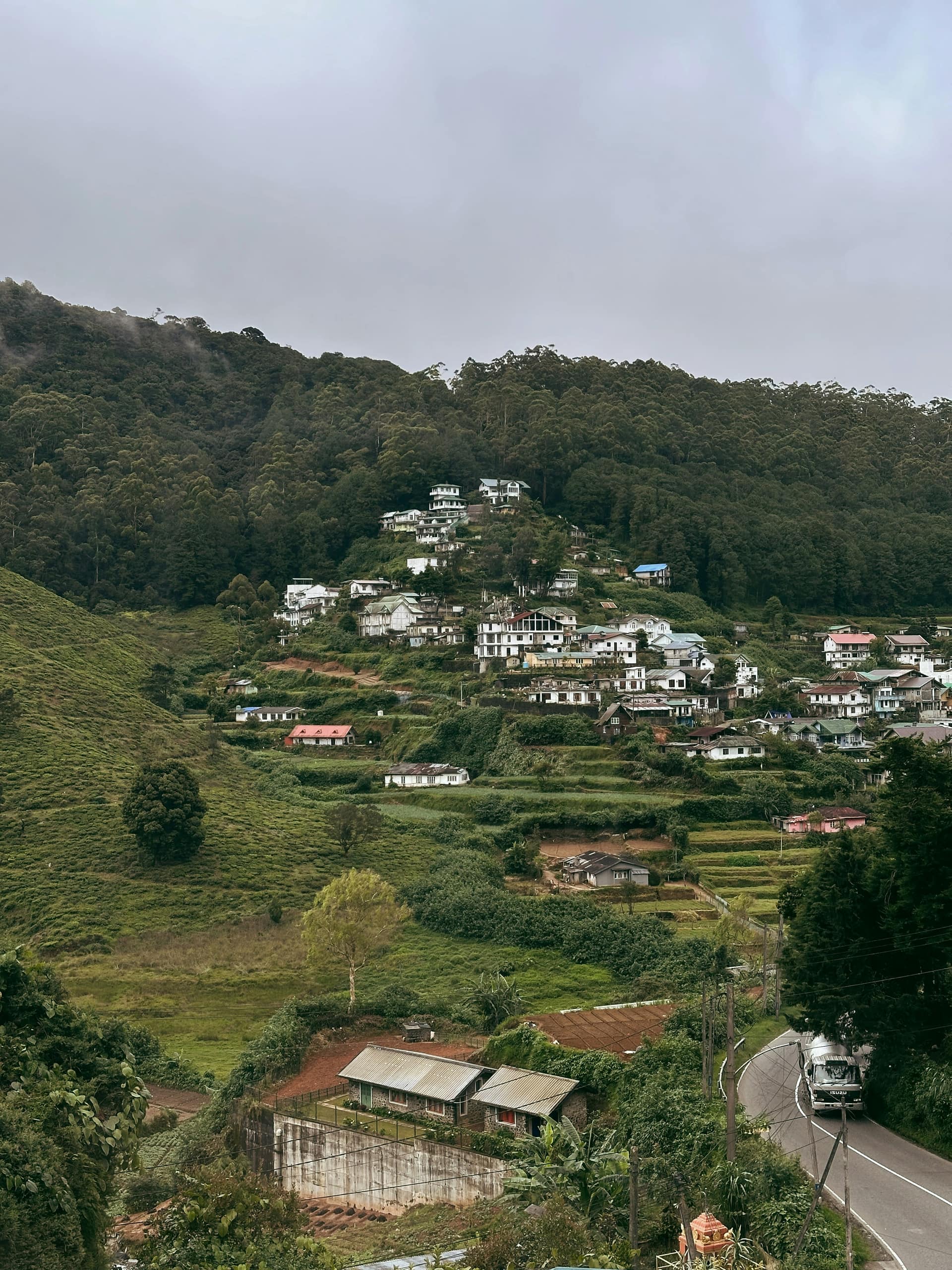
Underestimating drive times is a specific trap for travellers used to Turkey's motorway network, since Sri Lanka's hill country and rural roads are narrower and more winding, meaning a 100-kilometre drive can genuinely take three hours or more rather than the one-and-a-half a straight-line map distance implies.
A private driver-guide who knows the actual road conditions, rather than a self-planned route based on map distances alone, avoids the most common version of this mistake: an itinerary with too many long transfers packed into single days.
- →Expect roughly 40-60 km per hour of average driving speed on hill roads, not motorway speeds.
- →Build transfer days as their own day where the distance genuinely warrants it.
- →A local driver-guide's route knowledge outperforms a self-planned route based on map distance alone.
Mistake three: choosing the wrong coast for the season
Choosing the wrong coast for the travel season is an easy mistake for a first-time visitor unfamiliar with Sri Lanka's two-monsoon system, since the west and south coast (Galle, Mirissa, Unawatuna) is in its dry season roughly December to March, while the east coast (Trincomalee, Arugam Bay, Pigeon Island) is dry roughly May to September, the exact opposite window.
This actually works in a Turkish traveller's favour once known: whether booking around Turkish winter or summer school holidays, a well-suited coast is always in season somewhere on the island. Booking without checking which coast matches the travel dates is the mistake, not the two-monsoon system itself.
Mistake four: one-night stops
One-night stops are the itinerary mistake that most consistently shows up in feedback from first-time visitors after the trip: a base changed every single night rarely leaves enough time to properly experience a region, and the cumulative packing and unpacking becomes its own source of fatigue.
Two nights minimum per base, and ideally three in the Cultural Triangle and on the coast, is a far more sustainable pattern, even if it means dropping a region entirely rather than visiting every region for one rushed night each.
Mistake five: the ETA and currency logistics
Arriving without an approved ETA is a preventable mistake that risks real delay at immigration; the Electronic Travel Authorisation must be arranged online before departure from Turkey, not on arrival. Screenshotting or printing the approval, rather than relying on an email that might not load without signal, is a small step worth taking.
Carrying Turkish lira to exchange for Sri Lankan rupees is a related, smaller mistake: lira is not as widely exchangeable in Sri Lanka as US dollars, so bringing dollars for the initial exchange on arrival is more practical, with cards covering most hotel and larger restaurant spending after that.
Avoiding all of it in one pass
Every mistake above is a planning-stage decision rather than something that happens on the ground, which means every one of them is avoidable with a little adjustment made before departure: pace the itinerary around four regions, expect real driving times, match the coast to the season, and confirm the ETA early.
Lankan Stays & Trails builds private, driver-guided first-time itineraries for Turkish travellers that are pre-adjusted for all of these, so the route already accounts for genuine road times and the correct coast for the travel dates before the trip even begins.
Frequently asked questions
What is the biggest mistake first-time Turkish visitors make in Sri Lanka?
Overpacking the itinerary with too many regions, usually a fifth or sixth stop added to the Cultural Triangle, hill country, safari and one coast. It nearly always forces one-night stops, which undermines the trip more than the missing region would have.
How long do drives actually take in Sri Lanka?
Longer than map distance suggests. Hill country and rural roads are narrow and winding, so a 100-kilometre drive can take three hours or more, roughly 40-60 km/h average, rather than the highway speeds Turkish travellers are used to.
Which coast should you choose in Sri Lanka and when?
The west and south coast is dry roughly December to March; the east coast is dry roughly May to September. Choosing the coast that matches the travel dates avoids the common mistake of booking the wrong one for the season.
Do you need the ETA before arriving in Sri Lanka from Turkey?
Yes. The Electronic Travel Authorisation must be approved online before departure. Arriving without it risks delay at immigration; saving or printing the approval avoids relying on an email that might not load without signal.
How many nights should you stay in each place in Sri Lanka?
Two nights minimum per base, and ideally three in the Cultural Triangle and on the coast. One-night stops are the most commonly regretted itinerary decision among first-time visitors, since they rarely allow time to properly settle in.
Should you carry Turkish lira or US dollars to Sri Lanka?
US dollars are more practical. Turkish lira is not as widely exchangeable in Sri Lanka, so carrying dollars for the initial exchange on arrival, then relying on cards for hotels and larger restaurants, works better.
Should first-time visitors self-drive in Sri Lanka?
Generally not recommended. Left-hand traffic, narrow winding roads and unfamiliar local driving styles make a private driver-guide the far more common and comfortable choice for first-time Turkish visitors covering the whole route.